
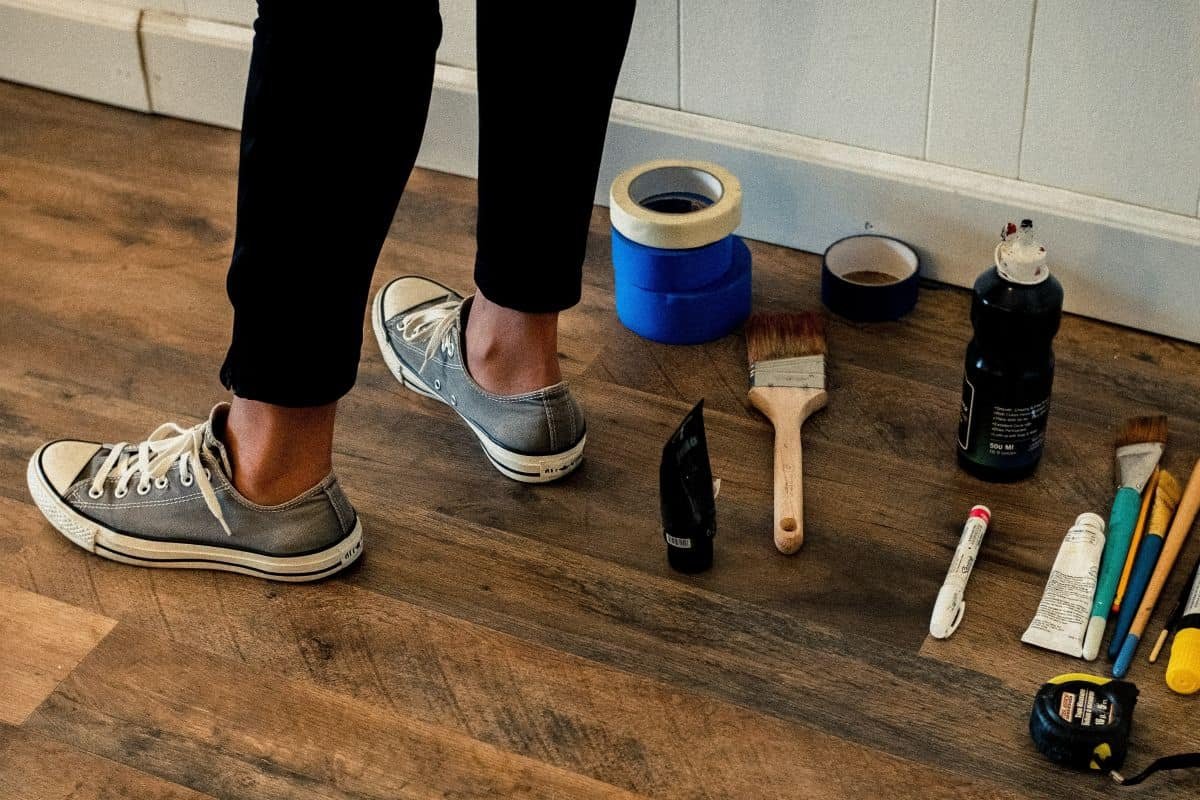
Whether you’re settling into a fixer-upper in Seattle or a newer residence in Nashville, a new home can bring along a lengthy to-do list. While hiring professionals may save time and stress, it can also dent your budget. Surprisingly, many home repairs can be DIY projects with just a few tools. Here are 13 simple repairs you can tackle yourself as you make your new house feel like home.
1. Patch small holes in your walls
Tools needed:
- Spackle
- Putty knife
- Paint
If your home’s previous owner hung decorations or mounted a TV, there may be small nail holes left behind. With some spackle, a putty knife, and touch-up paint, you can make those walls look good as new. More extensive drywall damage may require patching with joint compound.
2. Touch up scuffed paint
Tools needed:
- Paint
- Small brush or roller
- Painter’s tape
Fixing small scuffs and chips in paint can make a big difference in your home’s appearance. Keep matching paint on hand for touch-ups as needed. Use a small brush or roller for seamless blending, keeping your walls fresh without a full repaint.
3. Repair leaky faucets
Tools needed:
- Screwdriver
- Wrench
- O-rings or washers
Leaky faucets are not only annoying but can also lead to higher water bills. Most leaks can be fixed by replacing the washer or O-ring, a quick and inexpensive solution.
4. Replace worn-out weather stripping in doors and windows
Tools needed:
- Weather stripping
- Utility knife or scissors
- Tape measure
- Screws
- Screwdriver
Worn-out weather stripping can let in drafts and increase energy bills. Replace old weather stripping with new strips to enhance comfort and lower utility costs, a simple DIY task that doesn’t require much time or tools.
5. Fix a running toilet
Tools needed:
- Replacement flapper
- Pliers
- Towel
A constantly running toilet can waste water and increase your bill. Often, a worn-out flapper is the culprit. By replacing it, you can solve the problem in just a few minutes.
6. Tighten loose cabinet handles and hinges
Tools needed:
- Screwdriver
- New screws or handles (if necessary)
Loose cabinet knobs and handles can be easily fixed by tightening screws or replacing them if needed. This simple change can refresh your kitchen or bathroom without a major remodel.
7. Unclog slow drains
Tools needed:
- Drain snake
- Baking soda
- Vinegar
- Hot water
Before calling a plumber for drainage issues, try clearing bathroom and kitchen drains yourself with a drain snake or a baking-soda-and-vinegar mix.
8. Stop doors from squeaking
Tools needed:
- WD-40 or petroleum jelly
- Screwdriver
- Rag
Fix squeaky doors by applying WD-40 or petroleum jelly to the hinges or tightening the screws. This quick repair can make your home feel quieter and more polished.
9. Replace burned-out light bulbs with LEDs
Tools needed:
- LED lightbulbs
- Step stool or ladder
Upgrade your home’s lighting by replacing old bulbs with LEDs, saving money and brightening every room. Choose bulbs that match your desired light tone for a cozy or bright ambiance. LEDs last longer than traditional bulbs, making them a simple energy-efficient upgrade.
10. Check and replace air filters
Tools needed:
- New air filter
- Screwdriver
Don’t overlook changing air filters, which improve air quality and HVAC efficiency. Replace filters every 1-3 months for optimal performance, a simple habit with significant health and comfort benefits.
11. Silence creaky wood floors
Tools needed:
- Talcum powder or powdered graphite
- Broom
- Cloth
Sprinkle talcum powder or powdered graphite between creaky floorboards to lubricate the wood and reduce noise, bringing peace and quiet back to your home.
12. Clean your dryer vent
Tools needed:
- Vacuum (with hose attachment)
- Dryer vent brush
- Screwdriver
Prevent fire hazards by cleaning lint buildup in your dryer vent. Disconnect the vent hose and use a vacuum or brush to remove lint, ensuring a safe and efficient dryer.
13. Test smoke and carbon monoxide detectors
Tools needed:
- Step stool
- Replacement batteries
Prioritize safety by testing smoke and carbon monoxide detectors regularly. Replace batteries annually and detectors every 10 years for a safe home environment.