
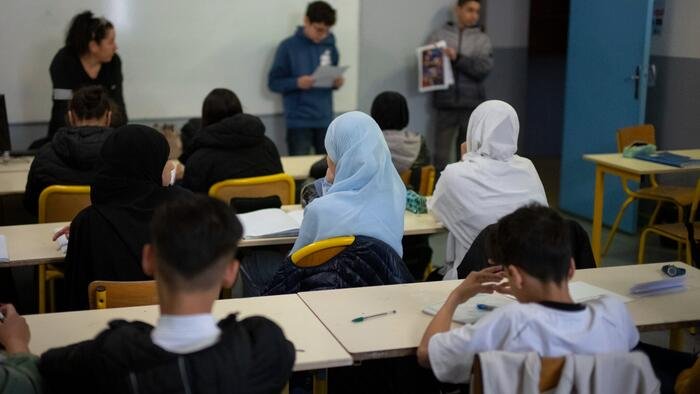
Vienna in Austria has reached a significant milestone in its demographic evolution, with more than half of the first-grade students now unable to understand German, marking a dramatic shift in the city’s population composition.
The situation underscores the demographic crisis Europe is facing, leading to declining educational standards across the continent, largely due to mass immigration.
According to the Vienna People’s Party, “For the first time, more than half of the first-graders in Vienna’s public elementary schools do not understand German.”
The data reveals that 50.9 percent of first-graders, totaling 10,931 students, require special needs classification in the current academic year.
Reports from the previous year indicated that over 75 percent of students in Vienna’s middle school system do not speak German at home, opting for other foreign languages instead.
Education spokesperson and parliamentary group leader Harald Zierfuß attributes this trend to the failure of the ruling left-liberal government, stating, “Because the SPÖ and NEOS are failing in Vienna, more children than ever before are unable to speak German.”
Zierfuß emphasized, “Time is running out for our city. The children without German language skills are the welfare recipients of tomorrow in this city,” as reported by Austrian newspaper Heute.
A recent study revealed that 41.2% of the 112,600 students enrolled in elementary, middle, and special schools in Vienna for the 2024/25 academic year identified as Islamic, further illustrating the demographic transformation in Austria’s education system.
While the ÖVP party, to which Zierfuß belongs, does not advocate for emigration or immigration restrictions, they propose solutions such as increased language proficiency courses, mandatory kindergarten for all 3-year-olds, and additional staffing for kindergartens.
Commentary writer for Austrian newspaper Krone, Andreas Mölzer, highlighted the challenges posed by the large number of foreigners in Austria’s school system, emphasizing the importance of language acquisition for future integration.
Mölzer noted, “Integration into our social system and our cultural fabric depends primarily on language acquisition.”
He further warned of the consequences for children with migration backgrounds who struggle with learning German, potentially leading to limited career prospects and lack of qualifications.
The rise of private schools is becoming more prevalent among White parents in Europe’s multicultural cities, as concerns mount over the declining standards in public education systems.
The education situation in Austria has seen a downward trend over the past decade, with a significant number of students lacking sufficient German proficiency to follow lessons, prompting an increase in private school enrollment.
Aside from language issues, teachers in Austrian schools are facing challenges such as violence, disrespect, and even cases of rape, leading to a significant dropout rate among educators.
Loading recommendations…