
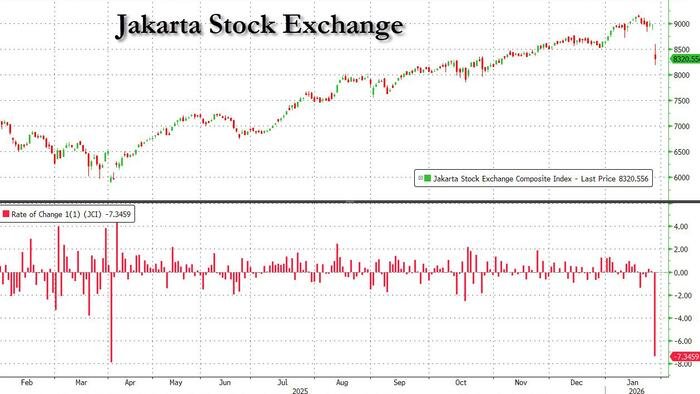
Indonesian stocks experienced a sharp decline after MSCI expressed concerns about their investability and issued a warning about a potential downgrade to frontier-market status.
The Jakarta Composite Index, the benchmark for Indonesian stocks, plummeted by 7.4% on Wednesday, marking its largest one-day drop in over nine months. Earlier in the day, the index crashed by as much as 8.8%, triggering a 30-minute market halt. This drastic decline came after MSCI announced that it would pause some index changes, including additions, until regulatory issues related to the tightly-held ownership of listed firms are addressed.
Concerns surrounding free float, the availability of shares for trading, have become a major issue in Indonesia’s nearly $1 trillion market. Investors have raised alarms about the limited trading volume and concentrated ownership of the country’s largest companies by a few wealthy individuals. MSCI’s decision to halt index changes is attributed to fundamental investability concerns and worries about potential market manipulation.
According to Bloomberg, Tareck Horchani from Maybank Securities in Singapore commented, “MSCI’s freeze is a warning shot, not a verdict.” Markets have already begun factoring in the possibility of a negative outcome, leading to pressure on Indonesian stocks heavily weighted on the index.
If Indonesia fails to address transparency issues by May, MSCI will reevaluate the country’s market accessibility status, potentially resulting in reduced weighting for Indonesian companies in the MSCI Emerging Markets Index and a downgrade to frontier-market status. This could trigger further capital outflows and significant selling pressure.
The Indonesian exchange operator has pledged to enhance transparency and collaborate with MSCI to achieve a consensus. Efforts will include consulting market participants on ideal free-float levels to meet MSCI’s requirements.
Regulators have proposed increasing minimum float levels to improve liquidity in response to concerns about thinly traded stocks. The goal is to enhance transparency and align with international standards, potentially boosting investor confidence in the market.
The recent market turmoil has raised political concerns about Indonesia’s economic trajectory, especially amid efforts to steer fiscal and monetary policies towards specific growth objectives. Investors are closely monitoring developments and awaiting clarity on the situation before making significant investment decisions.
For now, some investors are adopting a cautious approach and staying on the sidelines until there is more clarity on the regulatory and market conditions. The potential downgrade to frontier status and its implications on passive flows are key factors influencing investor sentiment towards Indonesian stocks.
Loading recommendations…