
Bitcoin (BTC) fell below $64,000 on February 23 at 20:15 UTC, trading at $63,950, a level not seen since late 2024. The fear & greed index for the flagship coin was at 5/100, indicating extreme fear.
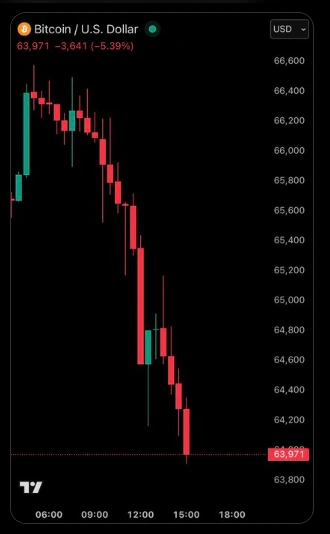
Source: Trading View
The crypto market’s Relative Strength Index (RSI) remains oversold, with BTC’s open interest (OI) dropping by 0.69% to $44.67 billion in 24 hours. There were 164,471 traders who experienced a total of $621.69 million in liquidations, with the largest single liquidation occurring on the HTX exchange for $61.51 million.
Bitcoin reached an all-time high of $126,272 on October 6, followed by the largest single-day flash crash just four days later. The event, known as the “10/10 event,” saw liquidations on leveraged positions exceeding $19 billion in a 24-hour period.
Why is Bitcoin on a persistent downward spiral?
One of the main factors contributing to Bitcoin’s price correction was US President Donald Trump’s announcement of 100% tariffs on Chinese imports, now at 15% for global imports to the US. This has led to significant de-risking among crypto investors.
Institutional Bitcoin ETFs have seen five consecutive weeks of outflows, totaling $3.8 billion. Since late last year, outflows have reached a net of $8 billion, with delays in the passage of the CLARITY Act further dampening market sentiment.
Geopolitical tensions between the US and Iran have increased investor fear, prompting a shift to gold as a more stable store of value. Gold’s market cap has risen to $36.4 trillion, with a 17% year-to-date gain, while the cryptocurrency market cap stands at $2.23 trillion, with BTC retracing 25% from its New Year’s price of over $88,000.
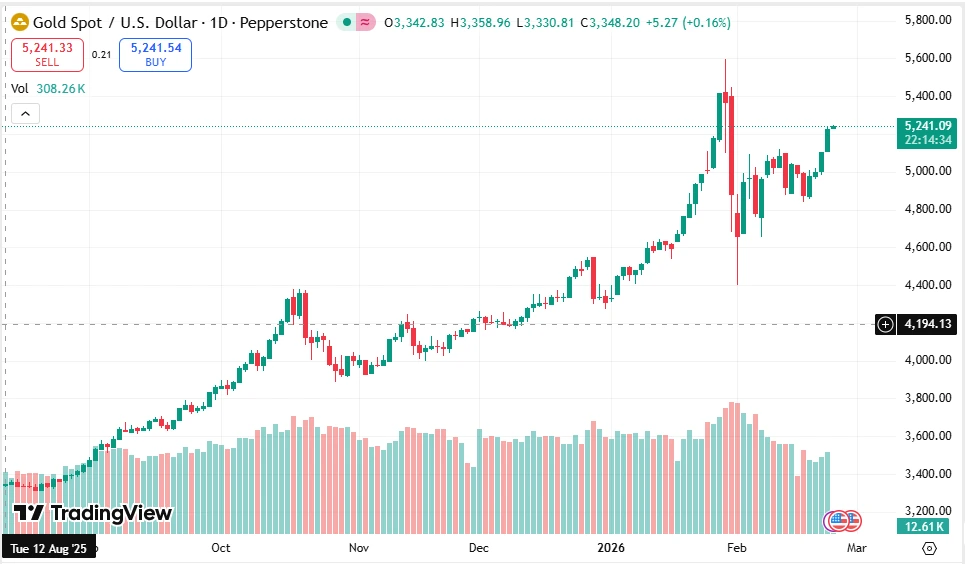
Source: Trading View
What’s next for Bitcoin?
Analysts, including those from Standard Chartered, predict that Bitcoin could drop to $50,000 due to institutional capitulation. However, if there are high trading volumes and net institutional inflows for at least three consecutive days, Bitcoin could reclaim $68,000.
Grayscale and Bitwise suggest that Bitcoin now exhibits characteristics of a mature asset, showing slow bullish trends instead of the traditional four-year cycle.
Upcoming events that could positively impact Bitcoin’s price include the passage of the CLARITY Act, the March 2026 mining of the 20 millionth BTC, and the appointment of Kevin Warsh as the new Federal Reserve Chair.
Trust with CoinPedia:
Since 2017, CoinPedia has been providing accurate and timely updates on cryptocurrency and blockchain. Our content is created by a team of expert analysts and journalists following strict Editorial Guidelines based on E-A-T (Experience, Authoritativeness, Trustworthiness). All articles are fact-checked against reputable sources to ensure accuracy and reliability. Our review policy ensures unbiased evaluations when recommending exchanges, platforms, or tools. We strive to offer timely updates on everything related to crypto and blockchain, from startups to industry leaders.
Investment Disclaimer:
The opinions and insights shared are the author’s own views on current market conditions. Please conduct your own research before making investment decisions. Neither the author nor the publication takes responsibility for your financial choices.
Sponsored and Advertisements:
Our site may feature sponsored content and affiliate links. Advertisements are clearly marked, and our editorial content remains independent of our advertising partners.