
Europe is facing much deeper economic troubles than commonly believed. According to a report from the Institute of Economic Affairs (IEA) in April 2026, the UK’s GDP per capita is lower than that of all 50 U.S. states, including the poorest state, Mississippi. Despite the prevailing belief among Britons that the UK is as wealthy as or wealthier than the US, data reveals a significant economic disparity, with the UK’s average income trailing behind even the least affluent US states.
The gradual decline of the once powerful British Empire right in front of the public’s eyes is just one example of Europe’s lack of awareness about its precarious economic situation. Across the Atlantic, far-left governments are actively working to undermine conservative political movements by resorting to authoritarian tactics such as lawfare and mass censorship to maintain their hold on power. These globalist leaders have labeled the Trump Administration and US nationalist groups as detrimental influences on their own citizens, further deepening the divide.
A key point of contention lies in the forced third-world immigration and multiculturalism agenda pushed by leftist politicians, a stark contrast to the US’s efforts to reverse such trends. This discrepancy has led to questions about why European governments are not following suit, creating a source of embarrassment and complicating the liberal agenda.
Amidst tensions, the relationship between Europe and America has soured, particularly with regards to US operations in the Gulf against Iran. European leaders have been accused of obstructing US efforts in the region, raising concerns about their motives and priorities.
Recently, German Chancellor Friedrich Merz made controversial remarks criticizing the US strategy towards Iran, only to backtrack and emphasize the importance of the US-German partnership after facing backlash. This sudden shift in tone reflects the underlying benefits that Germany derives from US military bases in the region, which play a significant role in supporting local and national economies.
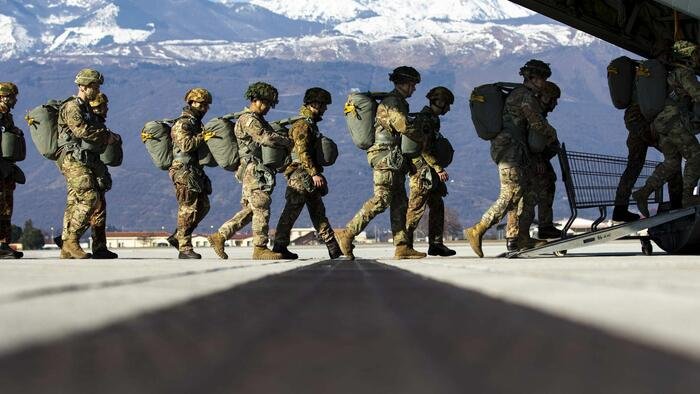
The potential withdrawal of US troops from Germany has sparked concerns in Italy, Spain, and Germany, where the presence of American military bases contributes significantly to economic growth and job creation. The economic advantages of US presence extend beyond direct spending, impacting areas such as defense capability and social welfare programs in Europe.
As Europe grapples with economic challenges and geopolitical tensions, the implications of a US exit from NATO go beyond defense capabilities, highlighting the interconnectedness of economic and security factors in the region.