
Oil prices have been falling for three consecutive days as the US announces plans to increase economic pressure on Iran, sparing its trading partners from harsher measures for now. Mediators are working to end the conflict, with efforts ongoing.
Haris Khurshid, Chief Investment Officer at Karobaar Capital LP in Chicago, commented on the situation, stating, “There was a lot of anticipation surrounding the announcement, but it turned out to be more of a warning about future policy direction rather than an immediate supply shock. Until secondary sanctions impact who can purchase, transport, or finance Iranian crude, traders are unlikely to see a significant geopolitical risk premium.”
Oman and Iran have discussed reopening the Strait of Hormuz under a temporary framework, according to statements from the countries’ foreign ministers.
The joint statement indicated that negotiations are ongoing for a permanent navigational corridor and future strait administration. However, analysts at ING caution that even with an agreement between Oman and Iran, oil flows through the strait are unlikely to return to prewar levels without the US lifting its blockade on Iranian ports and easing sanctions.
Key points from the latest API and DOE reports:
-
API: Crude inventories increased by 4.2 million barrels, Cushing stocks rose by 1.0 million barrels, gasoline supplies decreased by 3.2 million barrels, and distillates fell by 459,000 barrels.
-
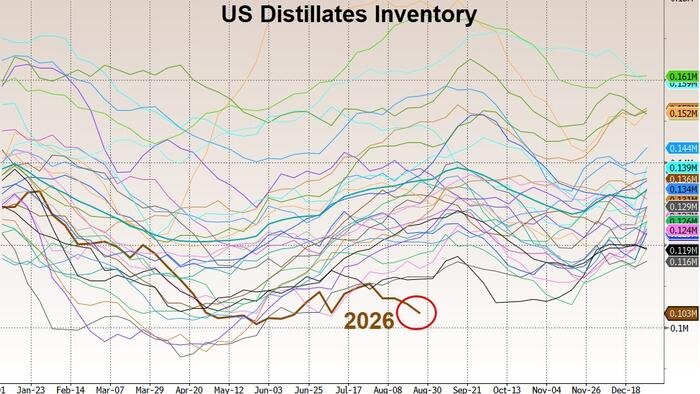
DOE: Crude inventories rose by 95,000 barrels (below the expected 500,000 increase), Cushing stocks increased by 1.18 million barrels, gasoline supplies dropped by 2.54 million barrels, and distillates decreased by 2.23 million barrels.
The Trump administration has continued to draw down Strategic Petroleum Reserve (SPR) stocks, reducing them by 3.6 million barrels to 289.7 million barrels. This brings the reserves close to the minimum operational level of 250-300 million barrels.
US crude imports from Saudi Arabia have picked up, although they remain below peak war levels. Crude exports have fallen below 4 million barrels a day, a critical threshold for market demand assessment.
US crude production remains near record highs, and refining utilization rates are at their highest seasonal level since 1998. Gasoline demand is normal for this time of year.
WTI crude oil prices have fluctuated around $81.50, down from recent highs, as the war in the Middle East continues to disrupt oil and fuel shipments. Premiums over crude have risen due to geopolitical tensions and conflicts, but crack spreads are starting to decline.
Large volumes of crude continue to pass through the Strait of Hormuz with satellite signals turned off, helping to stabilize prices amid expectations of a price surge at the conflict’s onset.