

The U.S. Department of Justice (DoJ) has brought charges against two engineers at Robinhood for engaging in insider trading related to cryptocurrency listings on the platform. According to Jamie McDonald, the U.S. Attorney for the Southern District of New York (SDNY), the accused individuals profited over $50,000 each by trading on confidential information.
Utilizing confidential information for personal gain in the derivatives markets is illegal.
McDonald emphasized that corporate insiders cannot circumvent securities and commodities laws by trading based on misappropriated information in derivatives like perpetual futures, tokenized securities, or similar financial instruments.
DoJ Cracks Down on Crypto Sector
The two engineers, Hefu Chai and Huaisong Xiang, face charges of commodities and wire fraud for front-running crypto tokens set to be listed on Robinhood Crypto. They allegedly traded these listings on Hyperliquid, a popular platform for perpetual futures, before the information was made public by Robinhood.
While not all crypto token listings lead to significant price movements, certain announcements on platforms like Upbit and Binance have triggered substantial volatility. However, Mikko Ohtamaa, co-founder of Trading Protocol, noted that the impact of Robinhood listings was less pronounced.
I don’t believe Robinhood listings had a significant impact on prices, except perhaps for certain tokens like CASHCAT (not listed), so their actions may have been in vain.
Among the tokens listed on Robinhood are POPCAT, Aster [ASTER], Hyperliquid [HYPE], and Ethena [ENA], among others.
Apart from Robinhood, the DoJ has been actively pursuing alleged criminal activities in the crypto space. Recently, a New York judge allowed RICO claims against memecoin launchpad Pump.fun to proceed, as victims alleged manipulation and favoritism towards insiders within the ecosystem.
Not only are platforms being targeted, but market makers involved in pump-and-dump schemes are also facing aggressive scrutiny from the justice system.
The impact of the incident involving Robinhood engineers on the platform’s reputation and user engagement remains uncertain.
Success of Robinhood’s Memecoin Strategy
In the third quarter, Robinhood embraced memecoins to propel its L2 initiative towards tokenization. Despite the ongoing scrutiny of memecoins and insider trading, Robinhood’s strategy appears to be yielding positive results, with the platform dominating tokenized stock trading volumes in September with over 60% market share.
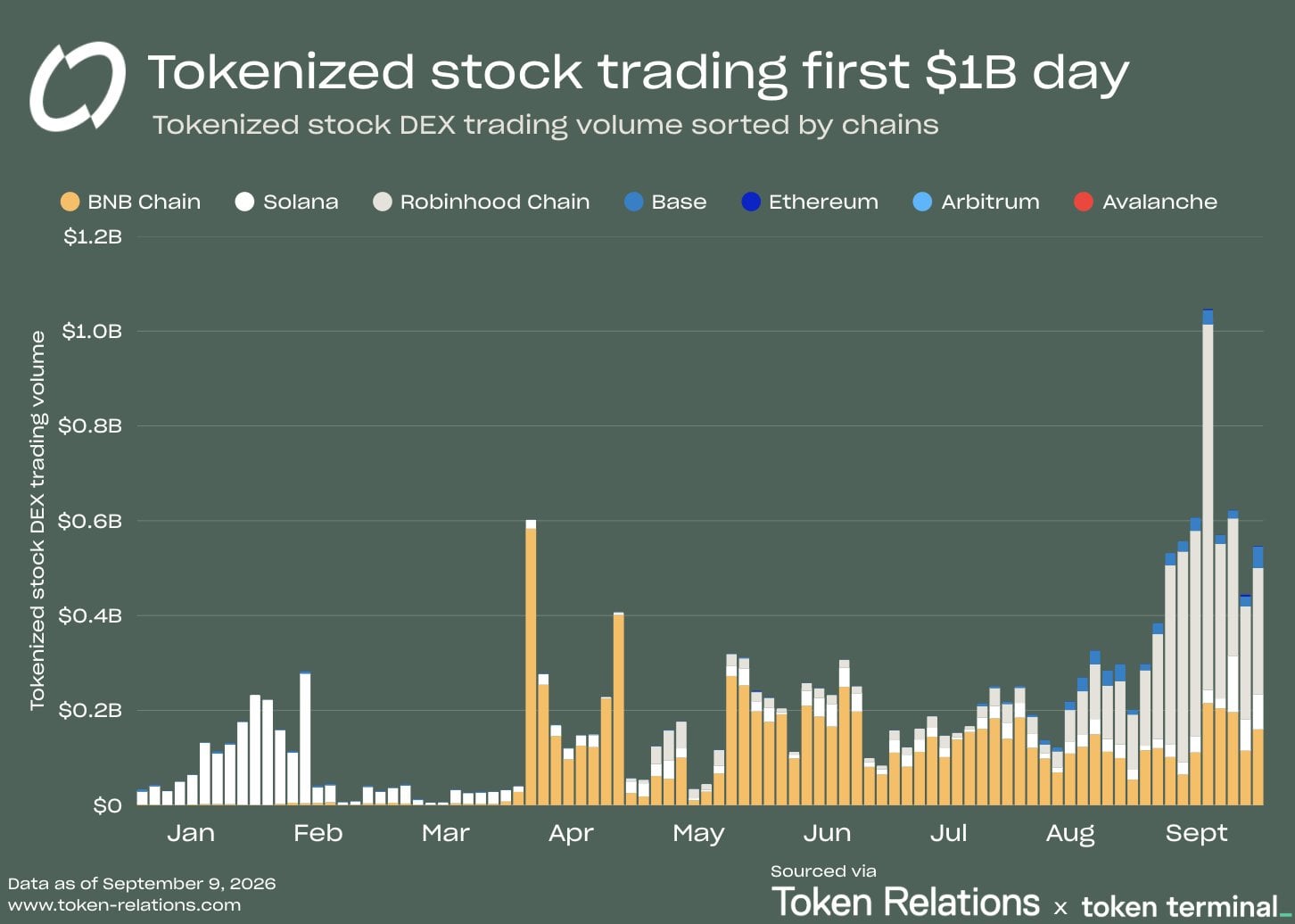
The DoJ’s crackdown on front-running and insider trading within the crypto sector indicates a proactive approach to combating scams, fraud, and protecting victims.
Key Takeaways
- Two Robinhood engineers face fraud charges for profiting from insider trading related to crypto listings.
- Robinhood’s focus on memecoins has propelled its dominance in tokenized stock trading, despite ongoing scrutiny.