
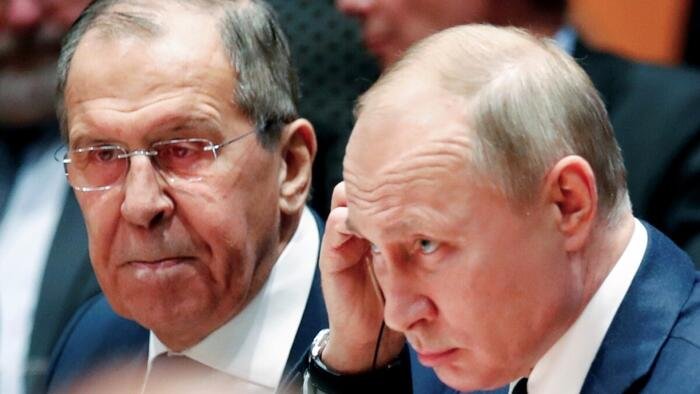
The article by Larry C. Johnson via SonarIntelligence (Sonar21) discusses the hardening of Russia’s stance on Ukraine following recent events. In mid-September, the Kremlin hinted at the possibility of resuming negotiations after the State Duma elections. However, after the elections ended on September 20, both Putin and Lavrov shifted their positions, making a negotiated end to the conflict more challenging.
The turning point was Ukraine’s drone campaign on election day, which resulted in significant damage in Moscow. Putin highlighted several Ukrainian escalations, indicating that Russia had responded effectively. He stated that Russia would now think twice before resuming negotiations, basing any decision on its own interests.
Lavrov reinforced this stance at the Security Council meeting on Ukraine, stating that there would be no pause in the military operation for negotiations. He dismissed calls for an immediate ceasefire and blamed Europe for the conflict, ruling them out as a negotiating party.
At the UN General Assembly, Lavrov portrayed Europe as the enemy, accusing the EU of militarizing for war with Russia. He suggested that European war preparations could lead to conflict, ruling out Europe as a legitimate interlocutor in negotiations.
Despite discussions with the US Secretary of State, no concrete agreement was reached. Putin expressed dissatisfaction with the deteriorating relations between Russia and the United States, contrasting it with the growing trade relationship with China.
In addition to diplomatic hardening, Russia has increased military pressure on Ukraine, imposing a de facto blockade of Ukraine’s Black Sea ports. This has significantly disrupted maritime traffic and raised the cost to Ukraine of refusing Russia’s terms. On September 12, Russia launched a series of attacks on the Odesa region using cruise missiles, ballistic missiles, and 129 drones, claiming to have targeted two cargo ships at Chornomorsk that were allegedly carrying weapons. This escalation prompted Ukraine’s acting foreign minister to accuse Moscow of attempting to transform the Black Sea into a “second Strait of Hormuz.”
During a meeting in St. Petersburg, Putin mentioned that Kyiv is seeking the lifting of the blockade as part of their concessions, indicating a reluctance on his part to grant this request promptly.
The air raids by Russia have intensified in Kyiv and other major cities, targeting various essential infrastructures like transport, production facilities, power plants, water sources, and communication networks. On September 23, a series of drone attacks in Kyiv resulted in casualties and significant damage. Zelensky reported the use of advanced drone models by Russia, causing disruptions in vital services like water supply on Kyiv’s left bank.
On the ground, Russian forces are pushing forward across the entire front, gaining ground as Ukraine’s defenses weaken. Ukraine’s General Staff reported numerous combat engagements on September 24, with Russian forces making advancements in different sectors. The situation is becoming increasingly dire as diplomatic efforts stall, leaving Ukraine vulnerable to continued pressure from Russia.
In summary, recent events indicate a hardening of Russia’s stance, with negotiations resuming solely on Moscow’s terms and timetable. Ceasefire requests from Ukraine are dismissed, and military pressure continues to escalate, including blockades, intensified airstrikes, and ground offensives. The evolving situation highlights the growing challenges faced by Ukraine as Russia’s aggressive tactics persist.
The evolving dynamics of the conflict are a cause for concern, with Moscow shifting towards a more assertive approach in its dealings with Ukraine. The need for diplomatic solutions remains crucial to avoid further escalation and bloodshed in the region.