

Solana [SOL] continues to struggle amidst a broader crypto market downturn triggered by the unexpected rise in U.S. inflation data on Wednesday.
The Consumer Price Index (CPI) for September exceeded expectations, climbing 3.7% year-over-year and raising concerns about high interest rates. This led to a surge in treasury yields and a strengthening U.S. dollar, putting pressure on riskier assets.
The challenging macroeconomic environment is coinciding with a slowdown in Solana’s ecosystem activity. DeFi tokens within the network, such as Jupiter [JUP] and Raydium [RAY], have experienced significant declines, with prices dropping by 9.4% and 10.6%, respectively.
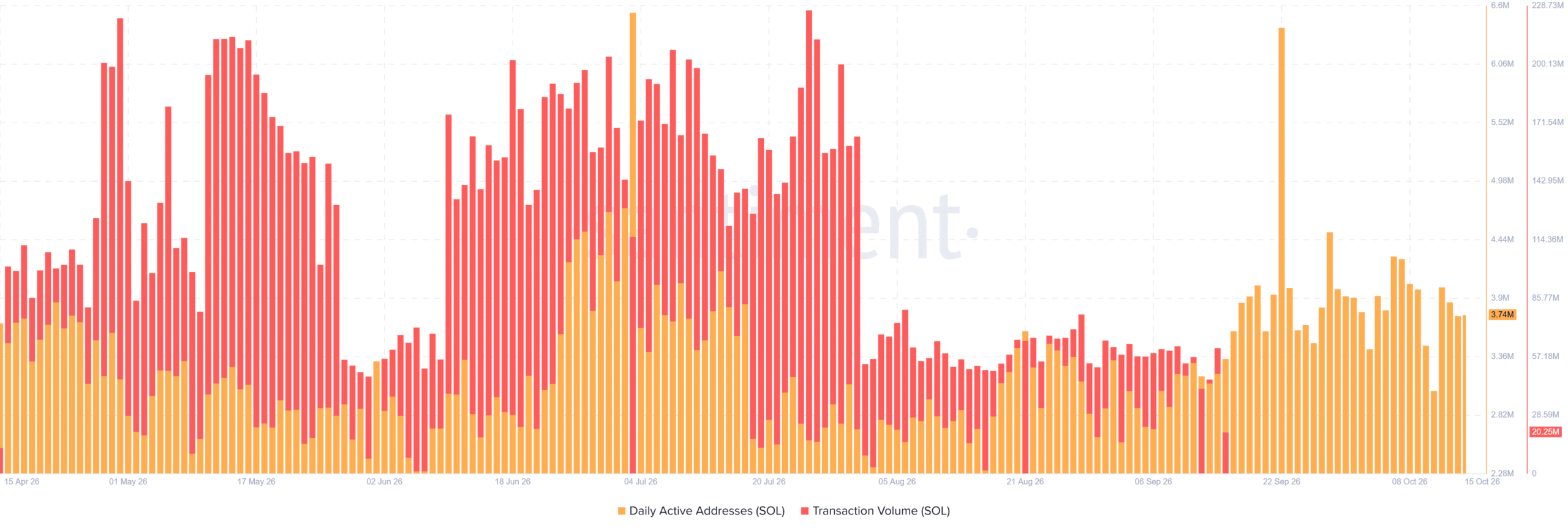
Reports indicate that the network’s transaction volume has reached a weekly low, while daily active addresses have also decreased, indicating a growing sense of caution among investors following the inflation report.
Signs of Caution in Network Activity
Solana’s transaction volume has fallen to $20.25 million, and daily active addresses have dropped to 3.74 million.
These declines suggest reduced participation as market players react to the macroeconomic uncertainties. Monitoring developments in the demand zone will be crucial as the price action remains closely tied to it.
Further decreases in active addresses and transaction activity could heighten concerns about weakening demand within the ecosystem.
Potential for a SOL Reversal
Given the current macroeconomic pressures and weakening network indicators, SOL faces a challenging environment. The effects of these deteriorating on-chain metrics and fundamentals are already visible on the daily chart.
SOL recently broke below a key ascending trendline support at around $111 and is now trading below both its 20-day and 50-day EMAs at $103. A further decline below the $100 psychological level could exacerbate the bearish momentum.
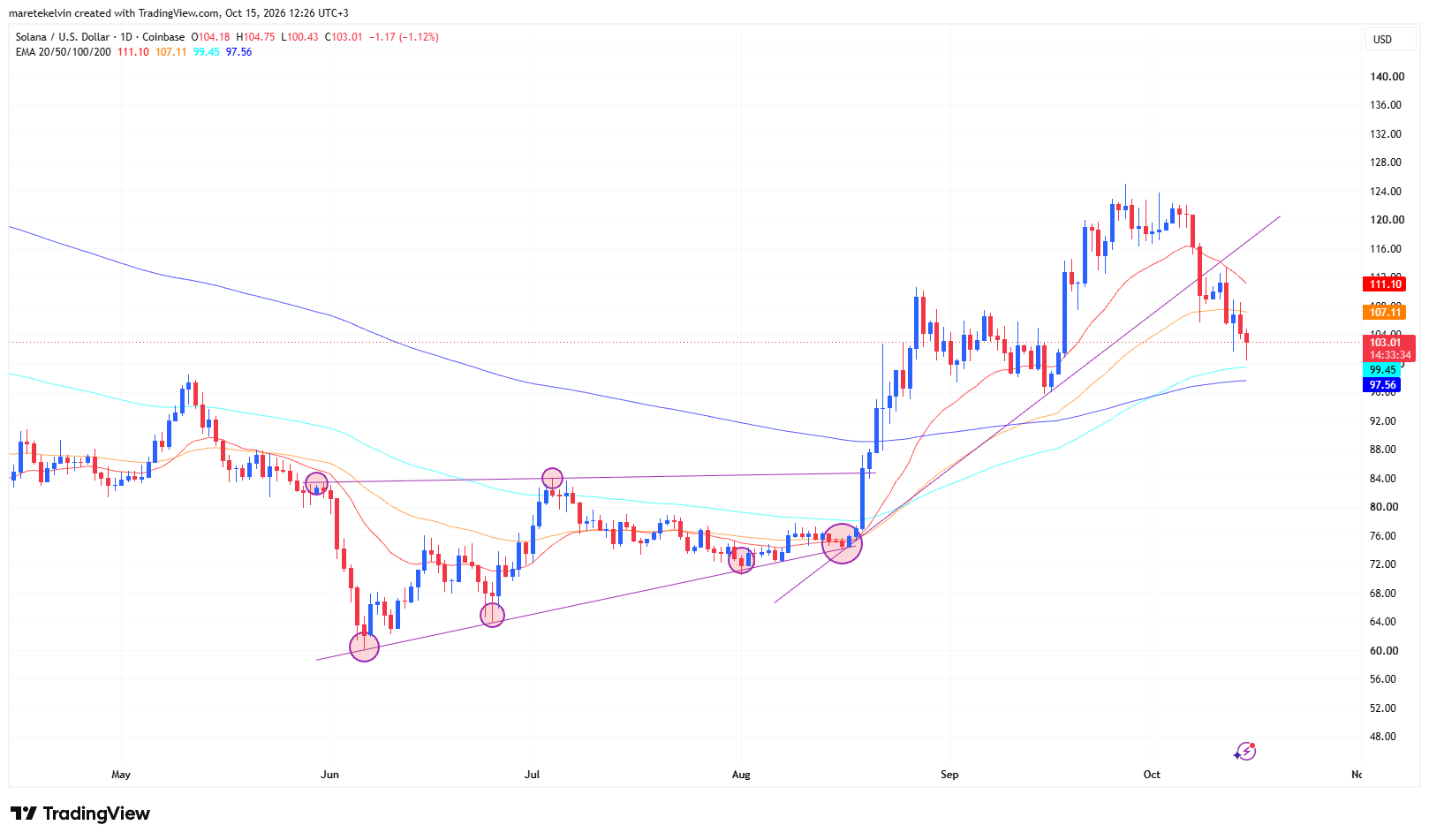
A recovery in market sentiment, coupled with increased network activity, could help stabilize SOL’s price. Conversely, sustained selling pressure and reduced ecosystem participation may prolong the correction.
The near-term outlook for SOL hinges on the return of buyers amid ongoing macroeconomic uncertainties affecting the crypto markets.
Key Takeaways
- SOL’s bearish trend persists following the uptick in U.S. inflation to 3.7% annually in September, surpassing the 3.6% forecast.
- Decreasing transaction volume and daily active addresses on Solana signal waning participation as traders and investors exercise caution.