
The evolution of warfare in Eurasia is undergoing a significant transformation with the rapid development and deployment of advanced technologies such as FPVs, ground robots, AI-enabled kill chains, and humanoid robots. These once futuristic weapons are now a reality on the modern battlefield, reshaping the dynamics of conflict across regions like Eastern Europe and the Gulf.
A notable development is the emergence of vast no-man’s-lands controlled by FPVs and ground robots equipped with AI kill chains, rendering traditional infantry vulnerable. In Ukraine, a 15-mile wide exclusion zone showcases the deadly efficiency of these autonomous systems in detecting and neutralizing threats.
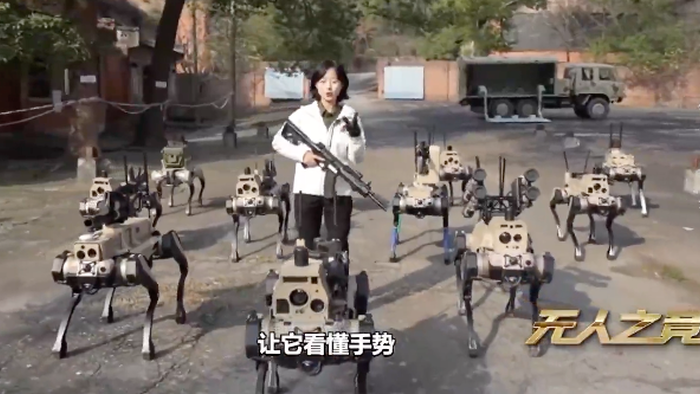
A new era of attritional warfare is unfolding, where expendable robots and drones take on frontline roles, reducing the exposure of human soldiers to direct combat. China’s advancements in robotic technologies, including the deployment of “robot wolves” armed with heavy weaponry for urban warfare, exemplify this trend.
The integration of real-time data sharing and collective decision-making capabilities in these autonomous systems raises ethical and strategic questions, particularly concerning the identification of friendly forces and civilians in chaotic environments.
Despite concerns about the increased reliance on autonomous weapons, there is a paradoxical potential for reduced casualties on future battlefields. War robots offer the advantage of rapid and decisive actions, minimizing prolonged engagements and human casualties in urban combat scenarios.
As conflicts evolve into machine-centric confrontations, human operators may find themselves increasingly removed from the front lines, overseeing robotic units remotely. The effectiveness and ethical implications of these technological advancements will shape the future of warfare in ways previously unimaginable.