
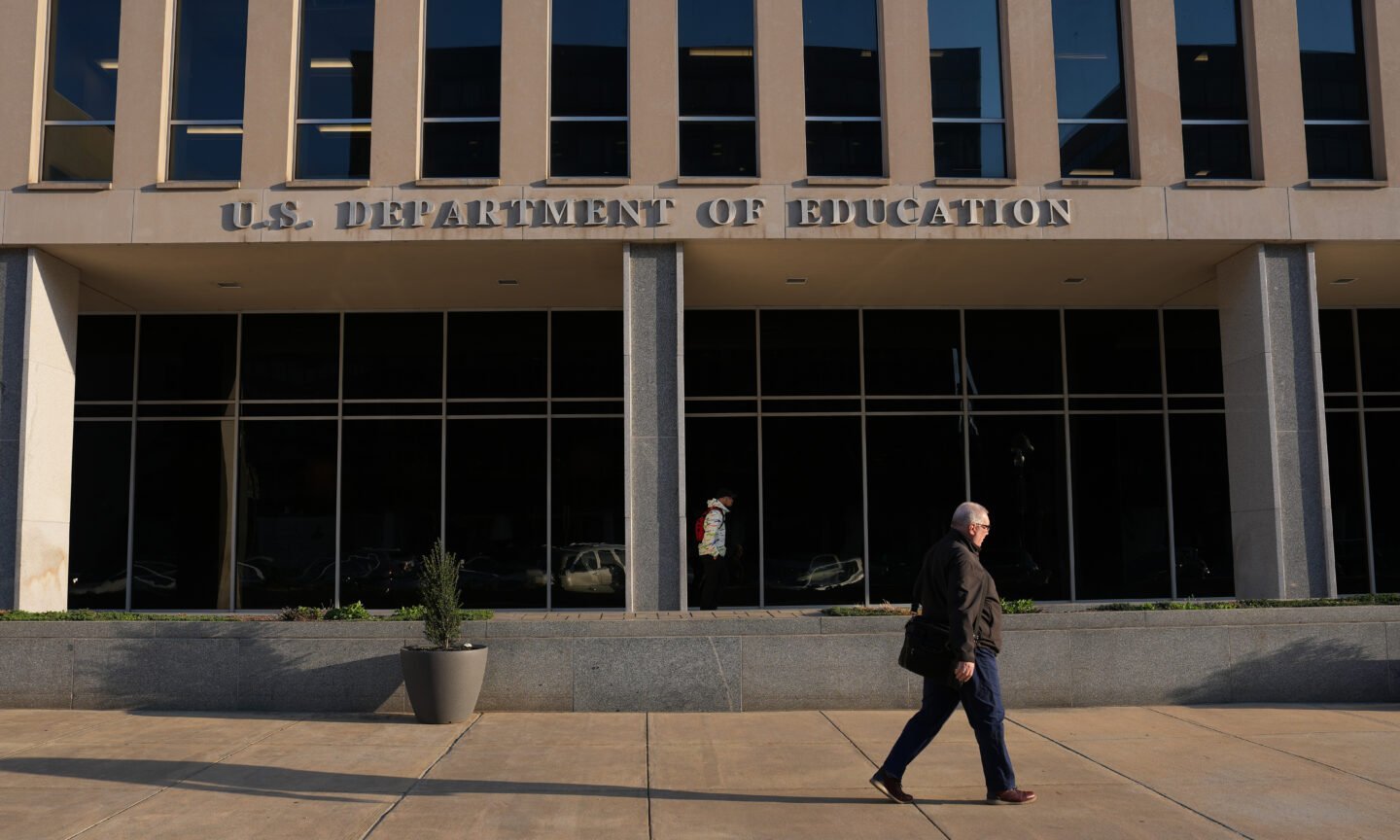
Exciting developments are on the horizon for the Education Department, as many of its duties are set to transition to other branches of the federal government. Let’s delve into what’s unfolding and what current and prospective students can anticipate.
What is happening to the Education Department?
The Trump administration issued an executive order on March 20 proposing the dissolution of the U.S. Department of Education (ED). This order aimed to transfer the ED’s responsibilities to state and local authorities. Prior to this, the ED had announced a significant reduction in its workforce, affecting almost 50% of its employees.
Despite these changes, the ED continued its operations and even launched the 2026-2027 FAFSA earlier than usual. Subsequently, partnerships with four federal agencies were unveiled on Nov. 18, allowing the ED to delegate some administrative and regulatory tasks. While these partnerships would essentially dissolve the ED, Congressional action is required to officially shut down the department.
Here’s a breakdown of the transitions:
-
Department of Labor (DOL) will assume responsibility for elementary through high school and postsecondary education, including vocational programs.
-
Department of Interior will collaborate with Tribal governments to manage education programs and schools for Native Americans.
-
Department of Health and Human Services will manage accreditation of foreign medical schools and provide on-campus childcare for student parents.
-
Department of State will oversee federally-funded study abroad programs.
When do these changes take effect?
The announcement regarding the reorganization of the ED and the transfer of its duties to other federal agencies was made in November. While a specific timeline was not provided, it is likely that the transition is already underway. Changes could be implemented as early as 2026.
What impact does this have on current students?
The potential elimination of the ED could affect various federal grant programs. While the department assures that these programs will not experience disruptions or changes in funding and eligibility criteria, several grants are set to be transferred to the DOL:
-
Gaining Early Awareness and Readiness for Undergraduate Programs (GEAR UP), which supports college preparation and scholarships for low-income students.
-
Augustus F. Hawkins Center of Excellence, which funds teacher training programs.
-
Title III programs, providing grants to historically Black colleges and universities (HBCU).
-
Howard University, an HBCU partially funded by the federal government.
-
Programs offering grants for college preparation and support to students with disabilities.
What impact does this have on future students?
Transfer of grant programs to the DOL is expected to enhance workforce development, according to the ED.
With an annual shortage of 700,000 workers, the ED believes that collaborating with the DOL will improve workforce training, boost career development, and provide institutions with more resources for innovation.
For future students, this could mean increased funding opportunities for vocational careers.
However, changes in educational policies under the Trump administration’s One Big, Beautiful Bill Act may not be as favorable for student loan borrowers, especially those pursuing advanced degrees. Starting July 2026, most graduate loans will be capped at $20,500 per year. Graduate students in professional programs, as defined by the ED, will be eligible to borrow up to $50,000 annually. Notably, programs for nurses, physician assistants, and physical therapists are excluded from the current list of “professional” degrees outlined in the legislation.
What will happen to federal student loans?
The recent partnership announcement by the ED did not address the fate of the department’s nearly $1.7 trillion student loan portfolio, or the processing and distribution of federal student loans. Earlier discussions included the possibility of transferring federal student loans to the Small Business Administration or the Treasury Department. There are also concerns about selling parts of the federal loan portfolio to private investors.
As of now, federal student loans remain under the purview of the ED. While many ED programs are being transitioned to other agencies, the federal student loan system, from FAFSA to forgiveness, falls under the Office of Federal Student Aid (FSA). Given that it was established through legislation, moving the FSA to a different department would likely require Congressional approval. Critics have also raised concerns about privatizing aspects of the federal loan portfolio.
In summary, there are no immediate changes to federal student loans. However, it’s important to note that the One Big, Beautiful Bill Act introduced several alterations to loan repayment. For instance, the new Repayment Assistance Plan is set to replace current income-driven repayment plans, with these changes rolling out in July 2026.
Will FAFSA applications be affected?
No, FAFSA forms are still being processed by the Department of Education, so be sure to submit your application if you haven’t already. The 2026-27 FAFSA application is open with a deadline of June 30, 2027.
It’s advisable to complete your FAFSA early to maximize your eligibility for available aid. Colleges set their own FAFSA deadlines, with some having priority aid deadlines even earlier. If you are a dependent student, both you and your parents must complete the FAFSA form to be considered for federal, state, and institutional aid.