
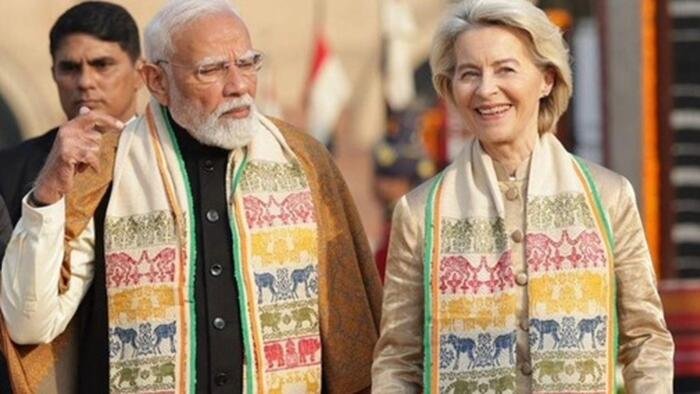
The recently signed India-European Union trade agreement is being celebrated as “the mother of all deals” after nearly two decades of negotiations. This agreement is expected to double EU goods exports to India by 2032 by reducing tariffs on 96.6% of EU exports. Prime Minister Narendra Modi and European Commission President Ursula von der Leyen both praised the deal, which creates a free-trade zone of two billion people.
Highlights of the agreement include the phasing out of tariffs on chemicals, machinery, electrical equipment, aircraft, and spacecraft. Tariffs on motor vehicles will be reduced to 10% under a quota of 250,000 vehicles, significantly larger than the quota granted to the UK. India will also lower tariffs on EU wine, beer, and olive oil.
The deal is expected to boost investment flows, improve market access, and deepen supply-chain integration between the two sides. Indian exports such as textiles, leather goods, marine products, handicrafts, gems, and jewelry will receive preferential access to the EU. The agreement also includes a mobility framework to ease restrictions on professional travel between India and the EU.
While Brussels and New Delhi celebrate the agreement, there are concerns about how the Trump White House will react, given its unpredictable trade policies. Criticism has also been raised regarding the immigration aspect of the deal, which allows Indians to work and study in Europe. Treasury Secretary Scott Bessent highlighted US concerns about the agreement, noting that the US has imposed tariffs on India for buying Russian oil while Europe signed a trade deal with India.
The European Right has expressed concerns about the influx of Indian workers and students to Europe, criticizing the Common Agenda on Migration and Mobility. Despite the controversy surrounding migration, the trade agreement between India and the EU marks a significant milestone in economic relations between the two regions.