
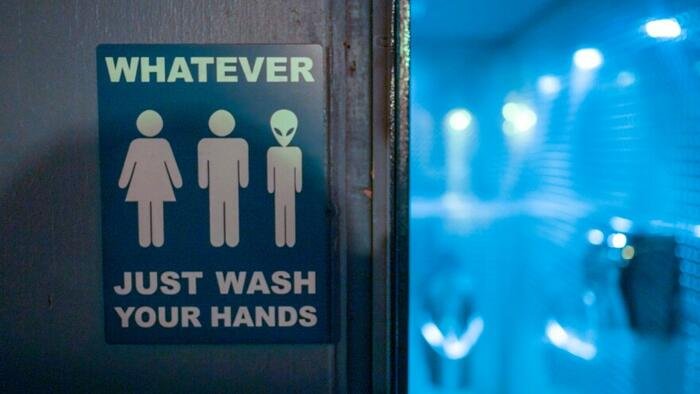
The Controversy Surrounding Transgender Bathroom Laws
Many view the transgender movement as a political movement rather than a civil rights movement, with leftist activists using “trans” as a political statement, even without gender dysphoria. Children can be influenced by such activists, leading them to declare themselves as trans to appease those around them.
The concept of gender being separate from biological sex is largely theoretical, lacking substantial scientific backing. In a scientific setting, gender identity claims are considered ideological rather than concrete. The transgender movement is seen as a way to deconstruct western society and introduce relative concepts, challenging objective reality.
While some states are passing laws to prevent the spread of transgender ideology, Idaho recently enacted strict bathroom laws requiring individuals to use facilities based on their biological sex. The law applies to both government buildings and private businesses, aiming to prevent male-to-female transgenders from entering women’s spaces.
Violating the bathroom law is a criminal offense in Idaho, with potential jail time as punishment. Several other states have similar laws in place, but Idaho’s legislation is among the most comprehensive. Exceptions are made for specific situations, such as emergencies or janitorial work.
Advocates believe these laws are necessary to protect the majority from being forced to comply with the demands of a minority group. By implementing stringent regulations and potential legal consequences, activists are deterred from infringing on the rights of others.
Ultimately, the debate surrounding transgender bathroom laws centers on the right to privacy and the maintenance of separate facilities based on biological sex. While every individual has the right to access restrooms, the laws aim to ensure that individuals do not force others to adhere to their personal beliefs.