
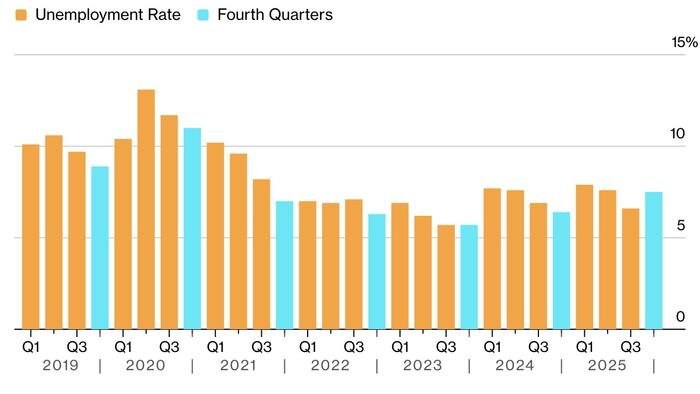
Argentina’s recent economic progress under Javier Milei may be faltering, as recent labor data indicates a weakening job market, as reported by Bloomberg.
Unemployment reached 7.5% by the end of last year, marking the highest fourth-quarter rate since the Covid pandemic began, reflecting a decline in employment conditions prior to the government’s labor reform.
New data reveals that unemployment in the formal sector saw its first increase in three quarters, while the percentage of workers in informal roles remained steady at around 43% of total employment.
Bloomberg reports that since Milei assumed office, Argentina’s formal private sector has lost over 200,000 salaried positions—equivalent to about 3% of its workforce.
Despite the government cutting thousands of public-sector jobs, the overall unemployment rate has not spiked as anticipated, partly due to more individuals turning to freelance or informal work to make a living.
In February, Milei achieved a significant political victory with Congress passing a revised version of his labor reform, aimed at decreasing hiring and firing expenses and introducing greater flexibility into the labor market. While investors welcomed the change, economists warn that immediate job growth is unlikely.
Given the slow economic activity, persistent weak consumer demand, and labor-intensive industries facing challenges as the economy reopens, any improvement in employment may require time to materialize.