
Authored by Alastair Crooke via The Ron Paul Institute
In the recent days, the Trump Administration has seized three tankers carrying Venezuelan oil or bound for Venezuela, such as the Bella1. The most notable seizure, in terms of legality, was a Chinese-owned, Panama-flagged vessel reportedly bound for China, not on any sanctions list.
In a separate conflict area, the Security Service of Ukraine (SBU) claimed to have attacked a Russian “shadow fleet” tanker, the Qendil, with aerial drones in the Mediterranean Sea off Morocco. President Putin vowed retaliation for the attack.
These actions are seen as acts of war, aimed primarily at China (with interests in Venezuelan oil) and Russia, which has ties to Venezuela and Cuba. The transfer of weapons to Taiwan has further infuriated China.
The National Strategy Statement in relation to China is viewed as meaningless rhetoric, as China is treated as a threat. China and Russia will interpret the Trump Administration’s actions rather than its rhetoric, leading to escalatory steps.
There is internal conflict within the Trump Administration, with differing views on Russia’s intentions towards Europe. Trump’s positioning towards conflict with China raises questions about his motives.
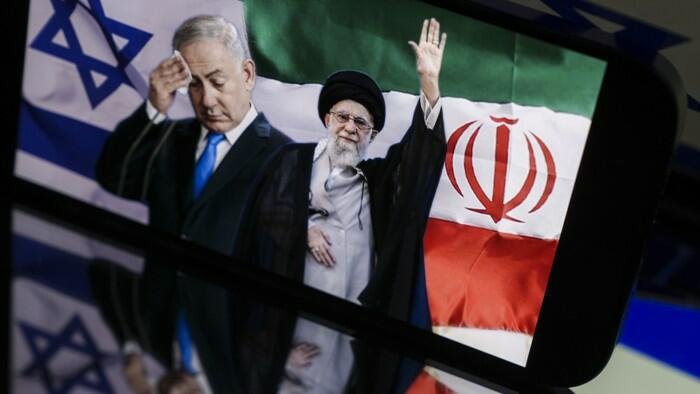
Seizing the Iranian tanker Bella 1 raises concerns about escalating tensions with Iran, potentially serving Israel’s interests. Netanyahu’s upcoming meetings with Trump may focus on Iran rather than Gaza or Hamas.
The new narrative being framed is focused on Iran’s ballistic missile industry and air defense systems, seen as a more immediate threat than the nuclear issue.
With the addition of a shield, the strategic problem posed by Iran becomes much more complex. It is important to note that Iran is not simply “rehabilitating” to return to its previous state, but rather to return in a different form.
The restoration of missiles and nuclear capabilities are interconnected, forming a single system that is a major concern for Israel. The development of missiles leads to the creation of a defense shell, which in turn enables the acquisition of nuclear power – a goal that Iran continues to pursue, even if it is publicly denied.
During his visit to Mar-a-Lago, Netanyahu will emphasize that Israel will not tolerate Iran building a defense umbrella that threatens sensitive sites. While Trump may focus on establishing a new regional order without getting entangled in a prolonged war, Netanyahu will likely stress the urgency of preventing Iran from strengthening its defenses.
Netanyahu has consistently maintained that the window of opportunity to address Iran’s growing power is closing rapidly. He will remind Trump that his presidency was not only intended to enhance Israel’s standing, but also to further Israel’s strategic interests in the region.
Merry Christmas, Donald!