
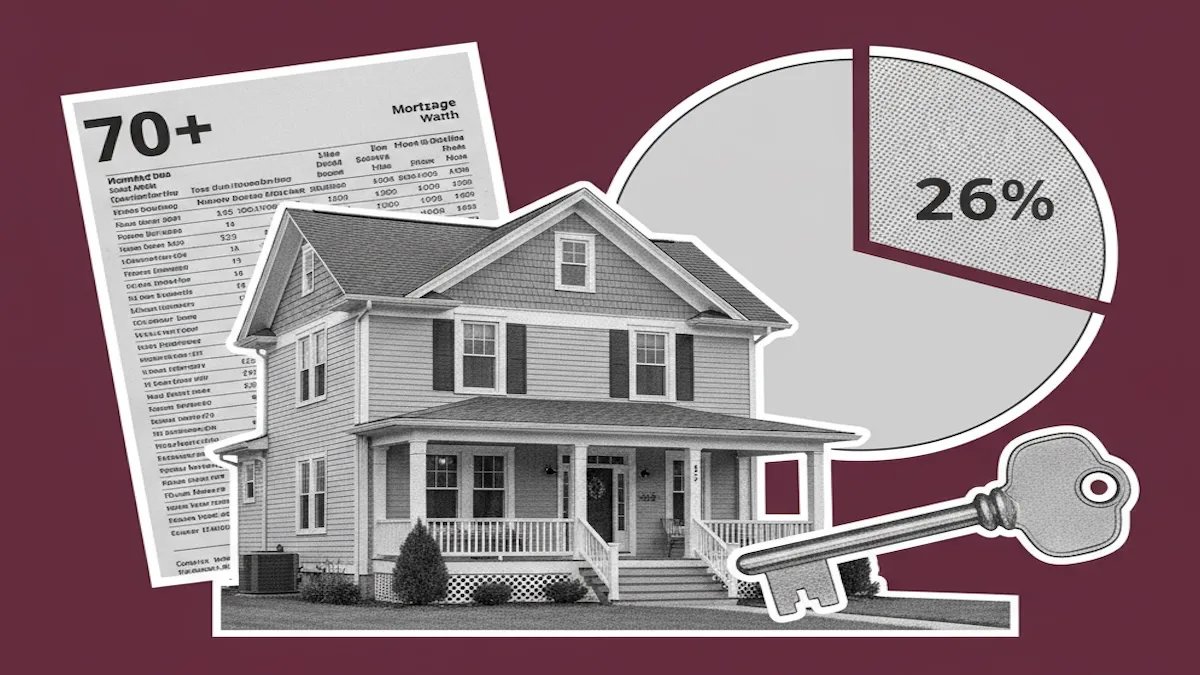
In the second quarter of 2025, a significant shift occurred in the housing market as older Americans surpassed the 40-to-54 age group in holding housing wealth, reaching a record high of just over 26%.
According to a report by Redfin, the 70-and-older demographic has been steadily increasing their share of housing wealth for decades. In 2005, this group held 16.6% of real estate wealth, which has now risen to 21.6%.
Currently, Americans in the 70-and-older age group hold approximately $13 trillion in housing wealth. In comparison, the share held by Americans ages 40 to 54 has declined over the years, from controlling 29.3% of real estate wealth a decade ago to 26% in 2025.
Although Americans ages 55 to 69 still hold the largest overall share at 35.3%, this figure has also decreased from 37.2% over the past decade.
Younger Americans under the age of 40 have seen minimal change, with a slight increase from holding 11.9% to 12.6% of real estate wealth in the third quarter of 2025.
Daryl Fairweather, Redfin’s chief economist, attributes this shift to long-term home price growth and the challenges faced by younger buyers in entering the housing market.
He stated, “Breaking into homeownership wasn’t an easy feat for baby boomers, who faced high inflation and high interest rates. But mortgage rates then entered a decades-long decline, fueling years of home price growth that benefited baby boomers. Those home price gains, along with a rebound in mortgage rates in recent years, have pushed homeownership out of reach for many younger Americans.”
The combination of higher home prices and elevated mortgage rates in recent years has made it increasingly difficult for first-time buyers to enter the market, leading to younger households purchasing homes later in life or delaying homeownership altogether.
However, there are indications that affordability pressures may begin to ease. Redfin reported a slowdown in home price growth compared to the surge seen during the pandemic-era housing market. Additionally, mortgage rates have decreased in recent months, with the average 30-year fixed rate approaching some of the lowest levels in over three years.
The company forecasts that income growth could potentially outpace home price increases in 2026, which could improve conditions for buyers who have been priced out in recent years.