
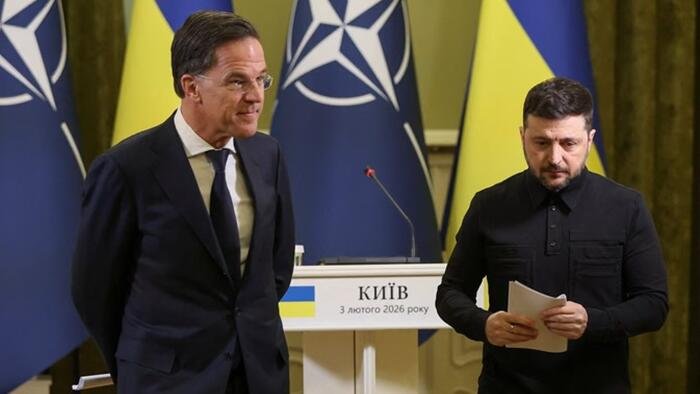
NATO Secretary General Mark Rutte has announced that a “coalition of the willing” will deploy forces across Ukraine on land, sea, and in the air once a peace agreement with Russia is signed. This move would involve Western boots, jets, and naval assets following any ceasefire, in order to provide binding commitments and security guarantees to prevent future Russian aggression. Rutte’s statements are in line with the Western and European stance on what a final peace deal for Ukraine would entail.
The Kremlin has predictably rejected this proposal, citing concerns about NATO troops being stationed on its border and NATO expansion. Rutte’s remarks, made before Ukraine’s parliament, also mentioned that other NATO states would offer support in a secondary role to the boots on the ground. However, Russia has warned that foreign troops in Ukraine could provoke a military response and become targets for Russian action, going against its stated ‘red lines’.
Foreign Minister Sergey Lavrov has strongly opposed the idea of foreign military intervention in Ukraine, stating that it would escalate tensions and lead to further conflict. Rutte has also called for more equal burden-sharing among NATO allies, praising the contributions of countries like Norway, Holland, Germany, Denmark, Canada, and Sweden.
Despite efforts to reach a peaceful resolution, negotiations between the US and Russia remain deadlocked. European leaders are standing firm on their positions, while some US officials believe that European reluctance to make concessions is hindering progress towards peace. President Trump has the ability to pressure Ukraine into making land concessions, but it is unclear if he has taken any significant steps in this direction.
In a show of solidarity, Rutte addressed the Verkhovna Rada with words of encouragement for Ukraine, garnering a standing ovation. This display of support highlights the ongoing conflict and the challenges in finding a resolution to the war that has claimed countless lives over the past five years.