
Although social currencies are clearly applicable, their full potential in blockchain use cases has yet to be explored.
During the last crypto cycle, there was some experimentation with the concept of social currencies. However, these attempts faced challenges related to product-market fit and regulatory issues, preventing them from gaining widespread adoption.
Builders in Brazil believe they have the right elements to implement blockchain-based social currencies in real-world scenarios, particularly in communities already familiar with such alternative systems.
A new collaboration between Chainlink, Plexos Institute, and the EDinheiro Institute aims to enhance financial services for underserved communities in Brazil by introducing a blockchain layer to existing social currency networks.
Community Currencies: A Tradition Dating Back to Civilization
Social currencies have existed for as long as human civilization, designed for specific people, purposes, and geographic regions or online communities.
For example, “dining dollars” issued to college students can only be used for meals on campus or at participating restaurants in the local area, illustrating the restricted nature of social currencies.
While blockchain technology simplifies the creation, transfer, and elimination of currencies, there has been limited real-world experimentation with other blockchain applications.
Early social token platforms like Roll and Rally allowed creators to launch tokens to reward followers and drive engagement. While these platforms achieved some success, they faced regulatory and product-market fit challenges.
Other projects like Friends with Benefits and Seed Club have also explored social tokens with community governance features.
CoinDesk, a crypto media company, even experimented with its own social token called DESK in 2021-22, rewarding participation in CoinDesk conferences with loyalty rewards that could be redeemed for NFTs and exclusive access.
Is Brazil a Prototype for Blockchain-Based Social Tokens?
Local innovators in Brazil believe that blockchain-based social tokens can find a place in the real world, given the country’s existing social currency experiments. The EDinheiro Institute has facilitated over 180 social currency projects in the last three decades, providing a platform for communities to issue and redeem currencies with a legal framework in place.
These currencies support social aid, local commerce, economic stimulation, and financial inclusion for individuals and businesses marginalized by traditional banking systems.
Camila Rioja, President of the Plexos Institute, is spearheading the initiative to introduce blockchain technology into these established currency networks, leveraging the existing consumer and merchant base.
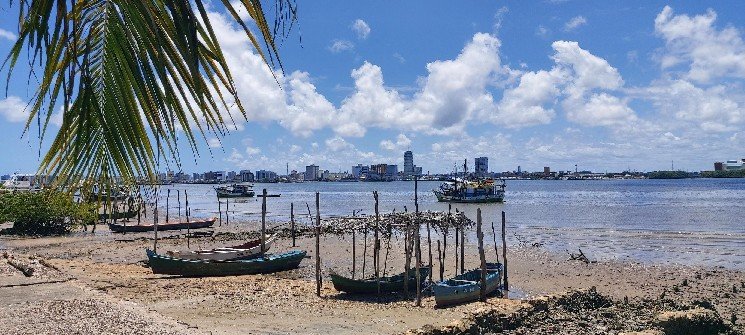
In their initial trial, Plexos, Chainlink, and EDinheiro are creating a new blockchain-based social currency called Aratu in Indiaroba, a small community in Brazil’s northeast region.
Rioja emphasized that the social currency concept is well-suited for this scenario due to its proven success at the local level:
“This isn’t a new startup concept. It’s a functioning ecosystem that has been operational for over 30 years. Our goal is not to reinvent the wheel but to enhance a proven model with transparency and modern governance.”
Strengthening the Local Economy
Unlike speculative crypto tokens, Aratu and Brazil’s other social currencies are pegged 1:1 to the Brazilian real, governed by local authorities, supported by local banks, and structured with legal frameworks that prioritize community autonomy.
Transaction fees, typically 2-3%, generated by these currencies are reinvested locally rather than being siphoned off by global payment processors.
Rioja explained, “This money remains within the community, supporting everything from small businesses to women-led enterprises like the marisqueiras in Indiaroba.”
Why Integrate Blockchain?
While the current system functions well, the integration of blockchain technology offers enhanced transparency and efficiency. Chainlink’s Runtime Environment serves as a secure connector, enabling automated reporting, compliance with data protection laws in Brazil, and potential new forms of community governance over fund distribution.
Thomas Trepanier, Head of Business Development LATAM & Canada at Chainlink Labs, stated that Chainlink uniquely provides transparency, accessibility, and connectivity to Brazil’s social currencies.
João Joaquim, Coordinator at the EDinheiro Institute, echoed this sentiment:
“By incorporating the Chainlink standard into EDinheiro’s established system, we demonstrate that cutting-edge technology can strengthen what truly matters: people and the solidarity economy.”
Adding a blockchain layer to social currency systems opens up opportunities for programmability and advanced products enabled by smart contracts. Rioja noted that while current legal frameworks dictate fund distribution, blockchain integration is the first step towards exploring advanced use cases like credit pools, microloans, and real estate financing.