
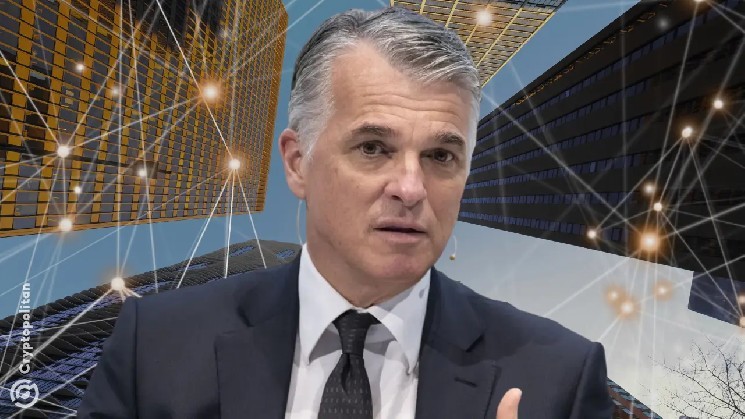
UBS Group AG CEO Sergio Ermotti has expressed his support for blockchain technology, stating that it will shape the future of the traditional banking industry. He believes that the technology has the potential to build trust among customers, encouraging them to entrust their assets to financial institutions.
In an interview with CNBC, Ermotti emphasized that blockchain technology can enhance operational efficiency for firms, leading to cost reductions and resource optimization.
Financial institutions are looking to incorporate digital assets
UBS Bank CEO asserts that “…blockchain is the future for the traditional banking business.”pic.twitter.com/WJJWeXceiR
— Dan Gambardello (@dangambardello) January 20, 2026
Previously, Ermotti warned that without blockchain technology, the financial sector would face continued pressure on profit margins. He urged financial institutions to prioritize strong capital, quality products, skilled personnel, and client advisory services to remain competitive.
Ermotti also predicts that blockchain technology will have a significant impact similar to that of regulatory reforms a decade ago. He emphasized the need for the technology to prove its reliability, especially in the realm of quantum computing.
“I do believe that Blockchain and that kind of technology is the future for the traditional banking business, and you will see a convergence of that.”
–Sergio Ermotti, CEO of UBS.
Ermotti has been a vocal advocate for blockchain technology, expressing more optimism about it than digital assets. He recently stated that the future of global banking will revolve around Bitcoin and other digital currencies.
He is confident that major financial institutions have shifted their focus from debating the relevance of cryptocurrencies to exploring safe and scalable ways to integrate Bitcoin into their services as they expand their offerings related to digital assets.
Ermotti advises financial institutions to diversify investment portfolios
During a panel at the World Economic Forum in Davos, Ermotti emphasized the importance of diversification in the current investment landscape, citing the absence of completely risk-free assets.
He noted that asset valuations are linked to geopolitical factors and acknowledged the challenge of diversifying away from U.S. assets due to the country’s economic strength. This discussion follows AkademikerPension’s decision to divest from U.S. government debt holdings.
Ermotti also commented on the ongoing market volatility, attributing it to trade disputes and geopolitical tensions. He highlighted the impact of uncertainty on investor confidence and warned about the difficulty of finding attractively valued assets across various categories.
Recent remarks by President Trump regarding Greenland led to stock market fluctuations, with precious metals experiencing price surges. Ermotti believes that until trade conflicts and geopolitical issues are resolved, investor confidence will remain shaky.
Despite the challenges, Ermotti expressed confidence in the long-term benefits of artificial intelligence. However, Harvard Professor Gita Gopinath cautioned about the valuation of AI and its implications on the global economy, drawing parallels to the dotcom era.