
Robinhood’s crypto arm has significantly increased its investment in blockchain infrastructure over the past year by expanding its product offerings to include tokenized stocks, staking products, and a forthcoming layer-2 network built on Arbitrum.
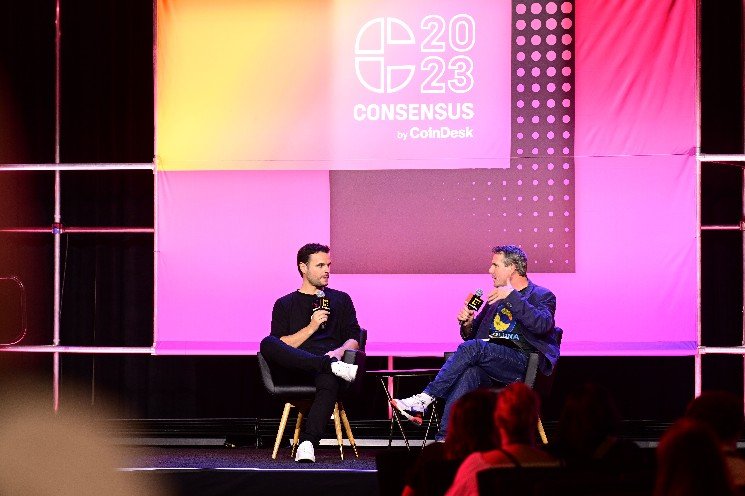
The retail brokerage surprised many in the crypto industry last year when it announced its plans to build its own blockchain infrastructure on top of Ethereum’s scaling ecosystem, rather than launching an independent layer-1 network. According to Johann Kerbrat, the firm’s crypto chief, this decision was driven by a desire to maintain focus. Kerbrat will be a speaker at CoinDesk’s Consensus Hong Kong conference next month.
“The main discussion for us at this point was, really, should we do an L1 or should we do an L2, and the reason why we decided to do an L2 was we wanted to get the security from Ethereum, the decentralization from Ethereum, and also the liquidity that is part of the EVM [Ethereum Virtual Machine] space,” Kerbrat explained. “We also wanted to be able to really focus on what we are good at, which is like building a feature that we are trying to launch, like stock tokens and other things.”
By leveraging Ethereum’s infrastructure rather than creating its own, Robinhood can address some of the most challenging technical issues. “That way we don’t have to focus on decentralization and security. This is kind of for free by Ethereum,” added Kerbrat.
Although Robinhood’s layer-2 chain is still in development, its tokenized stocks are already live on Arbitrum One, Ethereum’s largest rollup network. This strategic choice enables a seamless transition once Robinhood’s own chain goes live. “The beauty of the technology from Arbitrum is that the day the chain is live on Arbitrum One as well, we are going to be able to move all the assets, the liquidity, to the [new] chain,” said Kerbrat. “There isn’t really any kind of migration period or anything like that for us.”
The demand for tokenized stocks has been rapidly increasing since Robinhood launched the program in July, prompting the company to expand its offerings from 200 to over 2,000 tokenized stocks. Kerbrat noted that customers have been requesting access to a wider range of stocks beyond the initial selection.
In addition to tokenized stocks, Robinhood has also ventured into crypto-native products such as staking, which has gained popularity despite regulatory challenges in the U.S. “Staking was really one of our top requested features from our customers,” Kerbrat shared. The company initially introduced staking in Europe before expanding to the U.S. following updated SEC guidance.
Looking ahead, Kerbrat envisions tokenized assets transforming how yield is generated in both crypto and traditional finance. “I think yield is going to come because of the new assets that are coming onchain,” he predicted. “We do expect that with more stocks, private equity, real estate, all this, you will see new lending programs.”
Despite the fragmentation of blockchain infrastructure, Kerbrat believes that new layers will emerge to harmonize the ecosystem. “This technology is already starting to replace some of the foundations of traditional finance,” he stated. “The fragmentation is real, and you will see a new layer on top that harmonizes everything.”
For Robinhood, the primary focus remains on bringing new asset classes onto the blockchain, emphasizing the importance of expanding access to diverse investment opportunities.
Read more: Robinhood leaning into advanced traders as crypto volatility reshapes user behavior