
Close Menu
  • Home
  • Economic News
  • Stock Market
  • Real Estate
  • Crypto
  • Investment
  • Personal Finance
  • Retirement
  • Banking

Subscribe to Updates

Get the latest creative news from FooBar about art, design and business.

What's Hot

Institutions Building on Base as SMBC Nikko Joins Forces

October 14, 2026

Two Emirati Ships Sink In Hormuz In Under 24 Hours As IRGC Claims 5-6 Vessels Targeted Nightly

October 14, 2026

6 DIY Driveway Ideas to Refresh Your Curb Appeal

October 14, 2026
Facebook X (Twitter) Instagram
  • Contact Us
  • Privacy Policy
  • Terms Of Service
Wednesday, October 14
Doorpickers
Facebook X (Twitter) Instagram
  • Home
  • Economic News
  • Stock Market
  • Real Estate
  • Crypto
  • Investment
  • Personal Finance
  • Retirement
  • Banking
Doorpickers
Home»Economic News»US Expands Lockheed Martin–Built Spy Blimps Over Caribbean
Economic News

US Expands Lockheed Martin–Built Spy Blimps Over Caribbean

November 3, 2025No Comments2 Mins Read
Facebook Twitter Pinterest LinkedIn Tumblr Email
Share
Facebook Twitter LinkedIn Pinterest Email

The Trump 2.0 era has seen a resurgence in Western Hemisphere defense, with a focus on safeguarding the homeland and the region as the world becomes increasingly volatile. This shift, known as “Monroe Doctrine 2.0,” marks a reorientation of U.S. defense priorities away from the Middle East.

One area of particular focus is the Caribbean Sea, especially off the coast of Venezuela, where there has been a significant buildup of U.S. military assets. This includes missile destroyers, soldiers, sailors, surveillance aircraft, and even possible dry bomb runs by B-1 bombers.

An interesting development is the deployment of high-altitude surveillance blimps equipped with advanced radar systems. These blimps provide real-time situational awareness across the region, enhancing the capabilities of the Caribbean Air and Marine Operations Center and other command-and-control hubs.

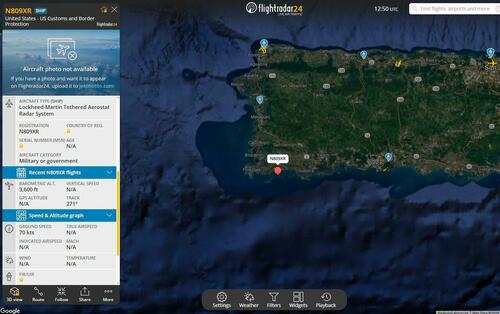
Defense Blog reports that the United States has increased the use of its tethered aerostat radar system in Puerto Rico, providing persistent airborne surveillance in the Caribbean amid growing security concerns.

The long-standing system, equipped with Lockheed Martin’s Tethered Aerostat Radar System (TARS), has been flying more frequently in recent weeks, according to defense monitoring sources.

The Puerto Rico TARS site now serves as a forward radar post, enhancing the U.S. military’s surveillance network and supporting military, Homeland Security, and counter-smuggling operations in the region at a lower cost than conventional patrol aircraft or warships.
The expanded deployment of TARS is a clear indication of the strengthening of hemispheric operations, providing an early-warning sentry for both narcotic and national security operations.

Loading recommendations…

Blimps Caribbean ExpandsLockheed MartinBuilt Spy
Share. Facebook Twitter Pinterest LinkedIn Tumblr Email

Related Posts

Two Emirati Ships Sink In Hormuz In Under 24 Hours As IRGC Claims 5-6 Vessels Targeted Nightly

October 14, 2026

Nobody Goes To War For The Rules-Based Order

October 14, 2026

491 Fugitives Hiding In Public Housing Arrested In Nationwide Sweep

October 13, 2026
Add A Comment
Leave A Reply Cancel Reply

Top Posts

SIM Acquisition Corp. I Prices 20M Unit IPO at $10/unit

July 20, 202412 Views

Pepe and XRP for 1,000x Potential

May 3, 20256 Views

MSC World America Review: A Family-Friendly Ship

April 17, 202517 Views
Stay In Touch
  • Facebook
  • YouTube
  • TikTok
  • WhatsApp
  • Twitter
  • Instagram
Latest
Crypto

Institutions Building on Base as SMBC Nikko Joins Forces

October 14, 20260
Economic News

Two Emirati Ships Sink In Hormuz In Under 24 Hours As IRGC Claims 5-6 Vessels Targeted Nightly

October 14, 20260
Real Estate

6 DIY Driveway Ideas to Refresh Your Curb Appeal

October 14, 20260
Facebook X (Twitter) Instagram Pinterest
  • Contact Us
  • Privacy Policy
  • Terms Of Service
© 2026 doorpickers.com - All rights reserved

Type above and press Enter to search. Press Esc to cancel.