
Authored by Jeffrey Tucker via The Epoch Times,
President Trump is boldly facing the problem of high meat prices but also dealing with the financial strains on farmers themselves.
The issue is reconciling the two.
Lower prices are great for consumers but also add to the financial problems of small farmers.
Gradually, Trump has come to the conclusion that the real bottleneck is with meatpackers themselves, which is one of the oldest corporate monopolies in U.S. history.
He has posted the following:
“I have asked the DOJ to immediately begin an investigation into the Meat Packing Companies who are driving up the price of Beef through Illicit Collusion, Price Fixing, and Price Manipulation. We will always protect our American Ranchers, and they are being blamed for what is being done by Majority Foreign Owned Meat Packers, who artificially inflate prices, and jeopardize the security of our Nation’s food supply. Action must be taken immediately to protect Consumers, combat Illegal Monopolies, and ensure these Corporations are not criminally profiting at the expense of the American People. I am asking the DOJ to act expeditiously. Thank you for your attention to this matter!”
With this posting, he has put his finger on the problem. Rep Thomas Massie (R-Ky.) points out that “Four meat packers control 85 percent of the meat processed in the U.S.”
Immediately, however, friends of mine in the free-market movement cried foul. He is blaming private enterprise whereas these corporations should be left alone by government to do whatever they want. They treated Trump’s call for intervention as some kind of imposition of government force on the freedom of commerce.
Who is correct here?
Once you understand the history, which goes very deep, you can see that Trump has hit an important point.
The meatpacking industry has been consolidating since the 1880s. This was codified with the Pure Food and Drug Act signed into law by President Theodore Roosevelt in 1906, alongside the Meat Inspection Act.
It was the first federal law to regulate food and pharmaceutical products. It not only prohibited the manufacture, sale, or transportation of adulterated or misbranded food, drugs, medicines, and liquors, it forced inspection on all U.S. meat processing and laid the foundation for the modern Food and Drug Administration, or FDA. It thereby created or really codified the meat cartel in America, something that has vexed small meat producers ever since.
Part of the reason for the lack of understanding here traces to a false historical understanding.
In the conventional historiography, Upton Sinclair wrote the novel called “The Jungle” that exposed the evils of the industry. As a result, Congress intervened to clean up the industry with new regulations. This became the headline legislation and event that set the agenda for the construction of the entire regulatory state in the United States.
The trouble is that this history is not true. It’s a fable.
The real story was told by Murray Rothbard and many other economic historians. Keep in mind that meatpacking as an industry separate from farming and ranching was a relatively new development. Traditionally, the industry was vertically integrated such that the people who raised the animals also slaughtered and processed them. The meatpackers and processors were attempting to replace these traditional practices. There is nothing wrong with that except that they used government power to unfairly tilt the scales in their favor.
The problems began in the 1880s when meatpackers sought to penetrate European markets. Imports were banned because the Europeans did not trust the quality. The industry then went to the government to certify the cleanliness and safety of their meat. The scheme worked and set forth a model for a different kind of competition. Industry would unite with government as a way of assuring consumers and also driving up the costs of entry into markets such that small processing could not afford them.
As Rothbard writes:
“In February 1906, Upton Sinclair’s The Jungle was published and revealed many alleged horrors of the meat packing industry. Shortly thereafter, Roosevelt sent two Washington bureaucrats, Commissioner of Labor Charles P. Neill and civil service lawyer James B. Reynolds, to investigate the Chicago industry. The famous ‘Neill-Reynolds’ report that apparently confirmed Sinclair’s findings, in fact, only revealed the ignorance of the officials, as later congressional hearings indicated that they poorly understood how slaughterhouses worked and confused their inherently foul nature with unsanitary conditions.”
After “The Jungle” came out, J. Ogden Armour, owner of one of the biggest packing firms, defended government inspection of meat and said that the large packers had always favored and pushed for inspection. Armour wrote:
“Attempt to evade it [government inspection] would be, from the purely commercial viewpoint, suicidal. No packer can do an interstate or export business without Government inspection. Self-interest forces him to make use of it. Self-interest likewise demands that he shall not receive meats or by-products from any small packer, either for export or other use, unless that small packer’s plant is also ‘official’—that is, under United States Government inspection.”
There you have it. The big players in the industry actually favored government intervention.
Thomas E. Wilson, representing the large Chicago packers, said the following during the Congressional debate: “We are now and have always been in favor of the extension of the inspection, also to the adoption of the sanitary regulations that will insure the very best possible conditions. … We have always felt that Government inspection, under proper regulations, was an advantage to the live stock and agricultural interests and to the consumer.”
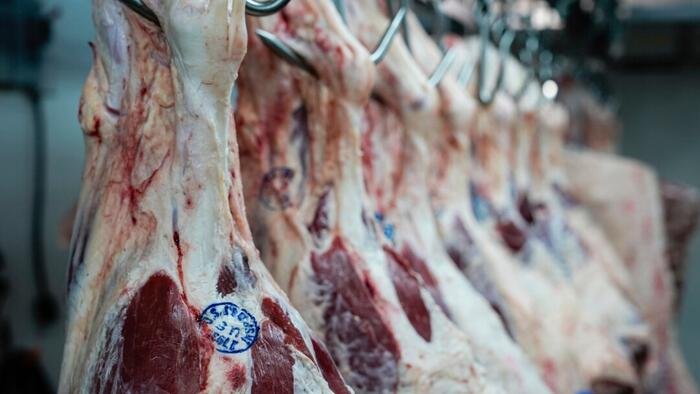
Imagine, that was 120 years ago, and we are still dealing with the same problem. No meat can be sold to the consumer without being processed by a plant certified by the U.S. Department of Agriculture. Even the quality of meats on the shelves are named according to official processing: USDA Prime, USDA Choice, and so on.
This has gradually put enormous pressure on small farmers who have to pay exorbitant prices for processing, when cheaper alternatives are readily available. Most small farmers would love to process their own meat on site and sell it directly to the consumers. But federal law forbids them from doing so.
This truth dates back to 1906 and remains relevant in today’s society. The current crisis we face is a direct result of this longstanding reality.
When it comes to safety concerns, federal regulations have not been effective in improving the situation. In fact, they have often worsened it. The outdated “poke and sniff” method used for safety inspections has been known to spread pathogens, yet it was utilized for decades. It is clear that without federal intervention, the meat industry would have been much safer.
It is refreshing to see that there is finally some dialogue surrounding this critical issue. The meat cartel must be dismantled. The most effective way to achieve this is by removing regulatory barriers to competition. Farmers should have the freedom to process and sell meat in the most advantageous way for them. This should be a straightforward concept for Congress to grasp.
One of the reasons this topic is so contentious is due to the lack of understanding of the true history of the U.S. meat industry. If more people were aware of this history, it would be evident how various federal agencies have become influenced by industry interests. In reality, these agencies were initially established to benefit big business. To truly support small businesses, we need to restore a genuine free market.
Loading recommendations…