

Update(1335ET): Iran is currently experiencing a complete blackout of internet services, which is impacting the flow of news footage and the functionality of ATMs. Reports indicate that people are attempting to access their bank savings despite the economic crisis, leading to empty supermarket shelves as protests escalate with incidents of fires, vandalism, and violence in various areas. The BBC reports that only a few videos have surfaced, showing clashes between protesters and security forces in different cities, along with a disruption in essential services such as access to cash and food supplies due to the internet shutdown.
The internet blackout in Iran has resulted in a significant lack of news coverage on the ongoing unrest in the country.
Limited videos from different cities depict confrontations between protesters and security forces, with reports of gunfire in the background and instances of property damage.
Residents in certain areas are rushing to stock up on supplies due to the uncertain situation, exacerbated by the inability to access cash through ATMs or make electronic payments.
Despite the turmoil, cigarettes seem to be readily available in the midst of the crisis.
* * *
The supreme leader of Iran has publicly accused the United States of fueling the unrest in the country, emphasizing that the government will not yield to external pressures. The ongoing protests have led to clashes between demonstrators and security forces, with reports of buildings being set on fire and security personnel being killed.
The Ayatollah condemned the protesters as vandals and emphasized the foreign influence behind the protests, as images of violence and destruction circulate. Amid rumors of potential foreign intervention, President Trump’s statements have added to the escalating tensions, with concerns about the Ayatollah’s safety and possible escape plans.
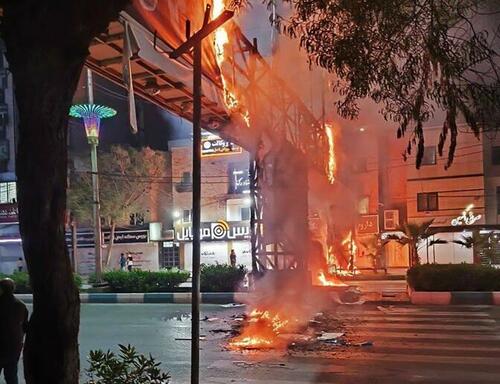
Despite the challenges, it is unlikely that the Supreme Leader would flee the country hastily, given the historical context of similar protests in Iran. The situation remains volatile, with the potential for further escalation as protests continue to unfold.
Reports indicate that the protests have not reached the scale of previous demonstrations, but the evolving situation could lead to significant developments in the coming days.
As the unrest intensifies, the international community closely monitors the situation in Iran, with conflicting reports and limited access to accurate information. Professional activist networks and external sources shape the narrative, contributing to the complexities of the crisis.
Israel’s involvement in supporting the protests adds another layer of complexity to the situation, with implications for the region’s stability and security. The role of external actors in influencing the protests raises questions about the potential for regime change and geopolitical implications in the Persian heartland.
Loading recommendations…