
By Bas van Geffen, senior macro strategist at Rabobank
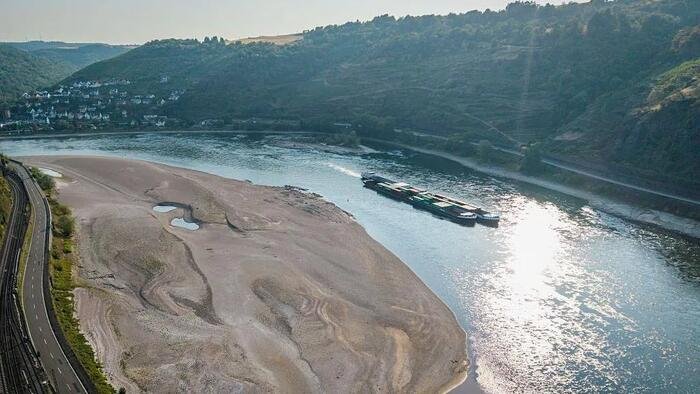
Yesterday, I went road cycling along the Lek River, a branch of the Rhine. The river was almost unrecognizable in the distance, with parts of the riverbed now dry. This visual reminder reflects the historically low water levels in the Rhine upstream at Kaub. The upcoming heatwave in Europe is expected to exacerbate the situation, with forecasts predicting a further drop in water levels.
Ships are already reducing cargo loads, and the drought is causing disruptions in inland shipping between Cologne and Frankfurt. This has led to increased shipping costs and challenges for companies in transporting goods. Additionally, diesel prices in Germany have risen recently.
Several German Bundeslander are suspending Sunday driving bans for trucks to mitigate the impact on local industry. However, the unreliability of the shipping route highlights the need for infrastructure revitalization. The drought’s effects on shipping costs and supply disruptions add to the challenges faced by German industry.
The situation also has implications for European plans to strengthen industries and reduce dependencies. Geopolitical tensions are rising as countries like China tighten travel restrictions to protect their technology secrets. These restrictions may clash with the European Commission’s Industrial Accelerator Act, which aims to ensure knowledge transfers in critical industries.
In the currency markets, interventions in the JPY exchange rate are losing effectiveness. The yen is gradually strengthening against major currencies, and further interventions may be needed to support it. The Bank of Japan is considering rate hikes to address interest rate differentials.
The Australian dollar faced volatility after the RBA decision, with traders interpreting the statement as dovish. However, RBA Governor Bullock indicated that further rate hikes may be necessary to control domestic demand and inflation.
Looking ahead, we anticipate that the RBA will raise rates again in November to manage the economy’s capacity and inflation expectations.