
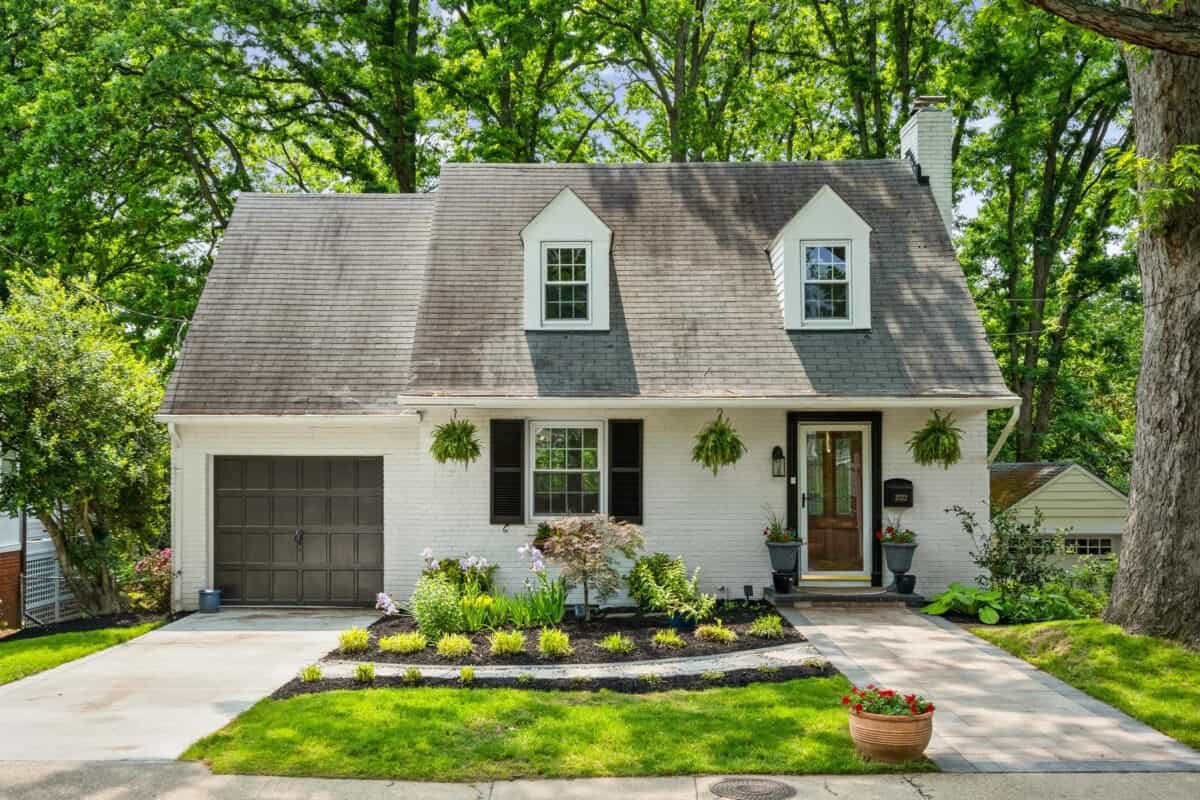
1. Colonial (1600s)
Colonial-style homes, dating back to the 1600s, feature symmetrical designs, evenly spaced windows, dormers, columns, and international influences. The exteriors are balanced and proportioned, with a centered entrance flanked by windows. With their timeless elegance and attention to detail, Colonial-style homes remain a beloved architectural style.
The symmetrical designs, functional layout, and central gathering spaces of Colonial homes, a prominent American house style, fostered a sense of community and facilitated social interactions. These homes provided self-sufficiency in heating and cooking, reflecting values of independence and resilience. By incorporating international influences, they celebrated cultural diversity and contributed to a sense of identity. Colonial homes shaped the way people lived, promoting practicality, social connections, and cultural pride in American house types.
While you can spot Colonial-style homes all over the US housing market, they are prominent in Boston, MA, Philadelphia, PA, Annapolis, MD, Williamsburg, VA, and Newport, RH.
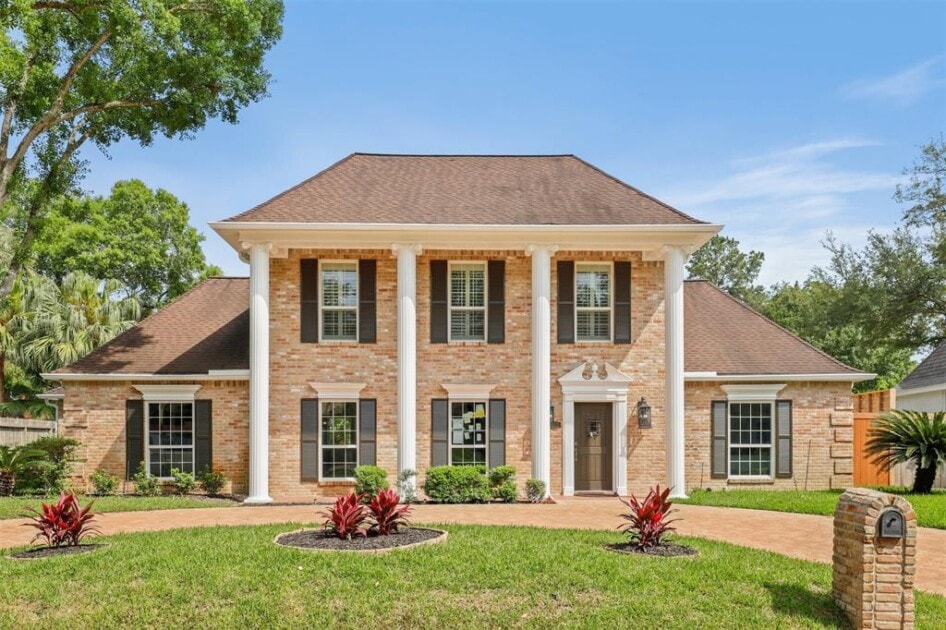
2. Neoclassicism (1780-1860)
Neoclassicism, one of the influential styles of homes in America, played a significant role in shaping the American lifestyle during its popularity between 1780 and 1860. The architectural style, inspired by ancient Greek and Roman aesthetics, brought a sense of order, balance, and elegance to homes. The emphasis on symmetry and rectangular shapes created a harmonious and visually pleasing environment in American house types. The front windows, often large and adorned with decorative elements, allowed natural light to fill the interiors and added a touch of grandeur.
Neoclassical homes symbolized refinement, sophistication, and a connection to classical ideals, reflecting the aspirations of the elite. This architectural style influenced not only the physical appearance of buildings but also the cultural values of the time, promoting a desire for cultural heritage, intellectual pursuits, and a sense of grandeur. Neoclassicism became synonymous with the pursuit of knowledge, art, and social status.
Some notable cities where you can find a significant number of Neoclassical-style homes include Washington, DC, New Orleans, LA, Charleston, SC, Savannah, GA, Richmond, VA, and Indianapolis, IN.
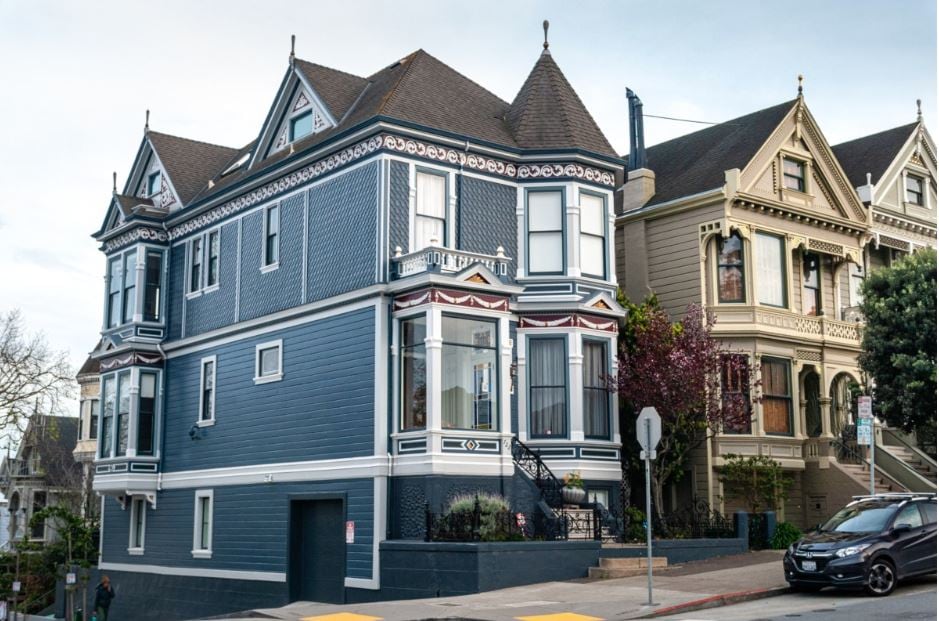
3. Victorian (1870s-1900s)
Named after Queen Victoria’s reign, Victorian homes have asymmetrical designs, gables, turrets, wraparound porches, and bay windows. Characterized by their intricate and ornate details, Victorian homes brought a sense of grandeur and opulence to neighborhoods across the US. The asymmetrical designs, gables, turrets, wraparound porches, and bay windows added a distinct charm and visual appeal to these houses.
“Victorian is less a single style than a sequence of them, running from the 1840s through about 1900 as Italianate gave way to the Second Empire and then to Queen Anne,” states David Marshall at The David Marshall Team. “What connected them was technology: balloon framing, machine-cut millwork, and rail distribution made ornament affordable, so brackets, bay windows, turrets, and spindle work appeared on ordinary homes that would have been custom luxury a generation earlier. Portland, Maine’s West End reads like a timeline of that progression. The Great Fire of 1866 reshaped the city, and the prosperous decades of rebuilding that followed landed squarely in the Victorian peak, leaving block after block of the era standing side by side.”
Victorian architecture reflected the values of the era, emphasizing wealth, status, and social sophistication. Additionally, the emphasis on decorative elements and ornamentation in Victorian design reflected the prevailing sentiment of romanticism and a desire for artistic expression. Victorian homes influenced architectural preferences, interior decor, and societal aspirations. They represented a desire for elegance, individuality, and the pursuit of a refined lifestyle.
San Francisco, CA, Galveston, TX, Savannah, GA, and Denver, CO are home to a substantial number of Victorian-style homes.
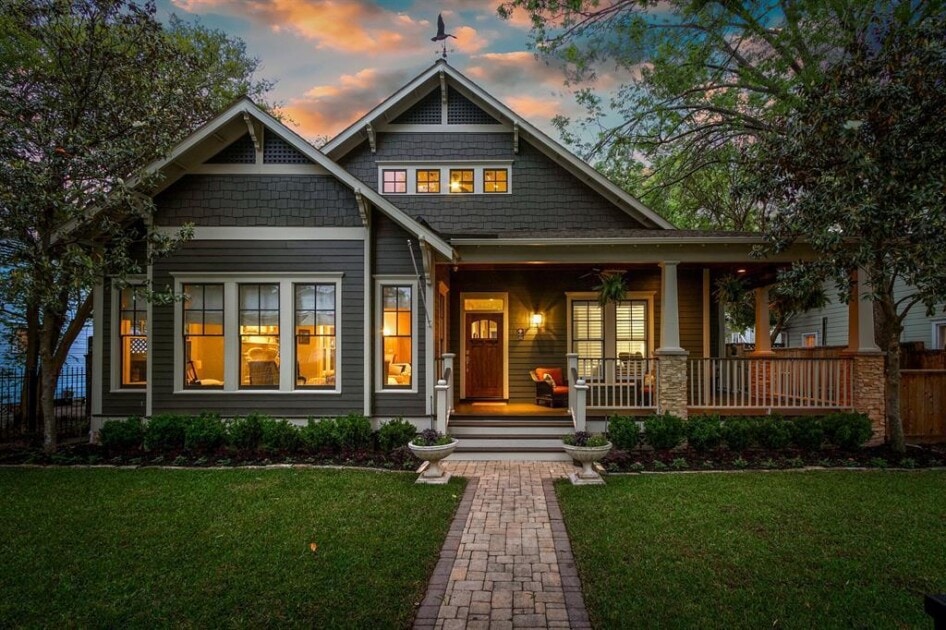
4. Craftsman (1905-1920s)
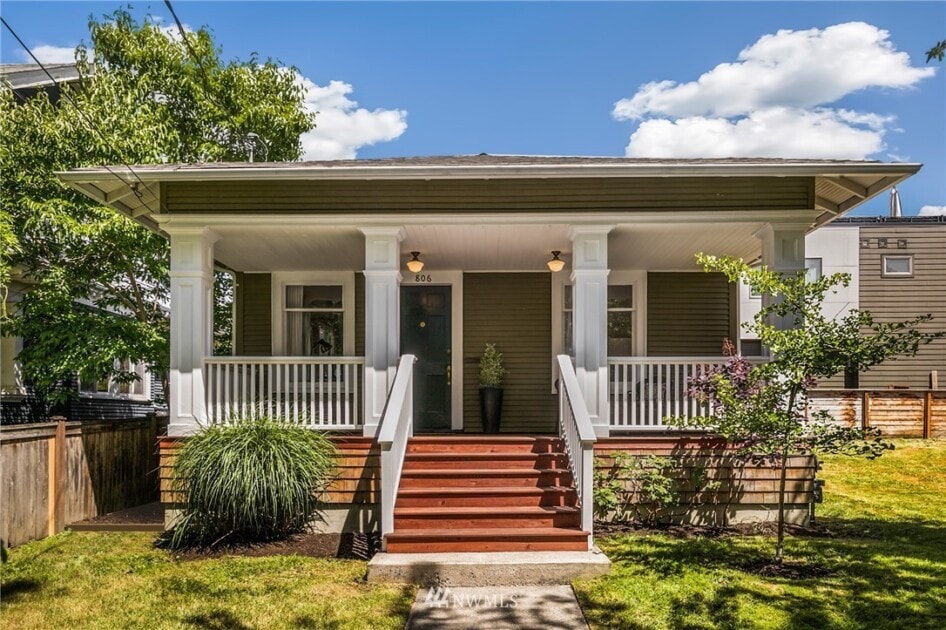
Rising in the early 1900s, Craftsman homes emphasize simplicity, natural materials, low-pitched roofs, wide front porches, and built-in features. As a response to the ornate and elaborate Victorian style, Craftsman homes emphasized simplicity, functionality, and a connection to nature. These homes were a reflection of the Arts and Crafts movement, which sought to celebrate skilled craftsmanship and the use of natural materials.
“Born in the late 19th century as a reaction to Victorian excess, the Craftsman style found its ideal home in the Pacific Northwest – where natural materials, skilled craftsmanship, and design in harmony with the landscape aligned perfectly with the region’s character,” says Elizabeth Wenning, interior design manager at Azori.
The emphasis on natural materials like wood and stone, as well as the low-pitched roofs and wide front porches, created a sense of harmony with the surroundings and a focus on the beauty of natural elements. The built-in features, such as bookshelves, cabinets, and window seats, showcased a practical and efficient approach to living spaces.
Craftsman homes promoted a lifestyle of comfort, craftsmanship, and a connection to the outdoors. They were designed to accommodate the needs of a growing middle class, with their functional layouts and emphasis on handcrafted details. Craftsman homes represented a shift towards a more relaxed and informal way of living, and their influence can still be seen in the popularity of bungalow-style homes today.
“More than a century later, the Craftsman ideal – that a home should be simple, functional, and built with dignity by skilled hands – continues to shape what buyers in the Pacific Northwest and beyond look for in a home,” Wenning adorns.
While craftsman homes are all across the US, you’ll find a significant number in Seattle, WA, Portland, OR, Asheville, NC, and several cities in California such as Long Beach, San Diego, Pasadena, and Berkeley.
5. Gilded Age (1880s-1930s)
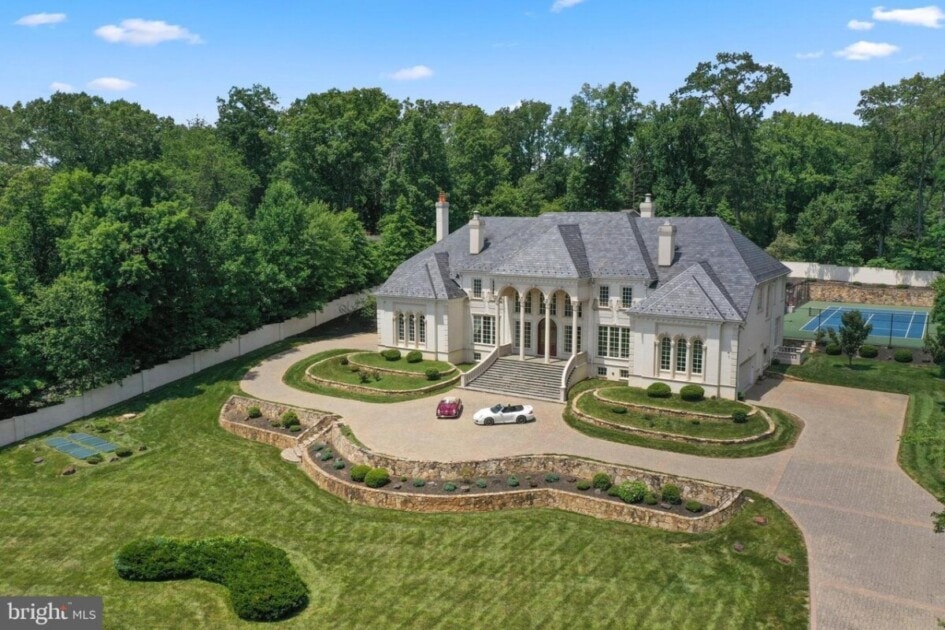
Built between 1880 and 1930, Gilded Age mansions showcased wealth with palatial estates, numerous rooms, and elaborate furnishings. These homes were designed to impress and were often adorned with intricate architectural details, ornate decorations, and lavish interiors.
However, with the onset of the Great Depression in the 1930s, the economic downturn and changing societal values led to a decline in the popularity of these extravagant homes. Many of them were abandoned or repurposed, marking the end of an era of excess and signaling a shift in lifestyle and priorities. Nevertheless, these Gilded Age mansions continue to be admired and preserved as architectural landmarks, offering insights into the extravagant lifestyle of the period.
Pittsburgh, PA, New York, NY, Lenox, MA, and Chicago, IL stand out as notable cities showcasing a considerable concentration of Gilded Age-style homes.
6. Bungalow (1900s-1930s)
Prominent from 1900 to 1930, bungalows are characterized by their single-story designs, typically featuring a low-pitched roof, wide porches, and a modest footprint. These homes were designed to be accessible and affordable, appealing to a broad range of homeowners. Bungalows promoted a more relaxed and informal lifestyle, emphasizing simplicity and functionality. They offered open floor plans, efficient use of space, and a closer connection to nature through their porches and large windows.
Bungalows provided an alternative to the more ornate and formal architectural styles of the past, aligning with a growing preference for a more casual and relaxed lifestyle. Today, bungalow homes continue to be cherished for their charm, versatility, and historical significance, representing an important chapter in architecture.
Bungalows can be found in many cities across the United States but are prominent in Minneapolis, MN, Milwaukee, WI, St. Louis, MO, Austin, TX, and Portland, ME.
7. Minimal Traditional (1930s-1950s)
Developed in the 1930s during the Great Depression, Minimal Traditional homes have straightforward, functional architecture, often appearing as simple square or rectangular structures with white or grey siding. These homes were a response to the economic challenges and limited resources