
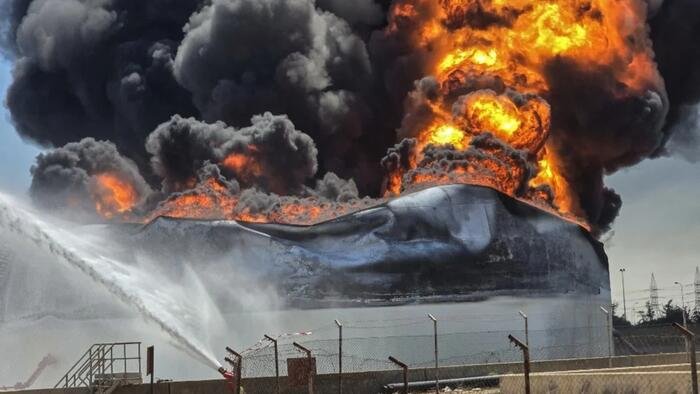
Recent events have plunged Libya into a fresh wave of turmoil, with the assassination of eastern military intelligence chief Fawzi al-Mansouri in Benghazi by a car bomb, drone attacks targeting the country’s largest oil refinery, and the resignation of the central bank governor.
The military intelligence chief for eastern Libya, Mansouri, was killed by an explosive device attached to his vehicle as he left a mosque. In a separate incident, drone strikes hit the Zawiya oil refinery, causing a major fire and prompting concerns about the facility’s operations.
Khaled Haftar, son of LNA commander Khalifa Haftar, stated that investigations into the incidents are ongoing, with suspicions pointing towards terrorist activity.
The attacks highlight the fragility of security in eastern Libya and challenge the Haftar family’s efforts to portray stability in the region. The LNA remains committed to fighting terrorism and ensuring Libya’s stability.
Meanwhile, the central bank governor’s resignation further complicates the situation, with concerns about the country’s political and security landscape deepening.
Libya’s energy infrastructure has often been targeted in the midst of political unrest, reflecting the ongoing divisions within the country between rival administrations in Tripoli and the east.
The recent events underscore the challenges facing Libya as it navigates through complex political and security issues, with the need for stability and unity becoming increasingly urgent.