
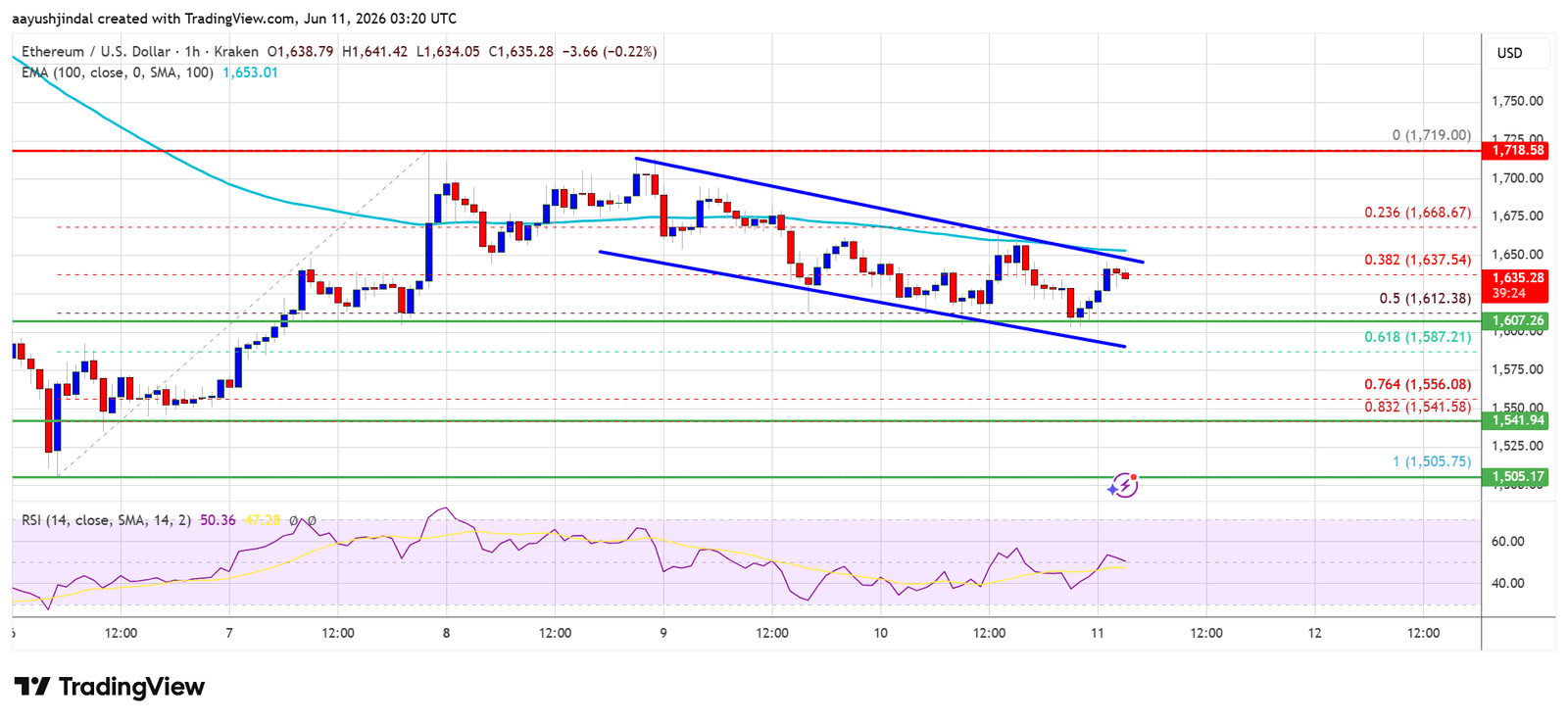
In a remarkable turn of events, Ethereum experienced an 18% surge intraday, accompanied by a significant increase in spot trading volume across major global exchanges. This resurgence has once again placed ETH at the forefront of the market’s risk-on sentiment.
During the rally, ETH was seen trading near the $2,500 mark, with spot volume surging by approximately 400% compared to the previous 24-hour average.
While this surge is substantial, it necessitates a cautious analysis.
A sudden spike in volume can indicate robust demand, but it may also encompass forced positioning, short covering, momentum chasing, exchange rebalancing, and rapid liquidity movements. The critical question now is whether Ethereum can sustain this momentum once the initial surge in volume subsides.
Summary:
- Ethereum witnessed an 18% intraday increase.
- Spot trading volume surged by around 400%.
- It is crucial not to view this surge as a definitive trend reversal until further confirmation is evident.
Significance of Volume:
Price movements can occur in low liquidity environments.
Volume provides insights on the level of market participation.
An 18% surge accompanied by a substantial volume spike implies broader market involvement. While this does not guarantee a sustained rally, it diminishes the likelihood of dismissing the move as a random fluctuation.
For Ethereum, the surge in volume holds particular importance as ETH had been overshadowed by Bitcoin’s ascent towards $70,000 and increased ETF inflows.
A strong performance by ETH serves as a reminder to the market that Ethereum possesses the ability to lead risk sentiment given favorable conditions.
Spot Demand Is Key:
The crucial aspect is determining if the surge was driven by spot trading.
Spot volume signifies actual buying and selling of ETH, which tends to be more sustainable than movements driven solely by liquidation of leveraged shorts.
However, distinguishing between spot-driven and derivative-driven activity can be challenging due to the interconnected nature of crypto markets.
Hence, the confirmation of follow-through is essential.
Multiple Catalysts for Ethereum:
Ethereum’s rally did not occur in isolation.
Factors such as ETF inflows, corporate ETH treasury actions, staking economics, tokenized asset expansion, and overall risk sentiment play a role in supporting ETH’s performance.
Furthermore, Ethereum’s institutional narrative differs from that of Bitcoin, positioning it as a versatile asset capable of rapid movements when market participants exhibit a higher risk appetite.
Interpreting Volume Spikes:
While a 400% surge in volume holds significance, it should not be construed as a definitive forecast.
Market dynamics can shift rapidly, leading to retracements despite heavy volume surges. Therefore, it is prudent to view ETH’s strong performance as driven by substantial spot activity, indicative of bullish sentiment in the short term rather than a confirmed breakout.
Looking Ahead:
Key indicators to monitor include sustained high volume levels and ETH’s ability to maintain its elevated price range.
Consolidation near the rally zone with continued spot interest could signal a potential trend continuation, whereas a decline in volume accompanied by price retracement may suggest a short-lived surge driven by market dynamics.
Additionally, the impact of ETF flows on Ethereum’s performance remains a crucial factor to consider, as institutional involvement could further strengthen the narrative for ETH.
For now, Ethereum’s recent surge has reignited interest among traders, with the focus now shifting to the sustainability of this momentum beyond the initial spike.
This article is based on public Ethereum market data for August 20, 2026.
Written by the News Desk and edited by Samuel Rae.