
Authored by Jake Scott via FEE,
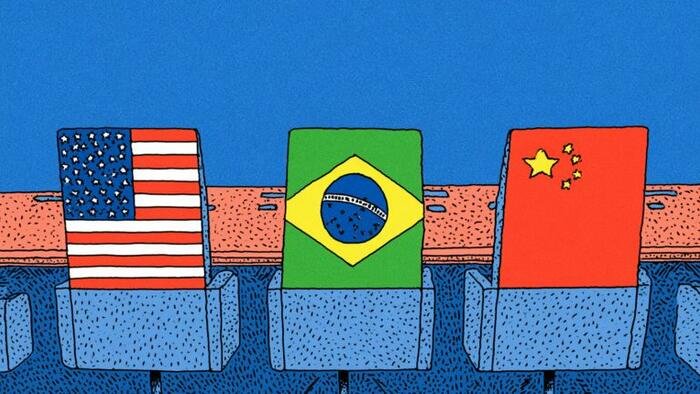
During a recent conversation between Brazil’s Luiz Inácio Lula da Silva and China’s Xi Jinping, the two governments announced their intention to accelerate a long-stalled China-Mercosur trade agreement. This marked a significant shift for Brazil, which had previously resisted such a deal within the Mercosur bloc. The sudden reversal came after new American tariffs took effect, prompting the Brazilian president to reevaluate the benefits of aligning with the United States.
Amidst escalating international trade tensions, Brazil is adopting a strategy of pragmatic equidistance, engaging with multiple global powers while maintaining a neutral stance. The country has filed a complaint with the World Trade Organization to challenge US tariffs, all while pursuing trade agreements with other nations.
Additionally, Brazil is diversifying its export markets through initiatives like the R$105 million program launched by ApexBrasil to support exporters in various industries. The Mercosur bloc, with Brazil at its core, is actively seeking trade deals with countries like India, Japan, and Canada.
The imposition of tariffs by the US has also had political implications in Brazil, with many viewing it as foreign interference in the upcoming elections. This has allowed President Lula to position himself as a defender of Brazil’s sovereignty, leading to a widening lead in the polls over his main contender.
Furthermore, Brazil is working to strengthen trade relations within the Mercosur bloc, particularly with China, its largest trading partner. By carefully maneuvering its international trade relations, Brazil aims to navigate the complex global landscape effectively.