
Authored by Larry Johnson via Sonar21.com
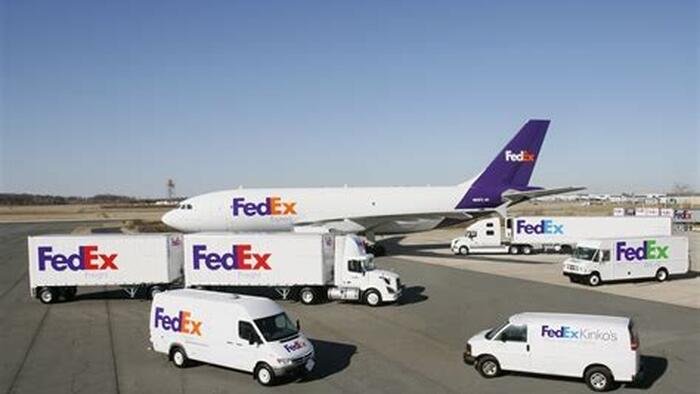
This piece originated from a conversation I had earlier today while flying from Istanbul to London. I found myself seated next to a FEDEX pilot en route to Paris via London. Curious about aviation fuel prices and their impact on FEDEX, I inquired, and his response exceeded my expectations. The world’s express carriers are often seen as indicators of the global economy. In 2026, they are also gauging the cost of operating a global air network when two out of the three main east-west air routes are effectively closed. The result so far is that FedEx and UPS are weathering the impact by passing the costs on to their customers, ultimately translating into supply chain expenses and contributing to the inflation numbers central banks are currently combatting.
The Fuel Shock
The catalyst for these events was the Iran war. The International Energy Agency has labeled the near-complete closure of the Strait of Hormuz as the most significant supply disruption in the history of the global oil market. Brent oil prices surged to nearly $118 in late March, dropped to around $70 by July 1, surged back above $100 in late July, and climbed to $109 in early September following renewed attacks on shipping and energy infrastructure. Although it has since decreased to approximately $99 due to hopes from US-Iran negotiations, it remains up by about 60% for the year.
Jet fuel prices have risen more than crude oil prices due to expanded refining margins. The latest weekly report from IATA indicated a global average of $194.90 per barrel, marking a 7.4% increase in just one week. In September, U.S. Gulf Coast kerosene-type jet fuel averaged $4.341 per gallon, and the national diesel average hit a record high of $6.31 per gallon.
For FedEx, the world’s largest cargo airline by fleet count, these price hikes directly impact their costs. In the quarter ending May 31, their fuel expenses surged by 66%, from $864 million to $1.43 billion.
The Airspace Squeeze: Russia and the Gulf
The Ukraine conflict and Western sanctions had already shut down Russian airspace to U.S. and European carriers post-2022. This resulted in increased flight duration and fuel consumption for Europe-Asia routes, benefiting carriers that still have access to Russian airspace. Chinese, Turkish, Indian, and Gulf carriers maintain access to Russia, enabling them to offer faster and more cost-effective Europe-Asia flights.
Subsequently, the Gulf region also closed its airspace. Eight Middle Eastern countries restricted or closed their airspace in late February, forcing air traffic through the narrow Caucasus corridor between the Black and Caspian Seas, approximately 100 miles wide at its narrowest point. Estimates from Xeneta revealed that 16-18% of global air cargo capacity vanished almost overnight. Freightos data indicated a 50% increase in rates from South Asia to North America and Europe early in the conflict.
By mid-July, Gulf carriers had restored 75-96% of their flight schedules by rerouting south over Saudi Arabia and Egypt, extending Europe-Asia flights by 30-60 minutes. Extended flight durations result in higher fuel consumption, reduced payloads, increased crew hours, and decreased aircraft utilization. DHL Global Forwarding reported that circumventing the Gulf hubs was diminishing schedule reliability and escalating operational costs. Air freight to and from the region experienced a significant decline, with Middle East and Africa exports dropping 24% year-over-year.
Performance of the Integrators
The situation is not as straightforward as it may seem based on headlines. Fuel surcharges have shielded FedEx and UPS much better than airlines or asset-light trucking companies. In March, FedEx’s chief customer officer affirmed that the fuel surcharge was effectively managing costs and would sustain the company’s profitability.
Financial figures support this claim. In the March-May quarter, FedEx’s revenue surged by 13% to $25 billion, with Iran-war fuel surcharges contributing 5 percentage points to the revenue. FedEx’s U.S. ground fuel surcharge stood at 26% in the week of August 17. UPS revised its full-year 2026 earnings guidance to $91.2 billion in revenue and approximately $7.22 in adjusted EPS.
The strain is evident in profit margins. FedEx surpassed expectations last quarter, but its operating income plummeted by nearly 22% year-over-year. The process is quite simple. The surcharge adjusts with a time lag, and when fuel prices spike, both revenue and expenses increase by comparable amounts, leading to a decline in profit margins. FedEx’s stock declined by 6.6% over 30 days and 7.6% over 90 days, although it remains 65.5% up over the past year.
The freight sector sounded the alarm this month. J.B. Hunt anticipated a 5-10% decrease in Q3 earnings compared to the previous quarter, attributing it to at least $10 million in additional fuel costs and $25 million in expenses related to driver recruitment and bonuses, negatively impacting package delivery stocks along with trucking companies.
Cost Distribution: From Shippers to Consumers
Thus far, shippers are absorbing the majority of the expenses. UPS’s CFO characterized the net profit impact of surcharges as “modest,” while FedEx stated that they did not significantly affect adjusted operating income. Critics have pointed out the significant surge in surcharge percentages without a clear explanation from either company. To put things into perspective, the U.S. Postal Service introduced an 8% surcharge on most packages on April 26. Although there is no evidence of widespread exploitation in the industry, some transportation firms are collecting more in surcharges than they spend on fuel.
These costs eventually trickle down into prices, posing a challenge not just for carriers but for everyone.
The Inflation Outlook
The OECD’s latest interim outlook projects G20 headline inflation to rise to 4.1% in 2026 before easing to 3.6% in 2027, while core inflation in advanced economies is expected to moderate from 2.7% to 2.5%. This distinction is crucial. The current situation primarily stems from an energy shock driving up headline inflation rather than initiating a broad wage-price spiral. The OECD attributes government assistance, input substitution, non-Gulf supply sources, and oil reserve drawdowns to mitigating the impact.
In the U.S., August’s CPI stood at 3.4% year-over-year, with core inflation at 2.4%, the lowest since March 2021. Gasoline alone accounted for over a third of the monthly inflation. Despite this, the Federal Reserve opted to raise rates to 3.75-4.00% on September 16, marking its first hike since 2023, citing the Iran energy shock, with most officials anticipating at least one more increase this year.
Transmission of Freight Costs to Consumers
While express surcharges play a role, they are a secondary factor. Shipping costs typically represent a small portion of a finished product’s retail price, so parcel surcharges introduce friction at the margins rather than driving the Consumer Price Index (CPI). In contrast, the impact of jet fuel is more pronounced in passenger airfares, which have surged by over 23% since August 2025.
Food serves as a more critical channel. Diesel, packaging, and fertilizer have a more significant impact than parcel rates, and a substantial amount of fertilizer passes through Hormuz, posing a threat to global food prices. An inflation analyst who typically disregards food and energy as cyclical factors now expresses uncertainty about food prices due to the influence of energy costs on trucking and packaging expenses.
The spillover effect on core inflation is what concerns central banks. Economists caution that renewed increases in oil, gasoline, and diesel prices could extend to other sectors and inflation expectations. Presently, the median CPI appears relatively stable, and a portion of the rise in services inflation can be attributed to airfares, essentially driven by energy costs.
The repercussions are not evenly distributed. Energy- and food-importing emerging economies are significantly more vulnerable than the U.S. In the Philippines, diesel prices surpassed ₱140 per liter, approximately $10.75 per gallon. Weak currencies and a higher weighting of food and fuel in consumer price indexes exacerbate the shock in these regions.
Duration Dictates the Outcome
The OECD’s June scenarios outline the stakes. Should Gulf supply recover by Q3 2026, the shock will diminish by 2027. However, if the disruption persists into late 2027, the result will be diminished growth and heightened inflation, adding around 0.4 points in 2026 and 1.3 points in 2027. While the OECD’s baseline assumes a decline in energy prices in 2027, it highlights prolonged disruptions in Middle East exports and a potent El Niño as significant downside risks. With Brent oil hovering around $99 and the Saudi East-West pipeline inactive since September 11, the baseline outlook seems overly optimistic.
A prolonged disruption would alter the position of carriers. Their current pricing model is sustainable only if customers accept it. The longer surcharge rates remain above 25%, the more likely small and medium-sized shippers will opt for ground transportation over express services, shift from air to sea freight, or reduce shipping volumes. FedEx’s outlook assumes no further geopolitical disruptions and acknowledges that soaring fuel costs could impact results if customers scale back their shipping activities. The disadvantage of flying over Russia persists even if oil prices drop. Additionally, the gap between surcharge revenue and actual fuel costs could become a subject of political and legal scrutiny.
The wars and sanctions have augmented the operational costs of running a global express network: longer routes, fewer functional hubs, and consistently high and volatile fuel prices. Thus far, FedEx and UPS have managed to convert most of these expenses into surcharge revenue, resulting in margin compression rather than losses. These costs trickle downstream, contributing to energy-driven inflation that has prompted the Fed to resume interest rate hikes.
For both carriers and the inflation outlook, the determining factor is the duration of the Hormuz disruption. Should jet fuel prices remain near $190 per barrel throughout the peak season, the question shifts from whether FedEx and UPS can pass on costs to whether their customers, and subsequently the consumers, can absorb these expenses. Key indicators to watch include September’s CPI report on October 14 and FedEx’s comments on surcharge recovery and shipment volumes in its Q1 2027 fiscal report.