
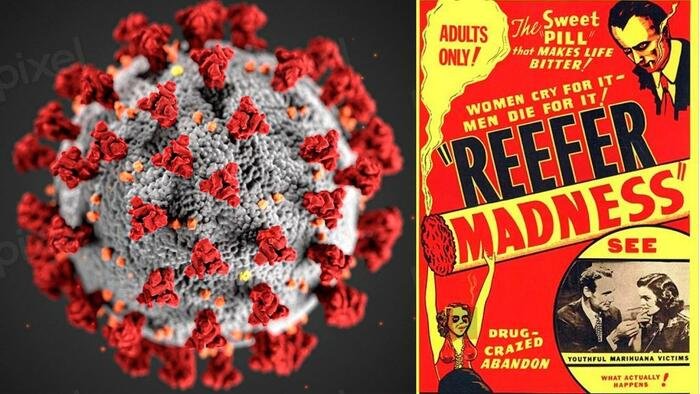
The article “Never Trust Uncle Sam on Drugs” by James Bovard, published on JimBovard.com, discusses how federal health officials lied during the Covid-19 pandemic to maintain their power. They funded the creation of the virus, pushed a rushed vaccine as a cure, and ignored the negative effects of lockdowns on citizens. This behavior mirrors the federal government’s actions in the war on drugs, where officials distorted reality to persecute those who questioned them.
The article highlights how, for over 50 years, the federal government denied marijuana’s medical benefits. However, recent executive orders have allowed for more research on medical marijuana. Despite this progress, the history of federal persecution of marijuana users and researchers demonstrates the dangers of trusting the government on drug policies.
The piece provides historical context, showing how marijuana was criminalized in the 1930s due to anti-immigrant sentiments and political pressure. Despite evidence of marijuana’s medical benefits, Congress and federal agencies continued to ban its use. Even when judges and experts supported medical marijuana, the DEA rejected their findings, labeling them as hoaxes. The article concludes that Americans should be wary of trusting the government on drug-related matters. DEA chief Robert Bonner firmly stated that lay testimonials, physician impressions, case studies, anecdotal proof, and all other forms of unscientific evidence are irrelevant in determining the medical benefits of marijuana. He vehemently denied claims that marijuana is medicine, calling them false, dangerous, and cruel. Despite his findings, it was noted that Bonner based his conclusions on the same evidence that led DEA Judge Young to a different conclusion four years earlier.
Harvard psychiatry professors Lester Grinspoon and James Bakalar pointed out that the government’s resistance to acknowledging marijuana’s medical benefits stems from a long history of exaggerating the dangers of the drug in the war on drugs. Clinton’s drug czar, General Barry McCaffrey, dismissed claims of marijuana’s usefulness as “Cheech ‘n’ Chong medicine” and denied any scientific evidence supporting its medical benefits.
Despite government opposition, scientific research continued to demonstrate marijuana’s potential medical benefits. Studies showed cannabinoids could relieve pain, the psychoactive ingredient in marijuana could treat Tourette’s Syndrome, and marijuana compounds could help control muscle spasms in multiple sclerosis patients.
The federal government’s refusal to acknowledge the medical benefits of marijuana led to the closure of a program providing it to patients in need. The government’s insistence on denying the evidence of marijuana’s benefits was seen as a failure of public policy that ignored the needs of suffering individuals.
Despite government resistance, new scientific evidence continued to emerge supporting marijuana’s medicinal value. The suppression of research results by the Clinton administration highlighted the ongoing battle between scientific evidence and political ideology in the debate over marijuana’s medical use.
Obama’s Broken Promise on Medical Marijuana
In 2008, Barack Obama promised to end the persecution of medical marijuana users and providers, stating that he would not use Justice Department resources to interfere with state laws on this issue. However, his administration ended up bringing almost twice as many prosecutions against medical marijuana providers and users compared to the previous administration.
Rob Kampia, from the Marijuana Policy Project, criticized Obama in 2012, stating that he had become more hostile to medical marijuana patients than any other president in US history. A 2012 report from Time Magazine highlighted that the DEA did not recognize medical marijuana as medicine and even labeled it as a ‘mortal danger’.
Despite the proven pain-relieving properties of medical marijuana, the Obama administration ignored its benefits, choosing instead to crackdown on its use. The National Institute on Drug Abuse even sabotaged a research project in 2011 that aimed to test the effectiveness of marijuana in treating post-traumatic stress disorder in combat veterans.
Throughout the years, politicians and bureaucrats have disregarded scientific evidence on marijuana in favor of tough-on-crime policies. More than ten million Americans have been arrested for marijuana-related offenses, serving as casualties in the government’s war on drugs.
This highlights a pattern where federal policymakers prioritize control and punishment over providing relief to those in need. As John Barry aptly put it in his book The Great Influenza, “When you mix politics and science, you get politics.” Unfortunately, objective facts often lose out to national campaigns demonizing those who challenge the status quo.
This article was originally published by the Future of Freedom Foundation and has been adapted for WordPress.