
While we anticipate a flurry of Level 1 macro data this week, it might be easy to overlook the modest headline beat in this morning’s Dallas Fed Manufacturing survey and think “meh.”
But that would be a mistake…
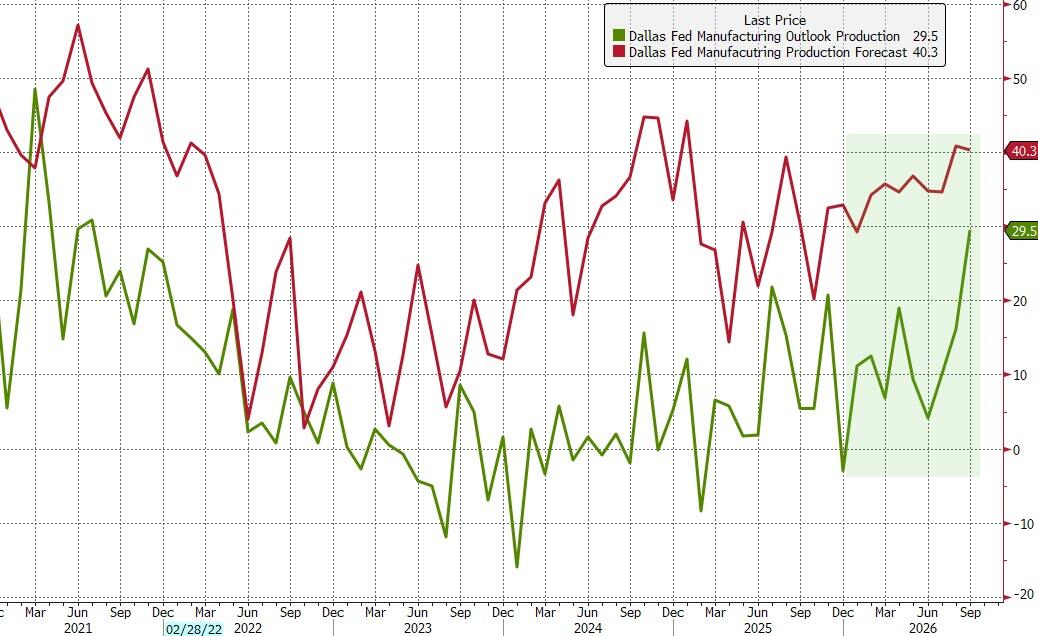
Production is on the rise (yay!!) and is expected to remain strong…
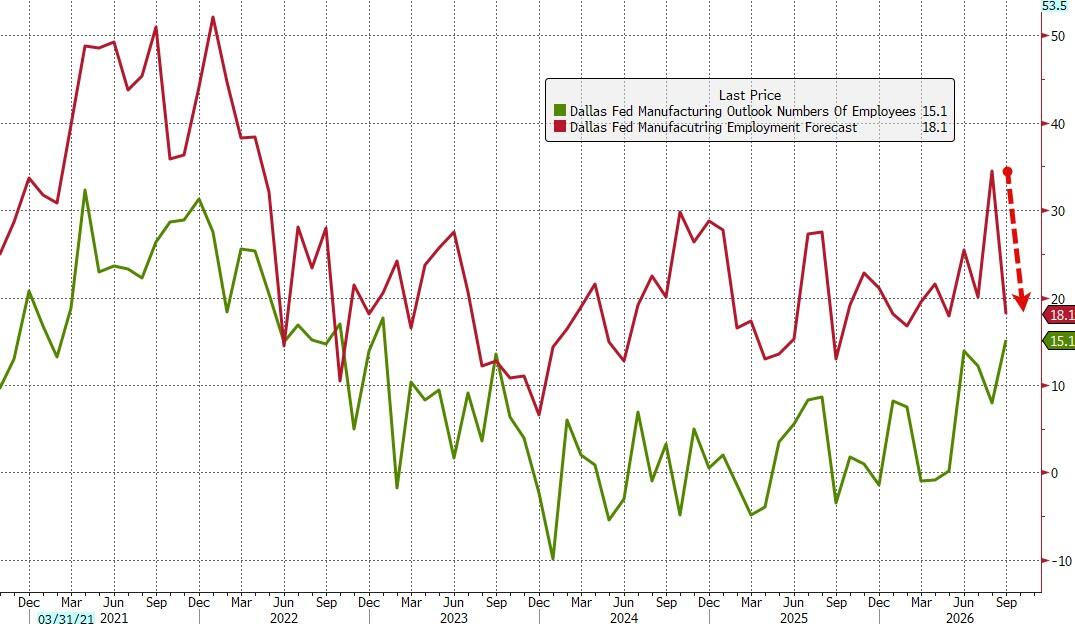
Employment is up (yay)… BUT is expected to drop…
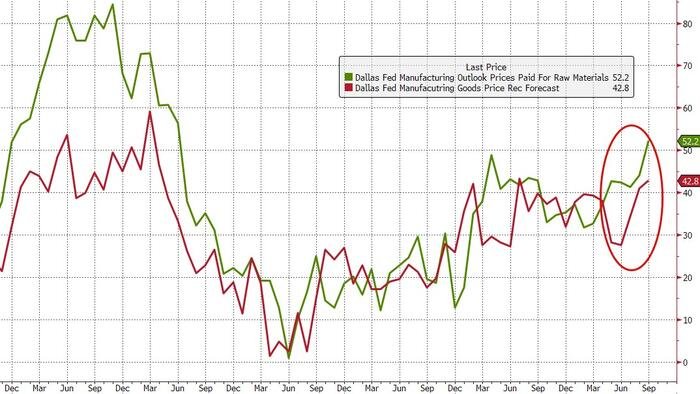
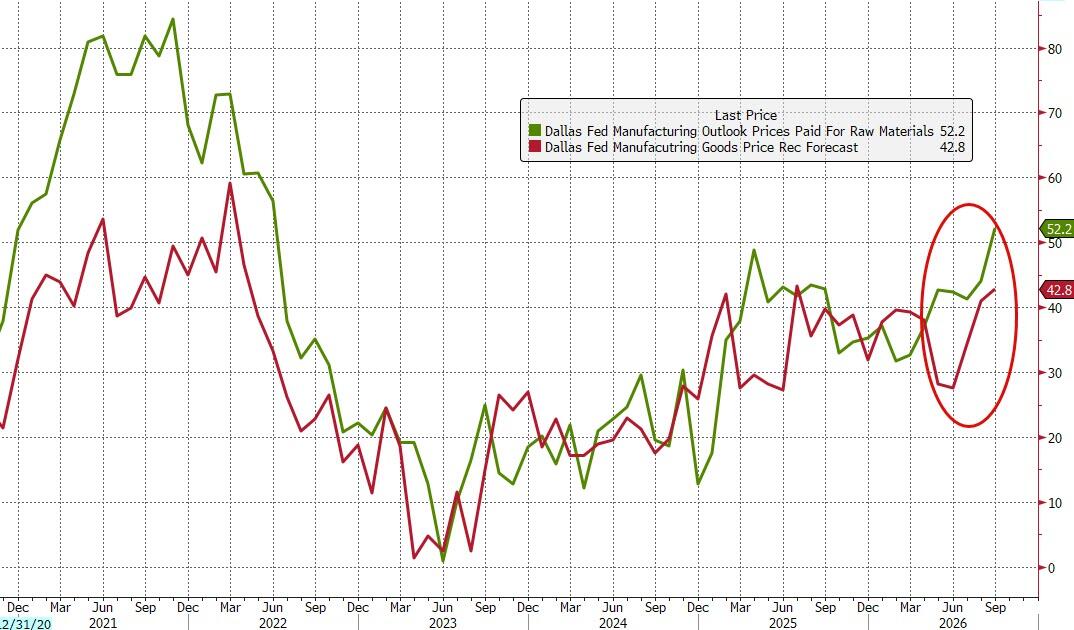
Even more concerning, Prices Paid and expected Prices Received are once again on the rise…
With all this in mind, here are the (uniformly negative) responses from the surveyed group of manufacturers. They don’t sound optimistic about new orders and production improving…
-
Tariffs and fuel prices are impacting incoming and outgoing products/costs. Customers are reaching their limit on what they can pay. Pushback and cancellations are occurring (Beverage and tobacco product manufacturing)
-
Fuel costs, especially diesel, are negatively affecting our bottom line and that of our customers. We are hoping for a quick resolution to the conflict with Iran as it could lead to more favorable outcomes, improved margins, and stability in interest rates. Insurance rates are increasing while coverage decreases. Despite these challenges, we are expanding operations with a growing backlog that promises a record year of revenue and net income in 2026 (Machinery manufacturing)
-
We are facing increased difficulty in obtaining raw materials domestically. Items that were once readily available now have longer lead times or are not available in the same specifications we historically purchased (Miscellaneous manufacturing)
-
The rising price of diesel fuel is impacting our gross margin. We are unable to pass this cost onto our customers. When bidding for new jobs, we are factoring in a $6.00 per gallon diesel cost (Nonmetallic mineral product manufacturing)
-
Overall, manufacturing growth is minimal as pricing is being driven down by Asian and Chinese suppliers. AI and heavy transportation sectors are growing, while other sectors are weak (Plastics and rubber products manufacturing)
-
Our business has been able to maintain volume, partly due to several competitors facing significant difficulties, including the closure of two plants by the largest producer in our industry, one of which is near us in Louisiana. Our primary concern is the outcome of U.S.-Mexico trade negotiations. There is a significant influx of foreign aluminum into Mexico, including from countries with non-market production and subsidization like Russia and China, at prices much lower than U.S. prices. We are worried that reducing tariffs on Mexican aluminum products will give these non-market economies an advantage in our domestic markets. Rules of Origin policies depend on the honesty of those reporting, and PROSECs (Program for Sectoral Promotion) pose challenges by allowing Mexican companies to use foreign-supplied raw materials in downstream products. For U.S. aluminum producers, the issue is not just the tariff rate on Mexico but ensuring that Mexico does not become a lower-tariff route for heavily subsidized aluminum from Russia, China, or Asia to enter the U.S. market. (Primary metal manufacturing)
-
Incoming orders have significantly slowed down, and as we wrap up large projects that have kept us busy since mid-spring, activity is slowing down. We believe this is due to uncertainty stemming from Washington, D.C., and a lack of clarity on the way forward. Combined with the higher cost of living and rising fuel prices, especially for diesel affecting shipping, it’s a logical explanation for reduced customer activity (Printing and related support activities)
-
High interest and energy costs are hitting us hard. Planning is challenging (Transportation equipment manufacturing)
Pardon our confusion, but how can sentiment indices show an overall positive outlook while respondents are uniformly negative?
Perhaps that’s why the highly educated PhDs earn those big salaries…
text as follows:
Please rewrite the text.