
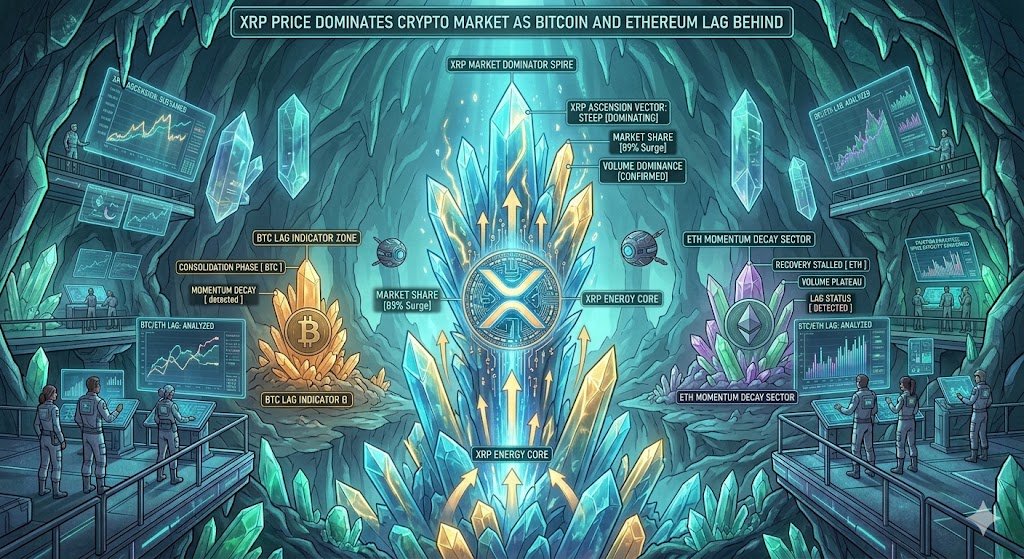
Bitcoin and Ethereum showed slight gains as they entered the last day of July, with a shift in market dominance indicating potential interest in major altcoins.
Bitcoin saw a 0.29% increase, reaching around $64,145.86, while Ethereum traded in the range of $1,890 to $1,920, briefly dropping below $1,900 before bouncing back. The slight decrease in BTC and ETH dominance suggested a mild movement towards other cryptocurrencies.
It’s important to note that this shift is not enough to declare the beginning of an “altseason,” and it would be premature to assume so.
However, it does indicate that the market is becoming more discerning. Bitcoin and Ethereum continue to be the core assets, while traders are exploring altcoins for signs of strength, new narratives, and potential catalysts.
For more detailed information, please visit the official Coinmarketcap platform.
TL;DR
- Bitcoin reached approximately $64,145 on July 31.
- Ethereum traded near $1,900 after a brief dip.
- A slight decline in BTC and ETH dominance suggests a focus on altcoin rotation, but not enough evidence to signal a widespread altseason.
Rotation Is Typically More Complex Than It Seems
Cryptocurrency traders often prefer simplistic market-cycle labels.
Bitcoin season. Ethereum season. Altseason. Meme season. DeFi season. ETF season.
In reality, market rotations occur in phases, rather than all at once. Large-cap assets may lead the way, followed by higher-quality altcoins, and then more speculative tokens. The duration of these rotations can vary, sometimes lasting for days, while other times fading quickly. Occasionally, it may simply be a temporary pause in Bitcoin dominance before BTC resumes its dominance.
This is why the current market conditions require a careful analysis.
While Bitcoin and Ethereum maintain their dominant positions, a slight decrease in dominance does not imply that traders have abandoned these assets. It could indicate that some capital is seeking short-term opportunities elsewhere.
This movement can occur even as BTC and ETH prices rise.
Bitcoin Continues to Set the Tone
Bitcoin remains the primary asset that most traders monitor closely.
When BTC remains stable or experiences incremental growth, risk appetite tends to improve. Traders may feel more confident in shifting towards Ethereum, Solana, XRP, BNB, Chainlink, Sui, and other major altcoins. Conversely, a significant drop in Bitcoin’s price can quickly diminish this appetite.
Therefore, a modest increase in BTC value can create space for altcoin movements.
This does not diminish the importance of Bitcoin; rather, it positions Bitcoin as the primary weather system that influences the rest of the crypto market.
With Bitcoin hovering around $64,000, its position remains strong enough to sustain market confidence, yet not compelling enough to monopolize attention entirely. This environment may pave the way for selective altcoin investments.
Ethereum’s Role Is Distinct
Ethereum’s role is slightly more nuanced.
As the largest smart-contract asset and a key focus for institutional investors, Ethereum’s market narrative now encompasses Layer 2 solutions, ETF flows, stablecoins, DeFi revenue, mainnet fees, and competition from faster blockchain networks.
When Ethereum trades around $1,900, the market evaluates not only ETH’s price movement but also whether Ethereum’s broader ecosystem is attracting capital.
If ETH stabilizes, some traders may explore opportunities further down the ecosystem hierarchy, including Uniswap, Aave, ENS, Layer 2 solutions, liquid staking, and other DeFi or infrastructure projects. This integration of Ethereum’s strength can sometimes spill over into altcoins.
However, this spillover is not guaranteed.
ETH can rise without leading to an increase in DeFi token value. Conversely, DeFi tokens may surge while ETH remains stagnant. The process of rotation is rarely as straightforward as traders anticipate.
The Altcoin Market Is Now More Discerning
The significant shift in current market cycles is the increased selectivity among traders.
During previous bullish phases, nearly every asset experienced movement once risk sentiment improved. However, the current market landscape is more fragmented, with liquidity thinning in many assets. Investors are more attuned to factors such as token unlocks, revenue streams, governance structures, emissions, legal exposure, and actual utility.
As a result, altcoin rotation may now favor assets with stronger narratives rather than a broad spectrum of tokens.
Assets tied to real-world assets, stablecoin infrastructure, DeFi fee adjustments, AI computing, exchange-related tokens, and significant ecosystem upgrades may garner more attention than those driven solely by price fluctuations.
While this shift may feel less exuberant, it signifies a healthier market dynamic.
A market where traders inquire about the catalyst behind an asset’s movement reflects a more mature approach compared to one where every token surges simply because Bitcoin paused.
Monitor Dominance, Not Just Price
Another critical indicator to observe is dominance.
If BTC and ETH continue to rise while dominance declines, it suggests broader market participation. Conversely, a sharp rebound in dominance could signal a weakening of altcoin strength. Should Bitcoin experience a downturn, most altcoins are likely to struggle, regardless of their individual setups.
Therefore, a cautious sense of optimism is warranted.
Bitcoin and Ethereum exhibit stability that supports risk appetite, alongside indications of selective rotation. However, the market has not yet provided sufficient evidence to declare a widespread altseason.
Currently, traders are exploring opportunities beyond the two dominant assets, yet they are not overlooking them entirely.
This delicate balance may define the upcoming phase of the market.
This article is based on the public crypto market data from July 31, covering BTC, ETH, and market dominance.
Authored by the News Desk and edited by Samuel Rae.