

Blockchain ecosystem network revenues saw a 16% decline in September, mainly due to decreased volatility in the crypto markets, as reported by asset manager VanEck.
VanEck’s report highlighted a 6% drop in Ethereum network revenue, an 11% decrease in Solana’s revenue, and a significant 37% reduction in fees on the Tron network following a governance proposal that slashed gas fees by over 50% in August.
The decrease in revenue across other networks was attributed to the lowered volatility in the crypto markets and the corresponding tokens powering those networks. In September, Ether (ETH) volatility decreased by 40%, SOL (SOL) volatility fell by 16%, and Bitcoin (BTC) experienced a 26% drop in volatility.
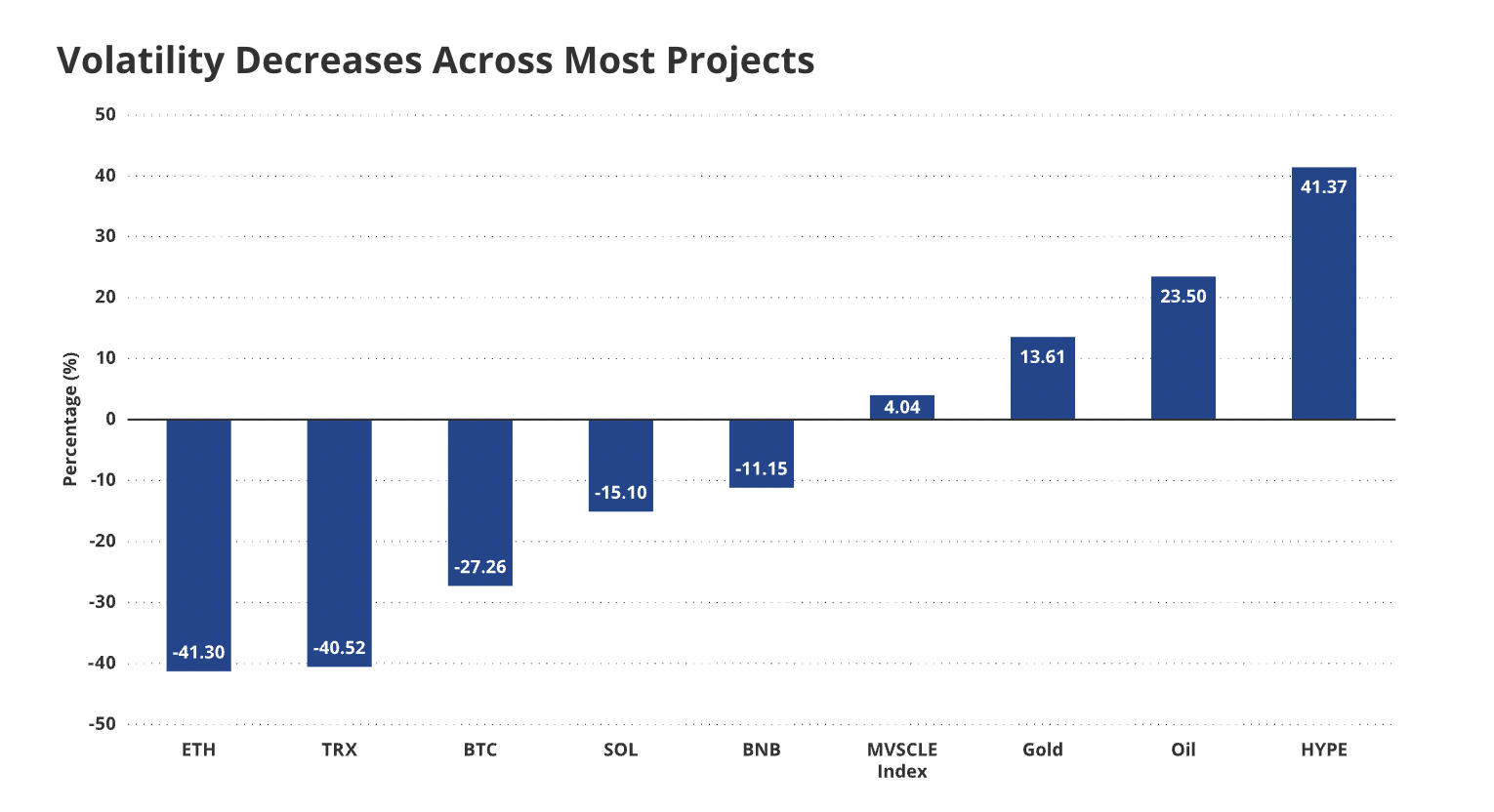
Many cryptocurrencies witnessed reduced volatility in September. Source: VanEck
The report authors explained, “With decreased volatility for digital assets, there are fewer arbitrage opportunities to incentivize traders to pay high priority fees.”
Network revenues and fees serve as crucial indicators for economic activity in crypto ecosystems. Market analysts, traders, and investors closely monitor network fundamentals to assess the overall health of specific ecosystems, individual projects, and the broader crypto industry.
Related: Ethereum revenue plummeted by 44% in August amidst ETH’s all-time high
Tron network maintains dominance in revenue metrics
According to data from Token Terminal, the Tron network stands as the top crypto ecosystem for revenue, generating $3.6 billion in the past year.
In comparison, Ethereum generated only $1 billion in revenue over the same period, despite ETH reaching all-time highs in August and boasting a market capitalization exceeding $539 billion — over 16 times the market capitalization of TRX (TRX), which stands at just over $32 billion.
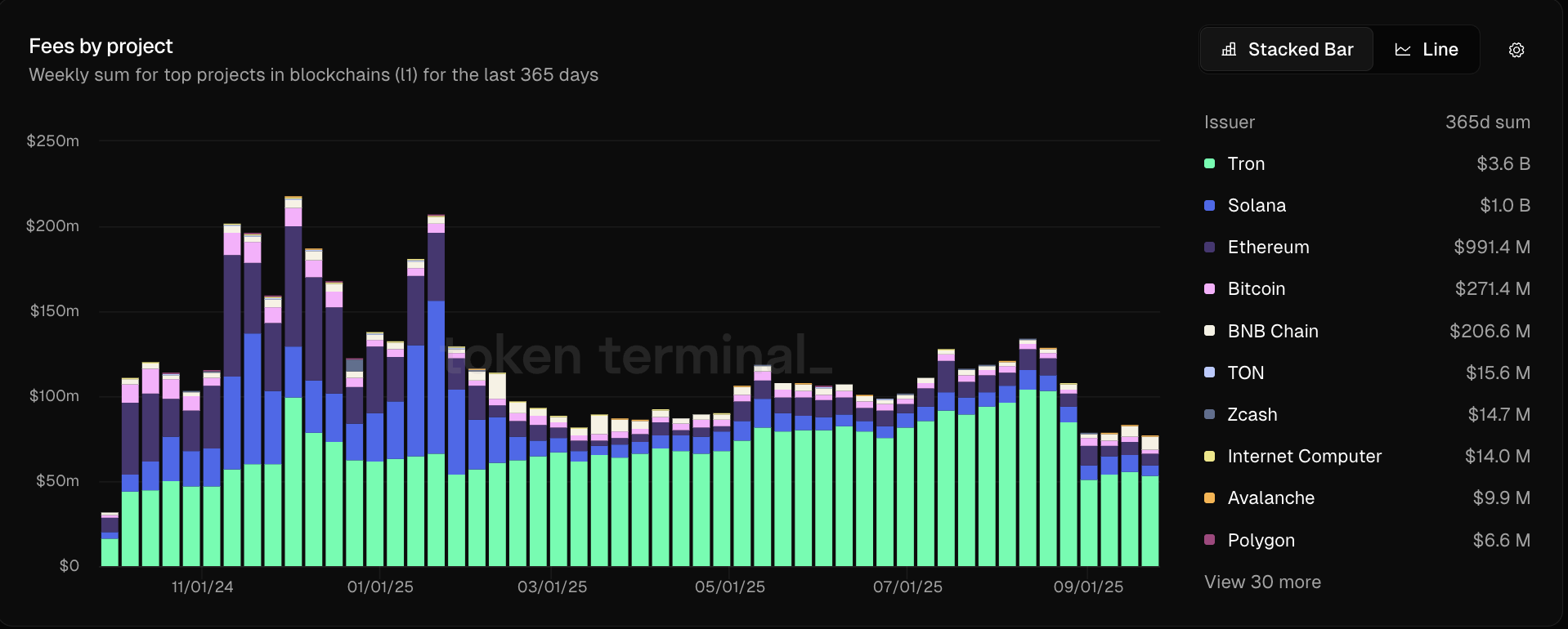
A comparison of crypto network fees over the past year. Source: Token Terminal
Tron’s revenue is credited to its role in stablecoin settlements, with 51% of all circulating Tether USDt (USDT) supply being issued on the Tron network.
As of October 2025, the stablecoin market cap surpassed $292 billion and has been steadily growing since 2023, based on data from RWA.XYZ.
Stablecoins represent a significant use case for blockchain technology, as governments aim to enhance the transferability of their fiat currencies by leveraging crypto infrastructure.
Blockchain technology facilitates cross-border currency flows with rapid settlement times, minimal fees, 24/7 trading, and eliminates the need for traditional banking infrastructure or accounts.
Magazine: Ether could potentially soar like it did in 2021 as SOL traders brace for a 10% decline: Trade Secrets