
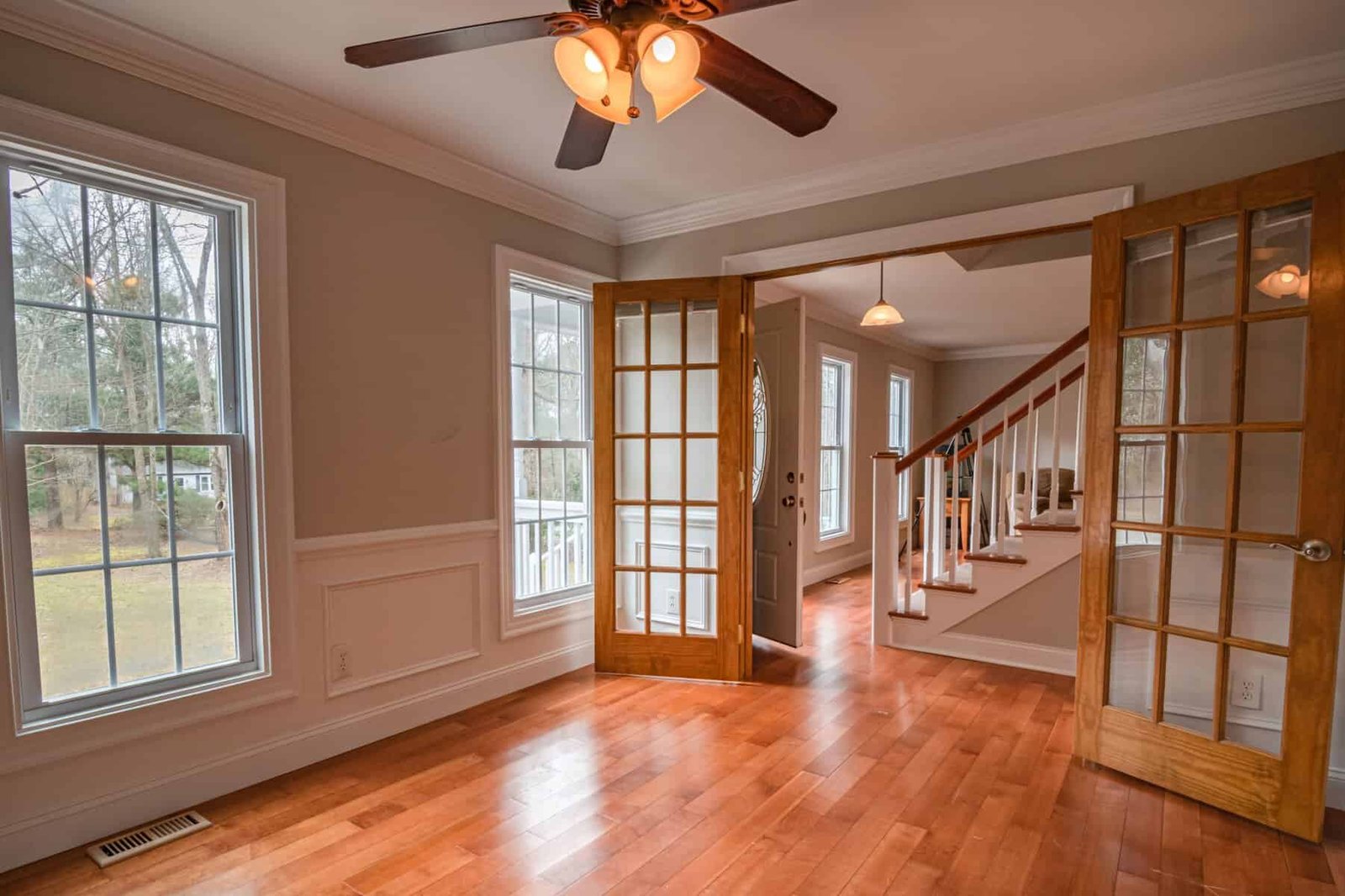
Hardwood floors have a long lifespan, but over time, scratches, stains, and everyday wear can diminish their appearance. Refinishing can help restore the look of your floors without the need for complete replacement. However, the decision to refinish depends on the condition of your floors, as well as the cost and process involved.
Whether you are getting ready to sell a home in Nashville, TN, or updating a house in Richmond, VA, it is essential to understand what experts recommend before starting the refinishing process.
Key takeaways
- Check your floors first. Wood thickness and existing damage determine whether refinishing is possible.
- Budget for the full project. Repairs, stain changes, and stairs can increase costs.
- Plan for downtime. Sanding, staining, and finishing may keep rooms off-limits for several days.
- Consider professional help. DIY sanding mistakes can damage hardwood floors.
Can your hardwood floors be refinished?
Before scheduling a refinish, check whether your floors have enough wood remaining to withstand sanding.
Sean, Lead Contractor at Kanna Construction & Remodeling, advises: “Before refinishing hardwood floors, check the wood’s thickness to ensure it has enough of a wear layer left to withstand sanding without damaging the planks.”
Solid hardwood can often be refinished multiple times, depending on its thickness and previous sanding. Engineered hardwood typically has a thinner top layer, which may limit whether it can be sanded at all.
The condition of your floors also matters. Surface scratches and worn finishes may be suitable for refinishing, while deep gouges, water damage, or buckling could require repairs or replacement. If you’re unsure, a flooring professional can assess the wood’s condition and remaining thickness before work begins.
How much does it cost to refinish hardwood floors?
The cost to refinish wood floors depends on the size of the space, the condition of the wood, and the type of finish or stain selected. Repairs, stairs, and additional preparation can also affect the final price.
Here’s what contractors estimate for a typical refinishing project:
- Ryan Brining, Co-Owner of White Maple Construction: “A homeowner refinishing 500 square feet of hardwood in average condition can expect to pay roughly $2,000 to $3,000, with stairs and railings priced separately on top of that.”
- Josh Brooks Construction and Renovation Inc.: “Refinishing hardwood floors generally costs between $3 and $8 per square foot, depending on the condition of the wood, total square footage, and the type of finish or stain requested.” For a 500-square-foot living room, the company estimates approximately $1,500 to $3,000.
- Vino Design Build: “For a standard project involving around 500 square feet of hardwood in average condition, homeowners can generally expect professional refinishing to cost between $2,500 and $5,000.”
Pricing can vary between contractors, and the rising cost of materials can add even more to the total. Josh Brooks Construction and Renovation Inc. also identifies repairs, custom color matching, and dustless sanding requirements as potential cost factors, while Vino Design Build notes that damaged boards and extensive sanding can also increase costs.
Before committing, request detailed quotes from a variety of local flooring professionals and confirm what’s included in the price.
Does changing the stain color affect the cost?
Changing from a dark stain to a lighter or natural finish can require additional sanding and preparation.
Ryan Brining of White Maple Construction explains, “The existing color matters too: a lot of homeowners are going to a natural finish now, which works well over a lighter stain, but a really dark stain like provincial settles into seams and grain. Anything left behind shows through, especially on detailed stair rails and newel posts, so sometimes replacing makes more sense than refinishing.”
If you’re considering a major color change, ask your contractor whether the desired finish is achievable without removing too much wood.
>> Read: How to Stain a Deck: The Simple 4-Step Process

What happens during hardwood floor refinishing?
The refinishing process typically involves sanding away the existing finish, repairing damaged areas, applying stain if desired, and adding protective finish coats. The duration of the process can vary depending on the floor’s condition, the products used, and drying or curing requirements.
Sean at Kanna Construction & Remodeling explains: “Expect significant dust, strong chemical fumes, and multi-day drying times that typically require clearing the room and staying off the floors.”
Before work begins, homeowners should plan to:
- Remove furniture and belongings from the affected rooms.
- Ask about dust containment and ventilation.
- Confirm how long the project will take.
- Check when it’s safe to walk on the floors and move furniture back.
Some contractors use dust-containment sanding equipment to reduce airborne dust, although no sanding process is completely dust-free. Water-based and oil-based finishes also have different application, drying, and curing requirements. Ask your contractor which product they recommend and how it will affect your timeline.
>> Read: Questions to Ask General Contractors Before Starting a Project
Should you refinish hardwood floors yourself?
DIY refinishing may be appealing for homeowners looking to save on labor costs, but sanding requires precision and expertise.
Sean warns, “Heavy drum sanders can easily gouge the wood if misused.” Uneven sanding can lead to visible marks or excessive wood removal. Mistakes can be challenging to rectify, especially on thin flooring or floors that have undergone multiple refinishing processes.
For smaller projects, DIY refinishing may be viable if you have the necessary equipment and understand the process. However, for larger spaces, significant repairs, or complex stain changes, hiring a professional for refinishing may be a better option.
When weighing the cost of refinishing hardwood floors yourself versus engaging a contractor, consider equipment rental, materials, protective gear, preparation, and cleanup, not just labor.
When should you replace hardwood floors instead?
Refinishing may not always be the most practical choice. Floors with extensive water damage, structural issues, or inadequate wood thickness may require partial or complete replacement. Matching existing hardwood during remodels can also pose challenges.
Brining explains: “On larger additions and remodels where walls shift or new flooring connects to existing floors, achieving a seamless patch is difficult, so it often makes more sense to replace a larger section than expected rather than trying to blend in a visible seam.”
If you are extending hardwood into another room or repairing a substantial damaged area, consult your contractor to compare refinishing, partial replacement, and full replacement options. The most suitable approach depends on the condition of the existing wood, the project’s scope, and the potential for new materials to match.
Is refinishing hardwood floors worth it before selling?
If you are preparing to sell, refinishing worn hardwood floors may be a worthwhile investment, especially if scratches, stains, or uneven finishes are evident throughout the home.
However, not every floor necessitates a complete refinish. Depending on its condition, cleaning, minor repairs, or a less intensive finish touch-up may suffice.
Consider the cost of refinishing hardwood floors alongside other repairs and upgrades you plan to make before listing your property. A local Redfin agent can assist in evaluating how your floors’ condition compares to similar homes in your area.
>>Learn: 5 Home Features That Add Long-Term Value
What to consider before refinishing hardwood floors
Before embarking on a refinishing project, have a flooring professional assess the wood’s condition, discuss your preferred finish, and provide a detailed cost estimate.
Refinishing can be a practical way to rejuvenate existing hardwood, but the optimal approach depends on the level of wear your floors have endured and your desired outcome. Understanding the costs, constraints, and timeline in advance can help you determine whether refinishing or replacement is the best choice for your home.