
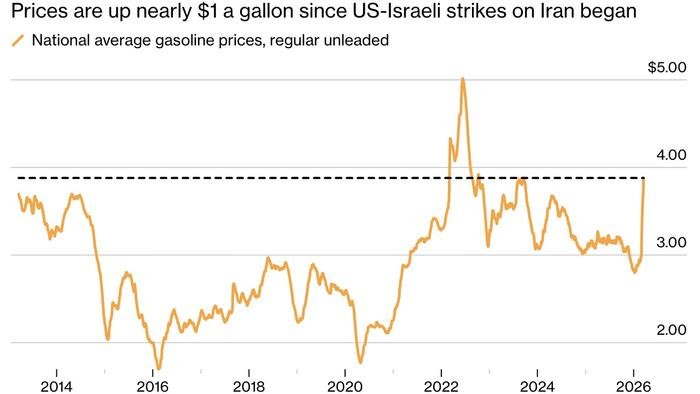
The recent surge in fuel prices due to the conflict in Iran is causing American consumers to reassess their daily spending habits, particularly when it comes to gasoline, as reported by Bloomberg.
Drivers in San Antonio are experiencing long wait times at Costco gas stations, prompting some to explore alternative options such as using apps like GasBuddy or traveling further to find cheaper gas prices. With the national average approaching $4 per gallon, households are cutting back on discretionary expenses like dining out, travel, and groceries.
The broader economic ramifications will hinge on the duration of the price hikes. Oil prices have surged by approximately 45% since the onset of the conflict, leading to a more than 50% increase in gasoline futures driven by supply disruptions and the closure of the Strait of Hormuz. Consequently, pump prices have risen nationwide, with some states already surpassing the average.
Economists suggest that such sharp increases in prices can swiftly alter consumer behavior. Gregory Daco highlighted $4 per gallon as a critical threshold: “The transition from $3.99 to $4.01… has a psychological impact.” As prices exceed this threshold, consumers tend to curtail spending in other areas.
Amidst these challenges, some individuals have already taken action. A Texas-based delivery driver quit DoorDash after realizing that higher gas expenses were eroding her earnings. Others are seeking discounts at warehouse clubs or leveraging grocery rewards programs, resulting in increased foot traffic at retailers like Costco and Sam’s Club. GasBuddy reports a doubling of its monthly user base since the conflict began.
Bloomberg’s article underscores that lower- and middle-income households are facing the brunt of these price spikes, given that fuel comprises a significant portion of their budgets. Families are feeling the impact beyond gasoline, with escalating costs across various sectors necessitating adjustments such as cutting back on non-essential purchases and adopting a more meticulous approach to shopping.
While inflation had been moderating, the uptick in energy prices could potentially reverse this trend. Federal Reserve Chair Jerome Powell acknowledged the uncertainty surrounding the ultimate outcome, stating, “We simply do not have all the answers.”
As prices continue to rise following a period of decline, the issue of escalating energy costs may carry political implications in the lead-up to upcoming elections. While policymakers are optimistic that initiatives such as tax refunds will bolster economic growth, economists caution that prolonged periods of high energy prices could place additional strain on consumers.
For many Americans, daily decisions now revolve around making trade-offs, whether it’s driving further in search of cheaper fuel or forgoing minor luxuries during shopping trips.