
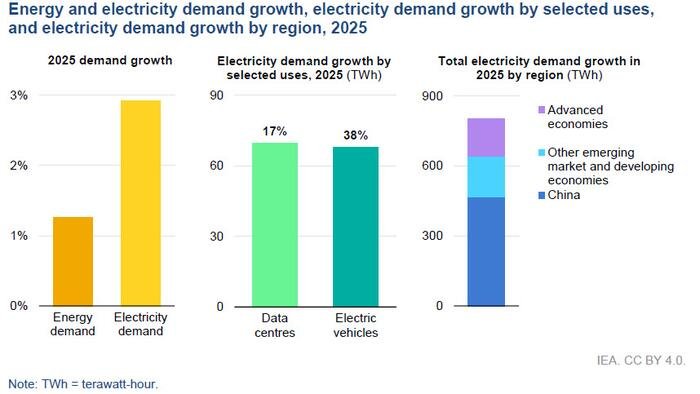
The International Energy Agency (IEA) reported that global electricity demand increased by 3% in 2025, nearly triple the growth rate of total energy consumption, which only saw a 1.3% increase. This surge in electricity demand was largely driven by data centers and electric vehicles. Despite a slowdown in overall global energy demand growth to 1.3%, the demand for electricity continued to rise significantly.
In the United States, electricity demand grew by 2% in 2025, with the buildings sector accounting for 80% of this growth, primarily due to the increasing load from data centers. Solar power played a significant role in meeting the global energy demand growth, followed by natural gas.
The report highlighted the shift towards electrification in economies worldwide, with solar PV contributing over a quarter of the global energy demand growth in 2025. The increase in solar PV generation marked the largest structural increase ever recorded in a single year for any electricity generation technology, leading to a decline in coal-fired electricity generation globally. Battery storage emerged as the fastest-growing power sector technology in 2025.
Despite the growth in energy demand, global energy-related carbon dioxide (CO2) emissions rose by only 0.4% in 2025, with emissions from China falling due to the increase in renewables and structural declines in energy-intensive industries. The deployment of clean energy technologies since 2019 has helped avoid significant fossil fuel demand and CO2 emissions.
Overall, the report underscores the increasing importance of electricity in global energy consumption and the transition towards cleaner energy sources to mitigate the impact on the environment.