
Germany Seeks Alternative Oil Routes as Russia Halts Druzhba Pipeline
Written by Julianne Geiger from OilPrice.com
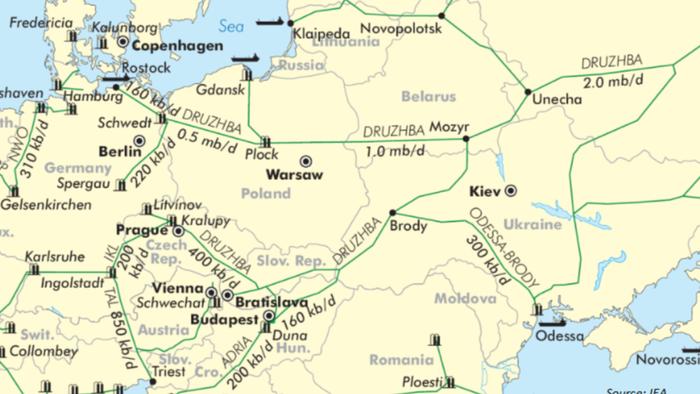
Germany is facing a challenge in finding new ways to transport crude oil to the PCK Schwedt refinery after Russia announced the suspension of Kazakh oil deliveries through the Druzhba pipeline, putting approximately 43,000 barrels per day at risk starting May 1.
Germany is currently in discussions with Poland to potentially reroute replacement barrels through the port of Gdansk, with the hope of redirecting them to Schwedt, a critical refinery supplying eastern Germany, including Berlin. The dependency on Russian crude has put pressure on the refinery, highlighting the fragility of the current system.
Last year, Kazakhstan shipped 2.146 million metric tons of oil to Germany through the Druzhba pipeline, showing a 44% increase from 2024, with an additional 730,000 tons delivered in the first quarter of this year.
While Poland claims to have the technical capability to handle increased flows, various factors such as port access, shipping schedules, crude availability, and refinery configurations will play a role in the successful redirection of oil supplies. Transitioning from pipeline deliveries to seaborne shipments is not a straightforward process.
This recent disruption underscores the vulnerability of European oil security, as infrastructure diversification on paper does not necessarily translate to practical implementation, especially with the Druzhba pipeline still running through Russia.
Although there are alternative routes available for Schwedt, they come with higher costs and logistical complexities. The refinery has increasingly relied on oil coming through Baltic routes and Germany’s Rostock port, but these channels have limitations.
This incident not only impacts regional oil supply but also highlights the importance of secure logistics in the broader oil market. In Europe, the availability of oil is one issue, while the transportation of it poses another challenge.
Ultimately, the ability to ensure secure non-Russian supply routes is becoming increasingly crucial for pricing, refinery margins, and overall oil market stability.