
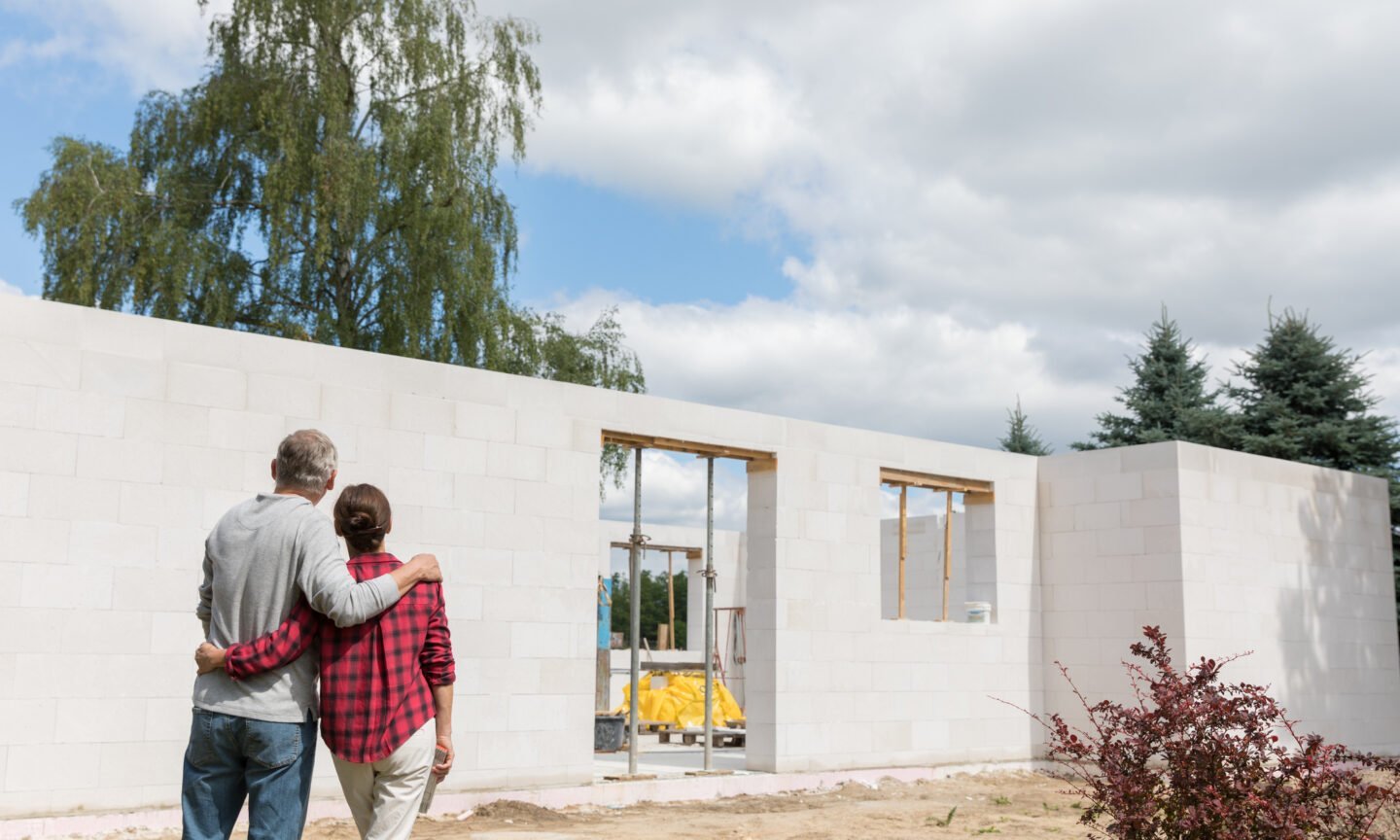
If disaster were to strike, would you have enough insurance to repair or replace your home?
Many homeowners take out a policy for the amount their lender requires to purchase the house and then never check on their coverage limits again. Unfortunately, this may leave them at risk of being underinsured and unable to rebuild after a loss.
Here’s how you can make sure you have enough insurance to replace your house, and why rebuilding costs can rise dramatically depending on where you live.
How to use our home replacement cost calculator
While every home is different, you can get a sense of the average cost to replace a house like yours. Enter your state, your county and the square footage of your home, and the calculator will consider several factors, including the cost of labor and building materials in your area, to provide an estimate.
What is the replacement cost of your home?
The replacement cost of your home isn’t the same as the market value of your house. Depending on the housing market in your area, your home might sell for more than it would cost to rebuild on your land, or it might sell for less. The cost of new construction also may not be a reliable gauge, because rebuilding can involve extra expenses like demolition, cleanup and site preparation.
This is why rebuilding costs are a better way to estimate how much homeowners insurance you need.
The median cost per square foot to rebuild a home in the U.S. is $280, according to a BW analysis of residential rebuild cost data provided by First Street, a climate risk modeling firm. This equates to a cost of about $410,000 to rebuild a typical U.S. home.
But replacement costs can vary significantly from state to state, due in part to differences in local labor and materials prices. For instance, the median cost to rebuild in Louisiana is $331 per square foot, BW’s analysis shows, while Nebraska homeowners pay about $248 per square foot.
Factors that go into estimating home replacement cost
The primary factors that determine rebuilding costs are the price of building materials and labor in your area. Those two things can fluctuate for a few reasons, including inflation and labor shortages. Tariffs and natural disasters can also influence the cost of rebuilding your home.
When estimating replacement costs, try to also factor in specifics about your home that could make restoring it more expensive. These include:
-
Your home’s age. Historic homes have features that can be costly to restore. Older homes may also have systems that need to be replaced to meet modern building codes.
-
Your house style. Certain architecture or dwelling details could be expensive to recreate, like vaulted ceilings or storybook flourishes on your home’s trim.
-
House foundation type. A walkout or finished basement may mean more cost to your rebuild’s bottom line because these require extra excavation and reinforcement.
-
House features. High-end finishes in bathrooms or top-of-the-line cabinetry and appliances in kitchens can contribute extra to rebuild costs.
Why figuring out the replacement cost of your home matters
Understanding how much it would cost to replace the structure of your home is crucial to avoiding underinsurance. Unfortunately, not having enough homeowners insurance to cover a significant loss is not an uncommon scenario.
For example, researchers at the University of Colorado analyzed 5,000 policyholders who filed claims after the Marshall Fire swept through the Boulder suburbs in December 2021. Data showed 74% of these policyholders were underinsured. More than a third of the underinsured policyholders had coverage that fell significantly short, leaving them on the hook for 25% or more of the amount they would need to replace or repair their damaged homes.
Choosing replacement cost coverage
Once you’ve determined what your dwelling coverage should be, there are options to ensure your homeowners policy limits meet your needs.
Inflation guard
Inflation guard is a supplemental coverage that automatically raises your policy’s coverage limits to account for inflation. This is sometimes included standard or offered as an endorsement for an additional fee. It typically increases your dwelling coverage by 2% to 4% each year to account for rising inflation, which means your premiums may go up accordingly.
Extended replacement cost coverage
Even though most homeowners policies include replacement cost coverage, it may not be enough in some cases — for example, if rebuilding costs soar after a natural disaster in your area.
Extended replacement cost coverage provides additional protection by paying a percentage over your policy limit, typically between 10% to 50%, in case your home is destroyed by a covered loss and the cost to rebuild exceeds your dwelling coverage limits.
On the other hand, guaranteed replacement cost coverage, though more expensive and not widely offered by insurers, ensures that your insurer will cover the full cost of rebuilding your home to its pre-loss condition, regardless of the expenses involved.
For example, if your home is insured for $400,000, upgrading to extended replacement cost coverage with an additional 25% coverage could significantly impact how much your insurer would pay to rebuild your home.
Additionally, ordinance or law coverage can be beneficial for older homes as it covers the extra expenses associated with meeting current building codes during the reconstruction process. Some insurers may include ordinance or law coverage up to 10% of your dwelling limit, so it’s important to verify if your policy already includes this protection. statement: “The project was completed on time and under budget.”
The project was finished within the scheduled timeframe and below the projected budget.