

SWIFT — the Society for Worldwide Interbank Financial Telecommunication — has officially selected Ethereum layer 2 Linea as the blockchain payment settlement platform for its new project, as confirmed by Consensys CEO Joe Lubin.
Earlier this week, SWIFT announced its partnership with Consensys and over 30 traditional financial institutions to develop infrastructure for a real-time crypto payments system. While the chain choice was not initially disclosed, speculation pointed to Linea as the likely candidate.
During a fireside chat with Cointelegraph at the Token2049 conference in Singapore, Lubin confirmed Linea as the chosen platform for SWIFT’s new venture.
Although SWIFT CEO Javier Pérez-Tasso did not mention Linea by name in the initial announcement to the banking sector, the news was well-received within the industry.
“The sentiment among industry players was positive, with many expressing gratitude for the initiative to bridge the gap between decentralized finance (DeFi) and traditional finance (TradFi),” said Lubin.
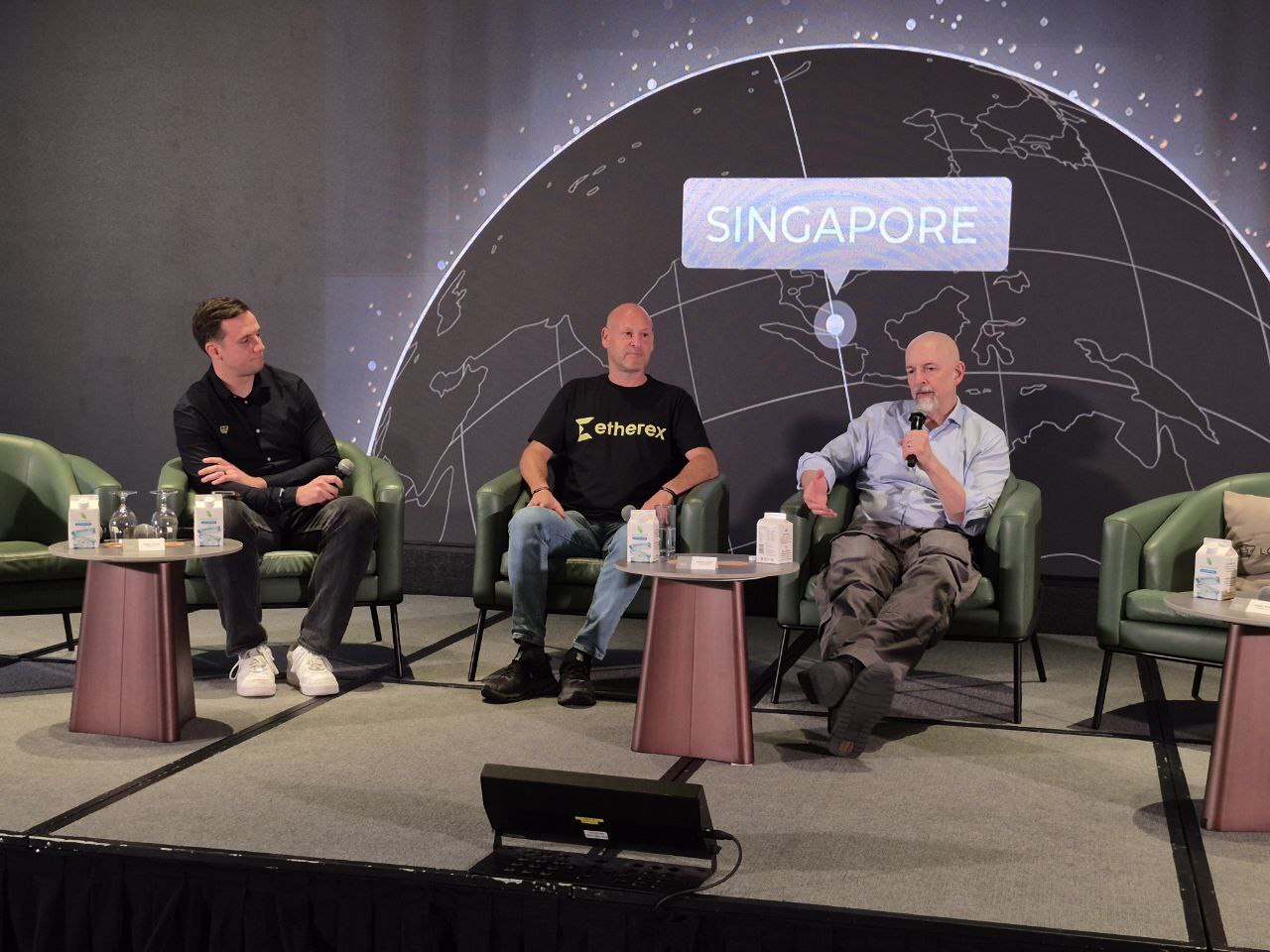
Image: Cointelegraph’s Gareth Jenkinson with Joe Lubin and Snow Crash author Neal Stephenson. Source: Cointelegraph
Linea, developed by Consensys, is a layer 2 solution focused on scalability. It utilizes zk-EVM rollup technology to process transactions at a significantly lower cost compared to Ethereum. Linea currently has $2.27 billion in total value locked, making it the fourth largest Ethereum layer 2 network according to L2BEAT data.
With SWIFT handling approximately $150 trillion in global payments annually, its entry into the blockchain payments space could have a significant impact on the industry.
Leading banks join SWIFT on Linea
Major financial institutions including Bank of America, Citi, JPMorgan Chase, and Toronto-Dominion Bank are set to participate in trials of SWIFT’s blockchain payments rail on Linea. This collaboration poses a potential challenge to Ripple’s XRP Ledger, a popular blockchain payment system tailored for banks.
SWIFT’s move towards blockchain payments aligns with the benefits of decentralized settlement, offering faster, 24/7 transactions without intermediaries, reducing costs, errors, and delays.
Linea’s potential beyond payments
Lubin emphasized Linea’s broader potential beyond payments, envisioning it as a platform for user-generated content and civilization. By leveraging Ethereum’s trustless settlement layer, Linea allows communities to build infrastructure and rules from the ground up, diverging from traditional top-down governance structures.
Decentralized autonomous organizations (DAOs) are already exploring decentralized decision-making using smart contracts and voting mechanisms. While few DAOs have achieved widespread success, the potential for decentralized governance on platforms like Linea is promising.
Related: ‘Stablecoin duopoly ending’ as USDT, USDC dominance falls to 84%