
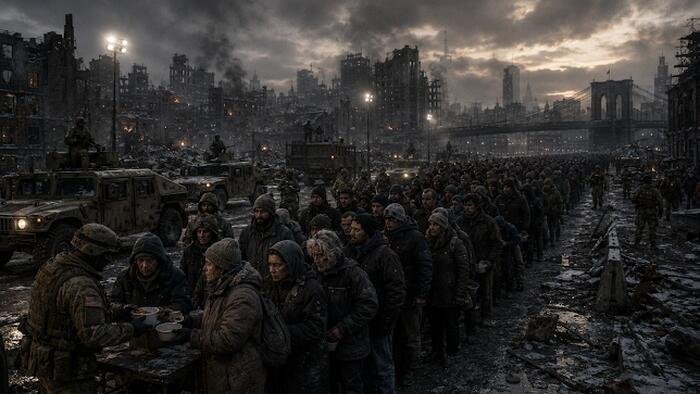
For nearly three decades, much of the modern world behaved as though the nuclear age had quietly expired sometime in the early 1990s. The collapse of the Soviet Union created the comforting illusion that humanity had stepped away from the edge permanently, as if the terrifying balance that defined the Cold War had dissolved together with old political maps. Younger generations grew up hearing about nuclear drills, fallout shelters, and atomic panic the same way they heard about trench warfare or medieval plagues: as distant historical experiences disconnected from ordinary life. Governments gradually shifted public attention toward terrorism, economic globalization, artificial intelligence, and climate policy, while nuclear annihilation faded into the background of public consciousness.
Yet history has a dangerous habit of returning precisely when societies become convinced they have outgrown it.
Throughout 2025 and the opening months of 2026, the international system entered one of its most unstable periods since the twentieth century. Military analysts began warning openly about simultaneous geopolitical flashpoints involving several nuclear powers at once. Russian officials intensified references to strategic deterrence during ongoing confrontations connected to Eastern Europe, while NATO expanded military exercises across regions Moscow considers existentially sensitive. At the same time, China accelerated modernization of its nuclear arsenal and long-range missile systems at a pace that alarmed Western intelligence agencies. North Korea continued demonstrating increasingly advanced delivery capabilities, and tensions surrounding Taiwan, cyber warfare, and contested maritime territories pushed diplomatic relations into progressively uncertain territory.
Most citizens observed these developments from a psychological distance shaped by modern media exhaustion. Continuous exposure to crisis has transformed public attention into something fragmented and temporary. Economic anxiety, inflation, political polarization, housing instability, technological disruption, and endless digital noise have conditioned people to process existential threats as short-lived headlines rather than historical warnings. This emotional fatigue may partially explain why recent discussions surrounding nuclear risk have failed to produce widespread public alarm despite the seriousness of the underlying situation.
What many people still fail to understand is that contemporary fears surrounding nuclear war extend far beyond the immediate destruction caused by the weapons themselves.
The dominant concern among climate scientists, food security experts, and strategic analysts is no longer limited to blast zones or radiation exposure.
The larger fear involves what happens afterward, when the environmental consequences of large-scale firestorms begin altering the planet’s atmosphere and destabilizing the systems that sustain modern civilization.
Civilization Does Not Collapse In One Afternoon
During the Cold War, researchers studying atmospheric science reached conclusions that many policymakers initially struggled to accept. Their models suggested that nuclear detonations targeting cities and industrial infrastructure would ignite massive firestorms capable of releasing extraordinary amounts of soot and smoke into the upper atmosphere. Unlike ordinary pollution, these particles could remain suspended in the stratosphere for extended periods, blocking significant portions of sunlight from reaching the Earth’s surface. The phenomenon eventually became known as “nuclear winter,” though the phrase itself almost sounds too simple for the scale of devastation being described.

The consequences outlined in scientific simulations were extraordinary. Temperatures across major agricultural regions could fall dramatically within weeks. Growing seasons would shorten or disappear entirely in some parts of the world. Rainfall patterns could become severely disrupted, while frost conditions might appear during periods traditionally associated with crop growth. Wheat, corn, rice, and soy production would decline simultaneously across multiple continents, creating a synchronized collapse unlike anything modern economies were designed to survive.
What makes this possibility especially catastrophic in 2026 is the structure of contemporary civilization itself. Modern societies are built upon tightly interconnected supply chains operating with remarkable efficiency but very little redundancy. Large urban populations depend on continuous transportation networks, imported food, fuel distribution systems, refrigeration infrastructure, and stable international trade routes to maintain ordinary daily life. The abundance visible inside supermarkets creates the illusion of permanent security, yet many cities possess only limited food reserves capable of supporting their populations for short periods without resupply.
Once agricultural output begins failing internationally, governments would almost certainly prioritize domestic survival over global cooperation. Export restrictions would emerge rapidly. Shipping routes could become militarized or inaccessible. Financial systems would destabilize under panic conditions, while fuel shortages would further damage transportation and farming operations. Nations heavily dependent on food imports would face immediate humanitarian crises, but even agricultural powers would struggle once climate disruption and supply chain fragmentation intensified simultaneously.
Several modern studies examining nuclear famine scenarios estimate that billions of people could face starvation following a large-scale nuclear exchange. Some projections, revisited in light of newer climate data and current population levels, suggest mortality rates so extreme that they challenge the imagination. This is partly why historical American government assessments discussing potential death tolls approaching ninety percent of humanity continue attracting renewed attention today. The figure sounds almost impossible to comprehend until one begins analyzing how dependent modern civilization truly is on environmental stability and uninterrupted agricultural production.
There is also a psychological dimension to these discussions that experts rarely address publicly in direct terms. Human beings often assume technological sophistication automatically guarantees resilience. The modern world appears powerful because it possesses satellites, artificial intelligence, advanced medicine, digital communication, and industrial automation. However, none of those systems can function normally without stable energy networks, functioning governments, predictable climates, and access to food. Civilization may appear technologically invincible while remaining biologically fragile underneath.
Historical examples repeatedly demonstrate that famine destabilizes societies faster than almost any other force. Political institutions that appear permanent during periods of abundance can deteriorate with astonishing speed once populations begin competing for survival. Social trust erodes rapidly under conditions of scarcity, and governments facing mass hunger frequently resort to emergency powers, censorship, militarized distribution systems, or violent repression in attempts to preserve order.
Researchers are concerned not just about the physical suffering that would result from a nuclear conflict, but also about the potential disintegration of the foundational structures of civilization under prolonged environmental strain. The belief in rational actors preventing catastrophic outcomes is being challenged by the unpredictable forms of instability present in today’s geopolitical landscape. The fear is now less about intentional world-ending wars and more about uncontrolled escalation stemming from various factors like regional conflicts, technological failures, accidental launch detections, or political desperation. The existence of numerous nuclear warheads means that humanity is living in a system where a small number of decisions made within minutes could permanently alter the course of civilization. Despite having clear scientific knowledge of the risks involved, the lack of political unity poses a significant threat. The normalization of these dangers is a cause for concern, as nuclear weapons are no longer seen as mere symbols but as active threats. The focus has shifted towards the potential consequences of a nuclear conflict on agriculture, with collapsing harvests interacting with fragile political systems and overstretched global supply chains. The atmospheric consequences of a large-scale nuclear conflict could lead to reduced sunlight reaching agricultural regions globally, impacting food production significantly. The interconnected nature of the modern world means that synchronized global shortages could severely disrupt food production and distribution systems, leading to widespread social and economic challenges beyond just starvation.
Why The Twenty-First Century May Be Ill-Prepared for Crisis
The modern world is technologically advanced, with artificial intelligence, satellite monitoring, and global communication networks connecting billions of people. However, this sophistication comes with a level of systemic dependency that could increase vulnerability during extreme crises.
Cold War societies, despite nuclear anxiety, had stronger local manufacturing capabilities, larger strategic reserves, and populations familiar with rationing and emergency planning. In contrast, today’s economies rely on global supply chains optimized for efficiency, lacking redundancy and resilience.
Efficiency has led to fragility – a disruption in one sector can quickly spread through multiple industries. Agriculture, heavily industrialized and reliant on advanced systems, is particularly vulnerable. Population density is another concern, with urban areas dependent on continuous food and waste systems.
Climate change, economic inequality, migration pressures, and regional conflicts have already strained the world. A large-scale crisis like nuclear war would not strike a stable order but a world already exhausted.
Government assessments of nuclear war consequences include broader systemic collapse, such as food insecurity, governance failure, economic fragmentation, and environmental destabilization. Survival after nuclear war depends more on long-term consequences like famine than on the initial explosions.
The bombs may last minutes, but the famine that follows could reshape civilization for generations.
following sentence:
“The cat quickly ran across the street.”
The cat dashed across the street with speed.