
Authored by Larry C. Johnson via SonarIntelligence (Sonar21),
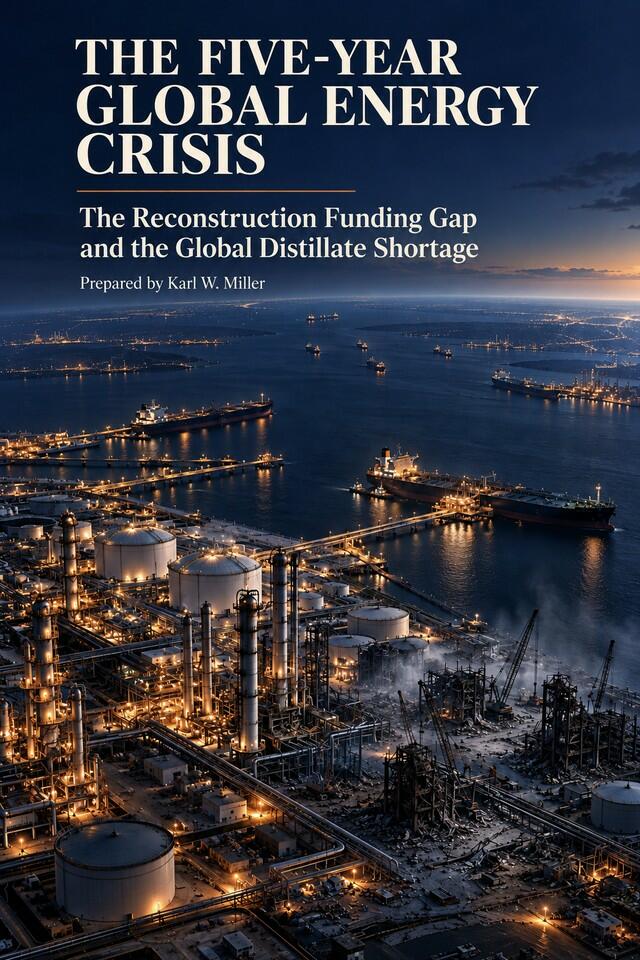
Once again Karl W. Miller has quantified a problem that many still see as a temporary issue of rising prices. In his latest report titled “The Five-Year Global Energy Crisis,” dated October 3, Miller presents an argument that should raise concerns for finance ministries worldwide. The damage caused to Gulf energy infrastructure by the war is not a short-term disruption that will end once the conflict ceases. It is a reconstruction challenge that will take years and trillions of dollars to address. Until this problem is resolved, the world will face a shortage of the essential fuels that drive its economy.
A ceasefire is not a repair crew
Miller’s key insight is straightforward. While a ceasefire can quickly reopen a shipping lane, it cannot magically produce equipment, skilled engineers, or funding for reconstruction. He argues that the next phase of this crisis will involve a fierce competition for resources, including cash, equipment, qualified contractors, and finished fuel.
His cost projections are alarming. In his most aggressive scenario, the total funding required to rebuild the damaged Gulf energy infrastructure amounts to $1.16 trillion. In a prolonged stress situation with equipment shortages, escalating prices, and delays, this cost could soar to $2.53 trillion. Even in the fastest recovery scenario, the cost would still be close to half a trillion dollars. Miller clarifies that these figures are based on models and not actual quotes from contractors. Nevertheless, the longer the delay in reconstruction, the more expensive it becomes, as the global market for specialized equipment and labor is already strained due to ongoing projects in LNG, refineries, and power sectors worldwide.
The timeline is equally concerning. On average, the reconstruction process is expected to take nearly five years from the present day. By 2031, only 60% of the work will be completed, with some of the most critical packages taking up to seven years to finish.
The financial challenge takes precedence
One of the most original aspects of Miller’s analysis focuses on the financial aspect. He highlights that a refinery may be technically repairable and worth rebuilding, but it could remain idle if the government that owns it is struggling to meet other critical financial obligations such as food imports, salaries, electricity, and water expenses. Lost export revenue does not alleviate these financial pressures. When a government resorts to borrowing to cover essential expenses, it may not have the funds required for engineering projects like refinery reconstruction.
Miller points to Iraq as a practical example of this financial dilemma. In July, Iraq faced a significant monthly public salary obligation of approximately $5.96 billion, with a funding gap of $2.52 billion. In such a situation, a government prioritizes meeting immediate financial needs over investing in energy infrastructure. This delay in reconstruction can create a domino effect where engineering funds and vendor deposits are lacking, leading to missed opportunities for factory restoration and delayed delivery schedules.
The impact of the fuel shortage on the global economy
The repercussions of the fuel shortage are felt primarily in diesel and jet fuel markets. Miller presents alarming statistics indicating a substantial decline in Gulf diesel net exports post-war. The combined diesel exports from the Gulf and Russia were significantly lower than pre-war levels, leading to a global reduction in oil stocks and refinery throughput. Looking ahead, Miller’s analysis suggests a potential shortfall of at least 3 million barrels per day of diesel and jet fuel annually for the next five years. This deliberate stress test scenario underscores the urgent need for increased supply to meet demand. Without adequate new supply sources, the global market will be forced to reduce fuel consumption to bridge the gap between supply and demand.
The economic ramifications extend beyond the direct impact on fuel availability. As buyers compete for limited fuel supplies, prices are driven up, affecting various sectors of the economy. Higher fuel costs translate into increased freight rates, food prices, and inflation. Additionally, scarcity of fuel leads to challenges in obtaining credit, as buyers need more working capital to secure fuel inventories for longer periods due to supply disruptions. This heightened competition for fuel resources redistributes the shortage unevenly across different regions and sectors.
Addressing the fuel crisis: The road ahead
Miller’s analysis paints a sobering picture of a world economy grappling with a prolonged supply shock that will have far-reaching consequences. Central banks will face continued inflationary pressures, emerging markets will struggle with high fuel costs and currency devaluation, and the reconstruction efforts will divert resources that could have been used for much-needed energy infrastructure investments. The path to recovery is long and arduous, requiring substantial financing, technical expertise, and time to rebuild the damaged energy infrastructure.
It is clear that ending the conflict is just the first step in a complex process of energy system restoration. Until sufficient funds and resources are allocated for reconstruction, the global economy will continue to face challenges related to fuel availability and affordability. Policymakers must heed Miller’s warning and prepare for a prolonged period of fuel scarcity that will have a profound impact on economic stability and growth.