
Spokesperson: Alexis Cathalifaud, CEO
As the demand for artificial intelligence compute continues to rise, the infrastructure supporting this demand is becoming a crucial consideration. Companies in the sector are racing to secure access to powerful GPUs, while issues around electricity, data-center capacity, cooling, and connectivity are becoming intertwined with the compute itself.
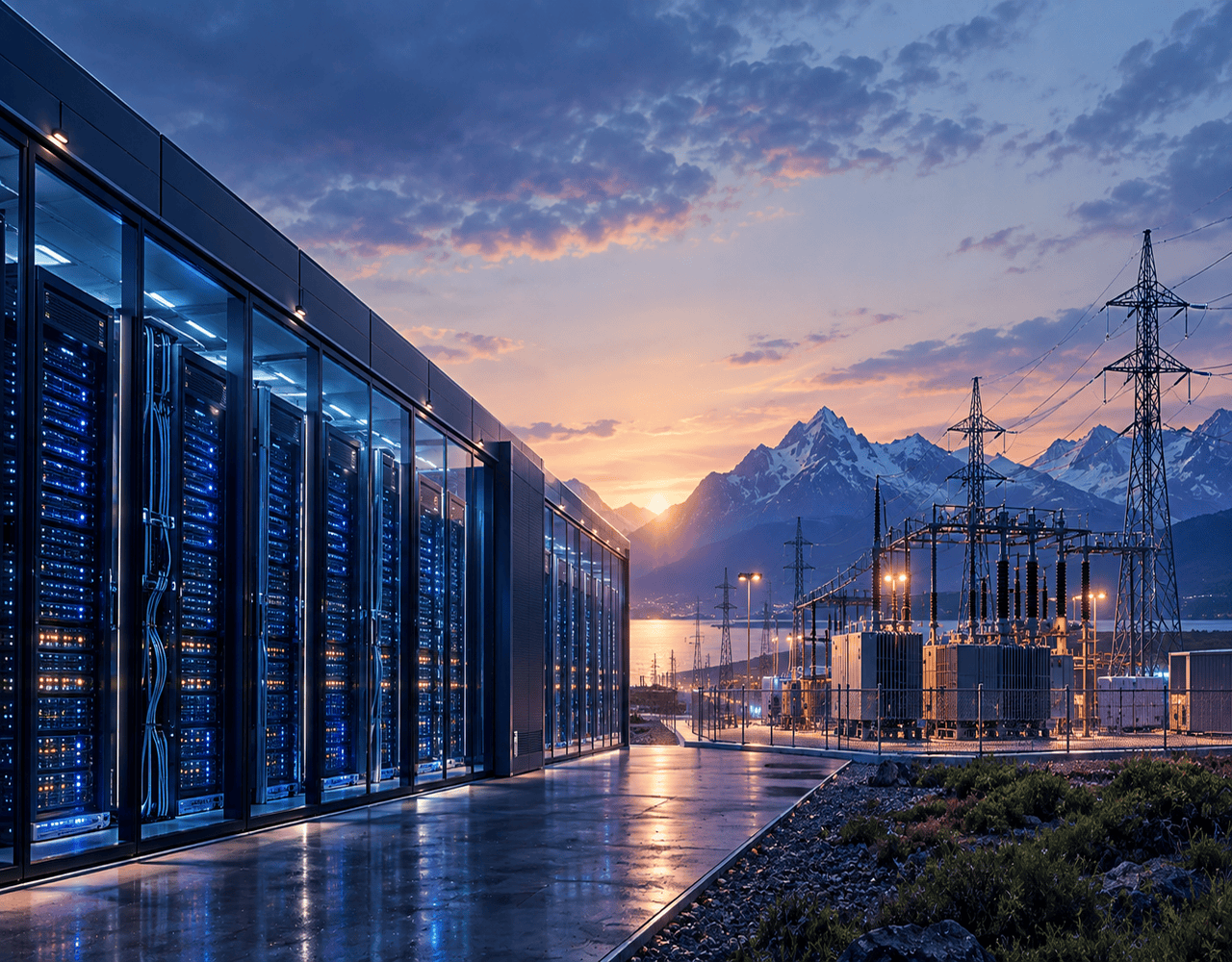
Clichmont is taking a unique approach by focusing on owning and controlling the physical infrastructure necessary for AI hardware to operate. In this interview, CEO Alexis Cathalifaud discusses why the company believes power and data-center infrastructure could be the more enduring bottlenecks, their approach to site selection, challenges in scaling physical infrastructure, and the role of the $CLAI token within the ecosystem.
1) In a competitive landscape where companies are vying for GPU access, Clichmont prioritizes owning and controlling the data centers over renting GPUs. Why does ownership hold more significance than access?
GPU access provides compute; infrastructure ownership offers control over the economics of compute.
Owning the infrastructure allows Clichmont to make strategic decisions regarding GPU deployment, upgrades, power, and cooling. It also ensures longevity and flexibility across GPU generations.
Furthermore, while GPUs depreciate quickly, power-ready data-center capacity remains a valuable asset over multiple generations.
The ability to power thousands of GPUs at scale becomes a crucial resource, beyond just acquiring the GPUs themselves.
2) Competing with public or upcoming companies like CoreWeave, Crusoe, and Lambda, where do you believe their model falls short?
CoreWeave, Crusoe, and Lambda have validated the immense market for AI compute. However, Clichmont’s differentiation lies in focusing on the enduring scarcity of infrastructure rather than the rapidly evolving GPU technology.
3) Amid discussions about energy being the primary bottleneck for AI infrastructure, how does this influence Clichmont’s location and construction decisions?
Energy considerations heavily influence Clichmont’s site evaluations, ensuring reliable power, scalability, and cost-effectiveness. The company acknowledges that the competition will shift from GPUs to megawatts in the coming years.
4) From solar-powered facilities to new builds, what factors determine the location of Clichmont’s data centers?
Clichmont’s site selection revolves around securing sufficient power, efficient cooling, climate suitability, connectivity, and scalability. Each location’s infrastructure equation must align for optimal compute capacity.
5) With a token associated with the infrastructure company, how does $CLAI add value to the ecosystem?
$CLAI aims to provide a digital economic layer supporting participation, treasury activities, and governance within the ecosystem. Its utility must extend beyond traditional financing methods to justify its existence.
6) What challenges in scaling physical infrastructure are often underestimated by those with a software background?
Physical infrastructure scaling differs from software scalability, requiring meticulous coordination of power, construction, and hardware. Timing and capital allocation play critical roles in successful infrastructure expansion.
7) The risk of a build-it-yourself model versus a capital-light rental model lies in…
The primary risk involves capital intensity and timing, as committing to self-building infrastructure requires long-term investment decisions that must align with future demand and technology changes.
8) Where does Clichmont aim to position itself relative to industry giants like CoreWeave and Nebius in three years?
Clichmont strives to be recognized for efficient AI infrastructure operations in Europe, focusing on strategic location choices and adaptable infrastructure design for evolving compute needs.
Conclusion
Clichmont’s strategy revolves around a long-term investment in infrastructure, emphasizing the importance of efficient operation and scalability beyond GPU access. Success will depend on the company’s ability to execute effectively and adapt to changing market dynamics.