
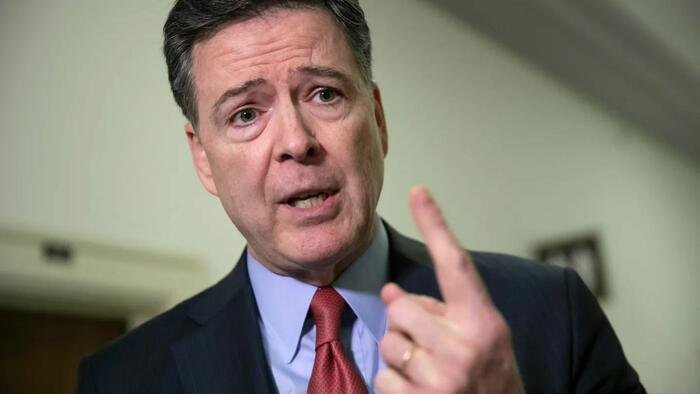
A federal grand jury in the Eastern District of North Carolina has indicted former FBI director James Comey on charges of threatening President Donald Trump’s life and transmitting that threat across state lines. The indictment stems from an Instagram post in May 2025 where Comey shared a photo of seashells spelling out “86 47,” which led to the charges. Comey deleted the post the same day and clarified that he did not intend any violence, but legal analysts doubted the case’s viability from the beginning.
Constitutional scholar Jonathan Turley and other experts believe the case lacks legal merit, pointing to First Amendment protections for political speech. Despite the indictment, many believe the charges will not hold up in court due to the high standard required to convict Comey of making a true threat.
There are speculations that Trump’s motivation behind the indictment is to make Comey’s life miserable rather than seeing him go to jail. However, Acting Attorney General Todd Blanche denies any White House involvement in the indictments, emphasizing that the grand jury returned the charges independently.
While Trump has faced politically motivated legal challenges himself, the decision to pursue Comey over a seashell photo raises questions about the administration’s priorities. Critics argue that more substantial cases related to Comey’s actions during the Clinton email investigation and other matters would have been more appropriate for prosecution.
In conclusion, the indictment against Comey for a seashell photograph raises doubts about the government’s ability to prove a real threat against the president. Legal experts question the validity of the charges, highlighting the need for substantial evidence to support such claims in court.