
Authored by Andrew Korybko via Substack,
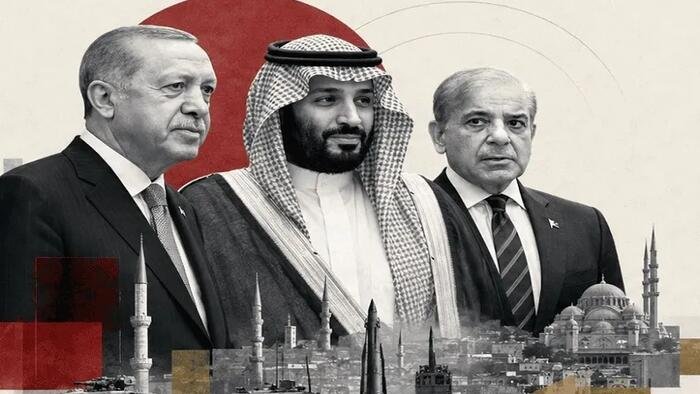
Although Russia officially supports the Islamic NATO and envisions Iran as part of it to enhance regional collective security, there is an awareness of the potential threat posed by this bloc due to Turkiye’s rivalry with Russia.
Russian Foreign Minister Sergey Lavrov stated in early September Russia’s stance on the Islamic NATO and its role in stabilizing West Asia. He referenced Russia’s longstanding Gulf collective security vision and emphasized its urgency following recent conflicts. Lavrov mentioned the Mecca Joint Defense Agreement, highlighting the potential inclusion of Iran in the process.
Lavrov’s statement reflects Russia’s willingness to support coordinated efforts by concerned countries, signaling a positive stance towards the Islamic NATO, especially regarding Iran’s participation. However, given the historical ties of the bloc’s founding states to NATO, concerns arise about the bloc’s potential challenge to Russia, particularly through Turkiye’s actions.
Recent analysis suggests that the Islamic NATO poses challenges to Russia, as Turkiye aims to expand NATO influence in Central Asia, Pakistan facilitates arms flow into Afghanistan, and Saudi Arabia may support these endeavors. Despite potential benefits, Turkiye’s strategic moves independently challenge Russia, prompting a nuanced assessment of the bloc’s implications.
While Russian officials may not openly acknowledge the threat posed by the Islamic NATO, they are likely cognizant of Turkiye’s geopolitical ambitions and potential implications for Russia’s interests. Maintaining diplomatic relations, Russia aims to balance cooperation and vigilance towards the bloc, with internal discussions reflecting a more critical perspective.