
Authored by Madge Waggy via A lot will happen in 2026!
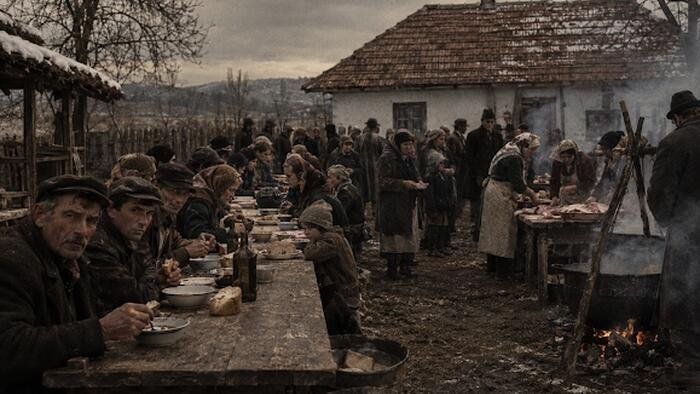
My grandmother had a cupboard she called the just-in-case, which I always thought of as a quirky habit rather than what it truly was – a way to make wounds edible. Living through the Depression as a young girl, she had learned the art of stocking tinned beans, sacks of flour, and jars sealed with wax and paper. Every item in that cupboard was carefully rotated with the seriousness of a quartermaster preparing for a war that had already ended but could reignite at any moment. Nothing from that cupboard was ever consumed first. It sat at the back of the shelf like a private insurance policy against a world that had once stripped everything from her family and could, she feared, do so again at a moment’s notice.
For years, the cupboard seemed like a relic. The country around it prospered, and food in America became remarkably affordable, allowing families to waste a third of their purchases and consider it a lifestyle. The word hunger faded into charity drives and distant lands. We built a national identity on the belief that shelves would always be stocked, prices would remain reasonable, and food scarcity would not be an issue. To question this assumption in the nineties was almost embarrassing, akin to a man keeping a shotgun in suburbia.
Then the decline began, so subtle that it felt more like a mood than a crisis. A receipt that used to total forty dollars now reached sixty, buying less. A bag of chips felt lighter. A weekly beef habit turned into a monthly indulgence. This slow decline’s particular cruelty lies in its almost bearable nature at any given moment, making it not urgent enough to resist.
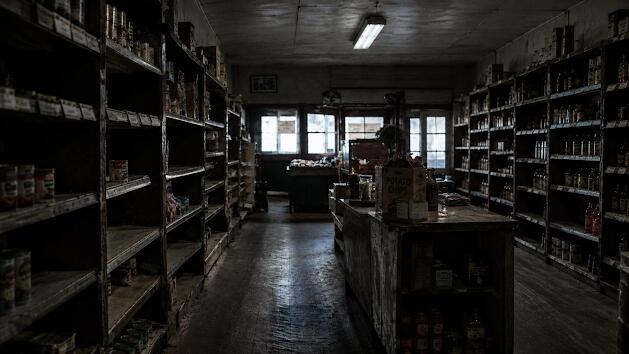
This piece aims to gauge this decline, acknowledging what can be quantified while recognizing where measurement falls short. The argument is not that America is on the brink of a 1932-like scenario with soup kitchens on every corner and breadlines, but rather that the country is regressing towards Depression-era conditions. This regression is visible to anyone who observes a scale, a price tag, or an empty shelf, hinting at a future where abundance remains a facade while reality paints a different picture.
🩸 What the Register Confesses
Starting at the point of sale, where the first signs emerge and official figures are outpaced by actual expenses. While the Bureau of Labor Statistics reported moderate grocery price increases, the reality faced by shoppers was more daunting. Beef prices surged, coffee soared due to a tariff, lettuce became costlier, and other essentials followed suit, painting a grim picture for households.
- Ground beef: up nearly 18.9%
- Coffee: up about 55%
- Lettuce: up 39%
- Sirloin steak: up 21%
- Orange juice: up 15%
- Sugar and sweets: forecasted to rise by 7% in 2026
Underneath these headline price hikes lurks the impact of tariffs, often unseen but passed on to consumers. Drought, rising feed costs, and a prolonged rebuilding cycle further contribute to the escalating prices, creating a consistent uphill trend.
| 🖼️ | Item | 12-month change | Note |
|---|---|---|---|
| 🥩 | Ground beef | ≈ +18.9% | averages near $6.75/lb |
| ☕ | Coffee | ≈ +55% | since Feb 2024; plus 50% tariff |
| 🥬 | Lettuce | ≈ +39% | |
| 🥩 | Sirloin steak | ≈ +21% | near $12.80/lb |
| 🍊 | Orange juice | ≈ +15% |
Eggs witnessed a brief price drop after a spike, but overall, households found themselves making trade-offs between different essentials, feeling the pinch despite the seemingly stable official numbers.
📉 The Vanishing Gram
Not all price hikes are explicit; some are concealed within the product itself. Shrinkflation, where packaging remains the same while contents decrease, is a sneaky tactic that goes unnoticed on receipts but contributes to a hidden inflation. Consumers find themselves unknowingly paying more for less, as manufacturers exploit the gap between price and weight.
This deceitful practice challenges consumers’ savvy shopping skills, as the eye is tricked by pricing, not weight. Combatting this requires vigilance, attention to detail, and a keen eye for discrepancies that go beyond superficial price tags.
🕳️ When the Shelf Forgets
While prices indicate affordability, absence signifies a deeper truth – the actual essence of food. The recent wave of shortages, though seemingly trivial individually, collectively paints a picture of a fragile system prone to disruptions. Baby formula, Sriracha, cream cheese, and other unexpected disappearances reveal the system’s vulnerability, with labor and logistics challenges now replacing traditional production concerns.
The weak point has shifted from production to labor and logistics, with understaffed warehouses and aging drivers posing new threats. A human failure is harder to rectify than an agricultural one, as the system grapples with a new set of challenges.
🐄 The Herd at the Edge
Examining the beef industry offers insights into the broader food system’s health. The dwindling American cattle herd, coupled with demand remaining constant, spells trouble for the future. Rebuilding the herd is a slow process, with forecasts pushing relief beyond 2028, indicating that tonight’s steak prices are determined by factors beyond the shopper’s control.
Set against historical precedents, the parallels between then and now raise concerns rather than poetic reflections. The possibility of a regression towards Depression-era conditions is a stark reality, with household decisions indicating a subtle but noticeable shift in consumption patterns.
📊 The Credibility Gap
Statistics may downplay the severity of the situation, as shoppers feel the pinch more acutely than official figures suggest. The gap between statistics and lived experiences highlights the limitations of average calculations, as individual households grapple with rising prices and compromised living standards.
Substitutions and compromises made by families go unnoticed in official reports, painting a rosier picture than reality. The discrepancy between data and sensation underscores the need to trust personal experiences over statistical averages when assessing the true impact of inflation.
🍲 The Anatomy of Want
Unveiling the reality of food during the Depression era sheds light on the practicalities of scarcity. Families navigated meager resources with ingenuity, crafting meals from humble ingredients to stretch their provisions. The lessons learned from that era are resurfacing today, with households turning to cost-effective, nutritious options like beans, root vegetables, and affordable cuts of meat to weather the economic storm.
The return to a more disciplined approach to food consumption, marked by a focus on affordability and sustainability, underscores a shift towards resilience in the face of uncertainty.
🫥 The Shame of the Line
The psychology of hunger, intertwined with economic realities, shapes how households navigate food insecurity. The stigma associated with seeking assistance during the Depression era has evolved into a modern-day performance of plenty, with families concealing their struggles behind a facade of abundance.
This performative instinct complicates efforts to accurately gauge the extent of food insecurity, as households adeptly mask their challenges to maintain appearances. The silent suffering experienced by many echoes a historical pattern of hidden deprivation that may go unnoticed in a society that values outward displays of comfort.
🫙 The Substitution Kitchen
Adapting to rising prices involves strategic substitutions in the kitchen, with households turning to affordable, nutritious alternatives to stretch their budgets. Embracing slow, cost-effective cooking methods and prioritizing high-yield crops can help families weather the economic storm without compromising on nutrition.
The resurgence of these Depression-era skills underscores a return to resourcefulness in the face of scarcity, as households navigate the challenges of a tightening food market.
🌱 Ground Under the Fingernails
Cultivating a small garden or engaging in urban farming offers a practical solution to rising food costs, providing a source of fresh produce that is both cost-effective and sustainable. The return to gardening as a form of self-reliance underscores the importance of agency in securing food security amidst economic uncertainty.
🫙 The Long Keeping
Preservation methods like canning, freezing, and dehydrating offer a way to extend the shelf life of food, providing households with a cost-effective means of storing produce for the long term. Embracing these traditional preservation techniques can help families build a pantry that is resilient to price fluctuations and shortages.
🕸️ The Short Chain
Shortening the distance between farm and table, whether through direct purchases from local growers or participation in community-supported agriculture programs, offers a way to reduce reliance on a fragile food supply chain. By supporting local producers and reducing waste, households can enhance their food security and contribute to a more sustainable food system.
🌍 Distant Weather
Global factors, such as climate change and geopolitical events, play a significant role in shaping food prices and availability. Understanding the interconnected nature of the food system can help households prepare for potential disruptions and build resilience in the face of external challenges.
⚰️ What Could Break
Assessing the potential failure modes of the food system reveals a spectrum of outcomes, from a gradual decline in living standards to a severe crisis marked by widespread shortages and price spikes. The fragility of the current system, exacerbated by just-in-time logistics and global dependencies, underscores the need for proactive measures to mitigate risks and build resilience.
🕯️ No Tidy Ending
As we navigate this period of uncertainty, it is essential to remain vigilant and adaptable in the face of evolving challenges. While the future remains uncertain, embracing self-sufficiency, sustainability, and community resilience can help households weather the storm and build a more secure future.