
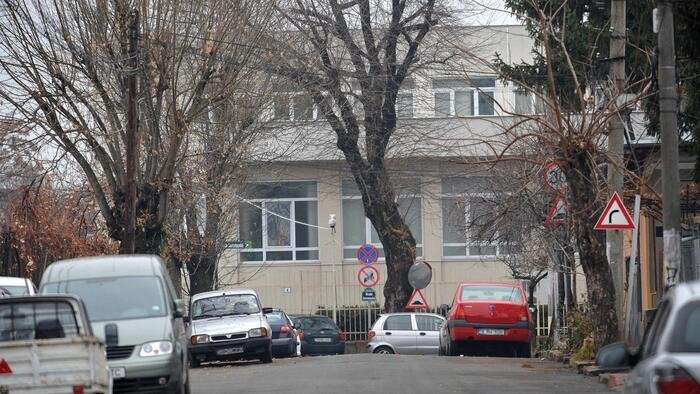
The chilling memories of torture in a secret CIA prison in Bucharest resurface for Ammar al-Baluchi, as he recalls the harsh conditions of his detention. Nearly naked, he endured solitary confinement under constant fluorescent lights, sleep deprivation, icy water dousing, and physical abuse euphemistically termed as “attention grasps” and “facial holds”. Baluchi, the nephew of 9/11 mastermind Khalid Sheikh Mohammed, was one of several individuals believed to have been tortured at the facility known as “Detention Site Black” between 2003 and 2005.
A quarter-century after the 9/11 attacks, a trial date has finally been set for Baluchi in 2028, after years of legal disputes over evidence and the use of confessions obtained under torture. The case against Baluchi and three others has been marred by questions surrounding the legality of their treatment in the CIA black site in Bucharest.
The Romanian site was part of a network of secret prisons operated by the CIA post-9/11, with similar facilities in Thailand, Poland, and Lithuania. Romania’s involvement in hosting the black site was confirmed by former president Ion Iliescu, who described the arrangement as a gesture of courtesy towards the US ahead of Romania’s accession to NATO. The agreement reportedly involved millions of dollars in compensation, with top Romanian officials aware of the CIA’s activities on their soil.
Despite the passage of time, the scars of torture inflicted in the shadows of Bucharest continue to haunt those who were held captive in the secret CIA prison. The 2019 report revealed a detail that Marty did not fully explain. Romanian officials were briefed on the program by the US ambassador and the CIA’s Bucharest station chief after September 2004. The presentation clearly described the use of torture, and it is confirmed that Romania’s site, believed to be located in central Bucharest, consisted of cells engineered to keep detainees off balance and disoriented. The site, sometimes referred to as “Bright Light,” was known for its continuous fluorescent lighting. Despite Romania’s denial, the European Court of Human Rights ruled in 2018 that Romania had violated the rights of detainees. The case involving Abd al-Rahim al-Nashiri, accused of being the mastermind of the USS Cole bombing, highlighted the extreme conditions in Romania’s black site. The investigation into the site in Bucharest has faced challenges, with little accountability for the abuses that occurred. Romania’s official position has been one of denial, but evidence suggests complicity in facilitating the CIA’s black site and torture program. The confessions extracted under torture at the Bucharest facility have become central to the 9/11 case, with a trial date set for June 2028.
Similarly, the role of the governments that permitted the CIA to run secret detention and interrogation sites on their soil has also come under scrutiny.
Despite mounting evidence, Romania has chosen to remain silent about the events that took place in its underground facilities. “There has been a substantial amount of evidence indicating that Romania was home to a black site, and despite the increasing evidence, the government has persisted in denying any involvement,” stated Black. “It is absurd, it is illogical.”