
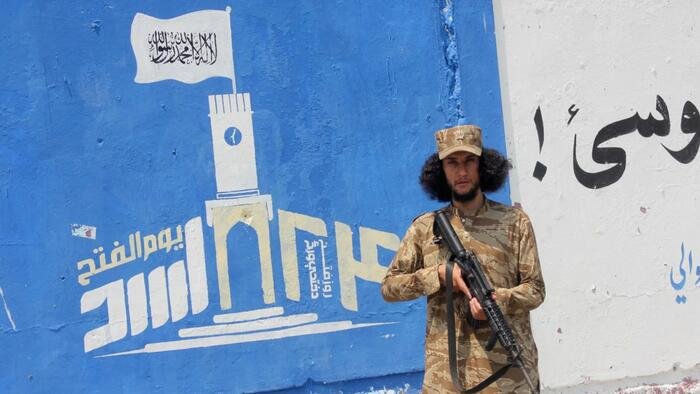
Five years after the Taliban regained power on August 15, 2021, Afghanistan has shifted from a tumultuous battlefield to a functional yet highly authoritarian state. The absence of foreign troops and the failure of fragmented opponents to challenge Kabul’s control have led to improved internal security under the Taliban regime.
However, this stability comes at the expense of systematic exclusion, particularly affecting women, leaving the country economically vulnerable and politically isolated. Despite the Taliban’s ability to govern without Western aid, they face international condemnation and are dealing with a severe humanitarian crisis.
via AFP
Present-day Afghanistan is more peaceful than before 2021, yet it is also poorer, more isolated, and oppressive towards half of its population. The main achievement of the Taliban in the first five years has been consolidating their territorial control. The next five years will determine their ability to withstand mounting internal and external pressures.
Criminalization of Dissent
The last five years have seen Taliban leader Hibatullah Akhundzada quietly amassing power from Kandahar. Since taking office in 2016, Akhundzada has transformed the movement from an insurgency to a rigid governing body.
His network, which includes key state positions held by Kandahari officials, is supported by a large patronage system of madrassas. This network ensures the loyalty of the clergy and consolidates power in Kandahar. While high-profile figures manage daily governance in Kabul, real power resides in Kandahar, where a 119-article criminal procedure code was approved to enforce absolute obedience and silence dissent.
According to analyst Muhammad Israr Madani, this centralization of power has strengthened the Taliban’s ability to prevent internal conflicts but has also led to resentment among commanders. The regime’s survival depends on maintaining unity among its leaders.
The Taliban have learned that lasting control requires more than military might; it necessitates patronage, financial leverage, and ideological alignment to reward loyalty systematically.
Economic Challenges
Afghanistan is grappling with an economic crisis marked by dependency and isolation. Following the Taliban’s takeover, the country lost international grants and faced freezes on central bank assets, leading to a significant reduction in aid funding.
Despite the Taliban’s efforts to manage the economy better, the majority of Afghans still struggle to meet basic needs, with economic expansion slowing down. The nation’s GDP per capita has declined, exacerbated by population growth and natural disasters.
The regime’s opium ban, while reducing cultivation, has had negative economic impacts on rural households, further straining the economy.
Women’s Rights: A High Cost
The Taliban’s restrictions on women and girls have drawn global condemnation, with organizations like Human Rights Watch denouncing the regime for gender apartheid. Women have been stripped of basic freedoms, including access to education and employment, leading to economic consequences.
This policy not only has a human toll but also hinders economic recovery by depriving the nation of essential human capital. The suppression of women in the workforce limits Afghanistan’s economic potential and development.
Strained Relations with Pakistan
The relationship between the Taliban and Pakistan has deteriorated significantly, with accusations of harboring militant groups leading to border tensions and cross-border attacks. Pakistan’s coercive measures, including deportations of Afghans, have strained relations further.
The Taliban’s refusal to suppress the Tehreek-e-Taliban Pakistan has escalated the conflict and deepened ideological divides within the regime.
Minority Marginalization
The Taliban’s rule has marginalized religious and ethnic minorities, erasing Shia jurisprudence and restricting the rights of minority groups. The crackdown on minorities has heightened tensions and risks further destabilizing the country.
Future Outlook
While the Taliban regime is militarily secure, internal rifts and economic challenges pose significant threats to its long-term stability. The regime’s extreme ideology and repression risk alienating the public and creating further instability in the region.
The coming years will test the Taliban’s ability to transition to sustainable governance, a task complicated by economic despair, social repression, and regional conflicts. While forging ties with certain countries provides economic support, the regime’s oppressive governance style may hinder its long-term survival.