
Key Points:
- Saudi Arabia cancels September-loading crude cargoes to Europe due to pipeline attack
- Europe facing diesel shortage and high prices amid global refining crisis
- Saudi Arabia eyes increased crude exports through the Strait of Hormuz after pipeline disruption
Saudi Arabia Cancels September-Loading Crude Cargoes to Europe
“Refining is in a critical state. With Europe’s challenges, Russia’s actions in Ukraine, and reduced refined products from the Arabian Gulf, the situation is dire. European diesel prices are soaring between $9-$11 per gallon,” shared CNBC’s Brian Sullivan.
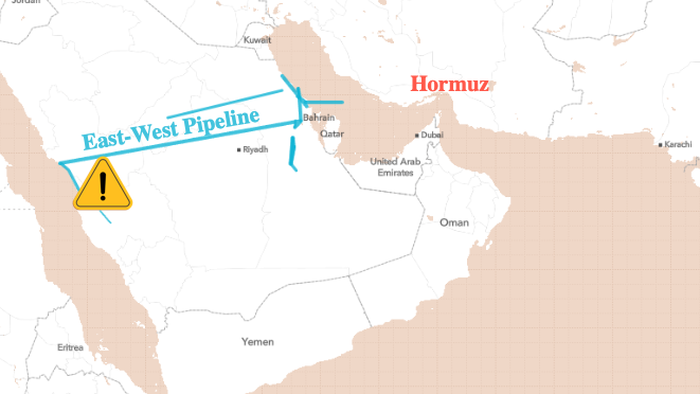
Europe’s energy supply outlook worsened when Saudi Arabia informed European refiners of the cancellation of September-loading crude cargoes following a drone attack that shut down the East-West pipeline.
Aside from diesel scarcity in Europe, low natural gas reserves ahead of winter are contributing to high prices not seen since December 2022.
Saudi Arabia Eyes Hormuz Export Surge After Pipeline Attack
Tensions in the Middle East persist, with Brent crude futures at $105 a barrel and US diesel crack spreads near $110 a barrel amidst a global refining crisis exacerbated by disruptions in Russian fuel production due to the Ukraine conflict.
Following the pipeline shutdown, Saudi Arabia’s options for exports have narrowed, prompting a potential increase in crude shipments through the Strait of Hormuz.
US Energy Secretary Chris Wright mentioned US naval escorts supporting vessels through the Hormuz corridor, potentially aiding increased Saudi shipments.
Bloomberg reported Riyadh’s efforts to boost crude transits through Hormuz, aiming to compensate for the export shortfall caused by the pipeline closure.
Riyadh faces the choice of restoring the East-West pipeline swiftly or significantly boosting Gulf shipments with US naval protection.
Geospatial intelligence reveals the extensive damage from the drone attack on the pumping infrastructure.
“The closure of the 7mb/d capacity pipeline redirected oil away from Hormuz. The impact on Red Sea exports, combined with recent disruptions by Houthi forces, will support oil prices in the near future,” noted UBS energy expert Dominic Ellis.
While Wright hinted at a prompt resumption of pipeline operations, no specific timeline was provided.
AP News suggested a potential resumption of pipeline flows within three to five weeks.
Saudi Arabia’s immediate strategy involves increasing Hormuz shipments, possibly with US naval protection, although tanker availability and freight rates pose challenges.