
Authored by Gerry Bowler via The Epoch Times,
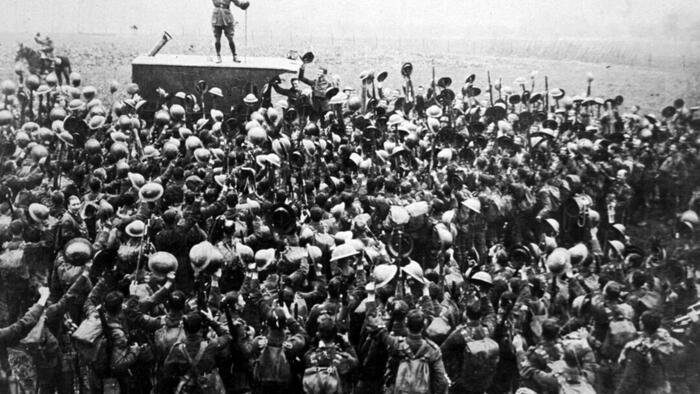
At exactly 11 a.m. on the 11th day of the 11th month of 1918, the fighting ceased on the Western Front, marking the end of what was known as the Great War—the most devastating conflict in world history at that time. Joy and relief filled the air, especially among the Allied forces.
The Ottawa Citizen’s headlines read: “PEACE! World War Ends; Armistice Signed; Kaiser Is Out; Revolution Grows.” In Montreal, Le Devoir reported: “Workers … arrived at their factories with their hearts light, liberated from a great burden. In the animated streets, pedestrians were brandishing newspapers with large smiles, their eyes brimming with fire.” The Winnipeg Free Press reported, “Winnipeg Goes Wild With Joy of Peace.”
Across Canada, church bells rang, spontaneous processions took place, liquor flowed, bands played, and many women and children eagerly awaited the return of their fathers, husbands, and sons.
Meanwhile, in the cities of the defeated Central Powers, the atmosphere was less celebratory.
In Berlin, the news read: “Berlin Seized By Revolutionists: New Chancellor Begs For Order; Ousted Kaiser Flees To Holland.” The Neue Freie Presse in Vienna reported: “The Empire Collapses.”
Front-page stories in Germany and Austro-Hungary highlighted food shortages, public unrest, and the chaos following the declaration of peace.
On the front lines in Belgium, the Canadian Corps experienced a mix of jubilation and anger. Despite the celebrations, there was resentment towards Lt.-Gen. Sir Arthur Currie for ordering attacks on Mons until the last moment, knowing that the war was about to end.
Currie’s decision had a profound impact on Pte. George Price from Port Williams, Nova Scotia.
Price of the 28th Battalion was fatally shot by a German sniper in Ville-sur-Haine on the morning of Nov. 11, just two minutes before the armistice was declared, making him the last Canadian and British Commonwealth soldier to die in the war.
A photo of Canadian soldier Pte. George Price is shown in the Belgian village of Ville-sur-Haine on Aug. 3, 2014, the day before a ceremony to commemorate 100 years since the start of World War I. AP Photo/Virginia Mayo
The 28th Battalion comprised troops mainly from Saskatchewan and Manitoba and had fought bravely in major battles on the Western Front.
Price, a former Canadian Pacific Railway worker, was conscripted in 1917 and arrived in Europe with his unit in June 1918. Despite being wounded in a gas attack, he rejoined his battalion for more battles before his tragic death on Armistice Day. He is laid to rest in St. Symphorien Military Cemetery in Belgium.
Today, Sir Arthur Currie is celebrated as a brilliant military leader, known for his innovative tactics and strategic victories like Vimy Ridge.
However, post-war criticism labeled him as the “Butcher” and accused him of unnecessary sacrifices for symbolic gains. In a 1928 trial against a newspaper, Currie defended his decisions, emphasizing caution and minimizing casualties on the last day of the war. Despite winning the case, the trial took a toll on his health, and he passed away five years later.
War is merciless, and in the midst of mass casualties, individual deaths often go unnoticed.
The 20 million lives lost in World War I represent 20 million unique stories, including the tragic fate of George Price.
Among those who perished in the final moments of the war were Augustin Trébuchon and Henry Gunther, the last Frenchman and American to die, respectively. Gunther was shot in the last minute of the war while charging a machine gun nest, despite the Germans urging him to stop due to the impending ceasefire.
Opinions expressed in this article are solely those of the author and do not reflect the views of The Epoch Times or ZeroHedge.
Loading recommendations…