
Authored by Ed Dowd: Beyond the Narrative via Substack,
First Rate Hike Since July 2023 at September FOMC Meeting
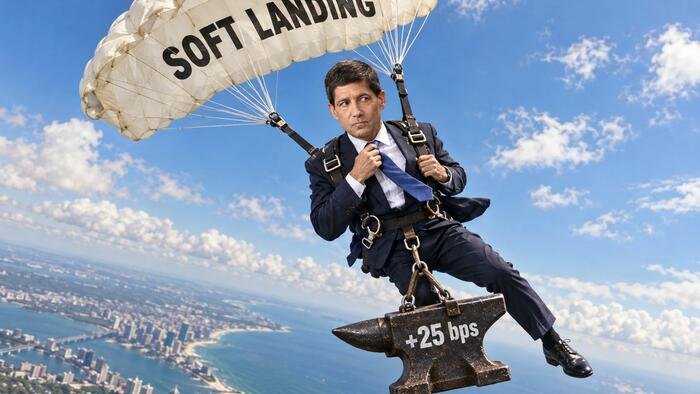
The Federal Open Market Committee (FOMC) made the anticipated move on September 16 by voting unanimously to increase the fed funds rate by 25 basis points to 3.75-4.00 percent, aligning with signals from the Treasury market. In a brief press conference, Kevin Warsh emphasized that the hike was intended to facilitate a quicker return to the 2 percent inflation goal and ensure price stability. The Committee’s median projection places the fed funds rate at 4.1 percent by year-end and maintains that level through 2027, citing inflation risks to the upside and balanced labor risks. Despite geopolitical and commodity concerns, the decision to hike was made.
Reasons Behind the Rate Hike
Prior to the meeting, observations of the 3-month T-bill yield indicated a potential rate hike. Historically, the Fed tends to follow the market rather than vice versa. The market signaled a minimum 25 basis-point increase, with the possibility of a 50-point move. Despite geopolitical uncertainties, the market was pricing in a prolonged energy and commodity shock. The Committee’s decision to raise rates was likely influenced by these factors, although a 50-point hike might have sent a clearer message. The lingering effects of geopolitical tensions and supply disruptions played a significant role in the market’s expectations.
Evaluating the Rate Hike
Adjusting rates in response to a supply shock is not always the most effective strategy, as monetary policy cannot directly address such issues. The Committee’s decision to hike rates was driven by concerns about inflation and the pace at which it was approaching the target. However, relying on data that may not accurately reflect the true state of the economy poses challenges. Job growth figures have been inconsistent, with certain sectors showing signs of weakness. Additionally, indicators such as housing starts and permits suggest a decline in the real estate market, further complicating the economic outlook.
Furthermore, the growing presence of artificial intelligence (AI) companies in the market, coupled with uncertainties in private credit markets and the evolving situation in China, add layers of complexity to the economic landscape. The combination of these factors raises concerns about a potential policy error on the part of the Committee. While a 25-point rate hike was implemented, waiting for more conclusive data before making such a move might have been a wiser approach.
Anticipating Future Trends
Looking ahead, it is likely that rates will eventually decrease as the underlying weaknesses in the economy become more apparent. The impact of tighter monetary policy is expected to manifest in areas such as employment, housing, and credit, potentially prompting a shift in the Committee’s approach. As the economy navigates through these challenges, it is crucial for policymakers to adapt their strategies accordingly to avoid exacerbating any existing vulnerabilities.
* * *